
Introduction
In aluminum melting operations, the crucible is one of the most important components that directly contacts molten aluminum. The performance of an aluminum melting crucible directly affects melting efficiency, aluminum quality, furnace safety, and operating costs.
Unlike ordinary containers, aluminum melting crucibles must withstand repeated high-temperature cycles, thermal shock, and chemical reactions with molten aluminum. Improper operation, especially during the first heating process, may cause cracks, damage, or even crucible failure.
For this reason, proper crucible baking, heating procedures, and daily maintenance are essential to extend service life and ensure stable melting performance.
This article explains what an aluminum melting crucible is, common crucible materials, new crucible baking methods, second-use heating procedures, and important precautions during operation.
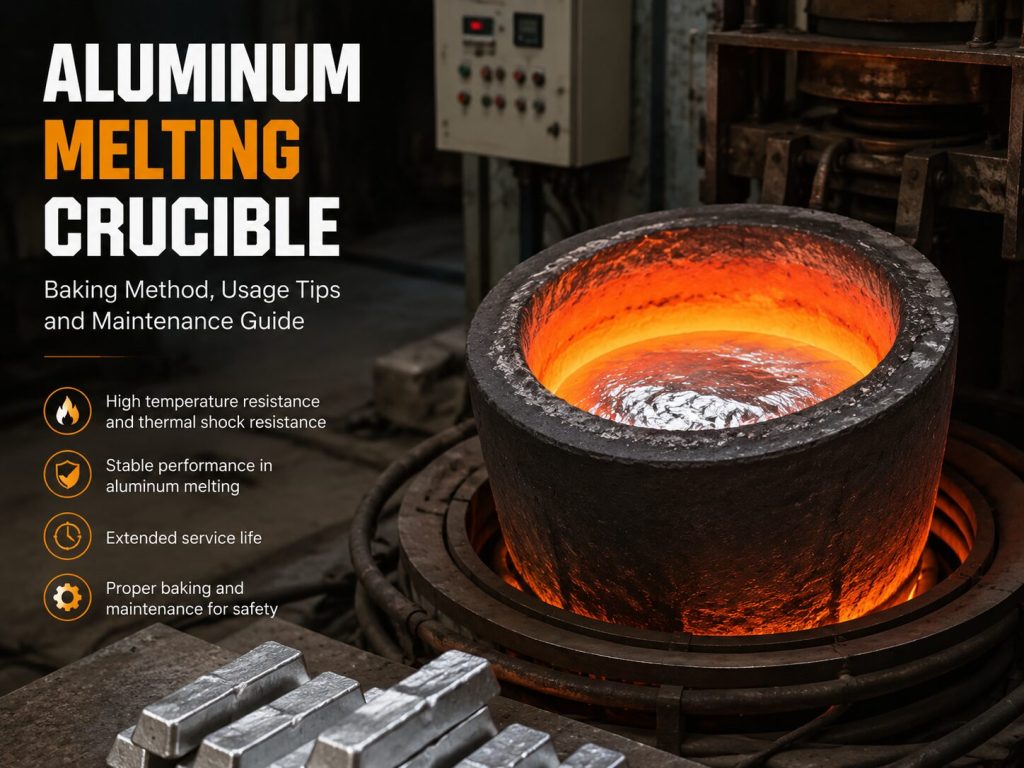
What Is an Aluminum Melting Crucible?
An aluminum melting crucible is a high-temperature container designed for melting and holding molten aluminum and aluminum alloys. It is widely used in industrial melting equipment, including induction melting furnaces, resistance furnaces, and other aluminum melting systems.
During aluminum melting, the crucible needs to withstand:
- High operating temperatures
- Rapid heating and cooling cycles
- Thermal expansion and contraction
- Mechanical impact during charging
- Chemical reactions with molten aluminum
A suitable crucible helps maintain stable melting conditions, reduce contamination, and improve production efficiency.
Common Materials Used for Aluminum Melting Crucibles
Different materials are selected according to furnace type, melting temperature, and production requirements. The most common materials used for aluminum melting crucibles include graphite, silicon carbide, and clay graphite. For a detailed overview of crucible materials, classifications, and applications, you can read our guide on What Is a Crucible Made Of?
| Crucible Material | Main Characteristics | Applications |
|---|---|---|
| Graphite | Excellent thermal conductivity and thermal shock resistance | Aluminum and non-ferrous metal melting |
| Silicon Carbide (SiC) | High strength, oxidation resistance, long service life | Industrial aluminum melting |
| Clay Graphite | Good thermal stability and cost efficiency | General aluminum casting applications |
Among these materials, graphite and silicon carbide crucibles are widely used in aluminum melting because they provide good heat transfer performance and resistance to thermal shock.
In induction melting applications, the crucible must also maintain stable performance under electromagnetic heating conditions to ensure efficient energy transfer.
Why Is Crucible Baking Important Before Aluminum Melting?
A new aluminum melting crucible usually contains moisture and internal stress caused by manufacturing and storage. Before normal production, the crucible needs to be gradually heated and dried.
Proper baking helps:
- Remove moisture inside the crucible
- Reduce internal thermal stress
- Improve structural stability
- Prevent cracking during operation
- Extend crucible service life
Rapid heating of a new crucible may cause uneven expansion, which can lead to cracks or serious damage.
Therefore, a step-by-step heating process is necessary before starting full-power aluminum melting.
1. New Crucible Baking Method
The first heating process is an important step before using a new aluminum melting crucible. The temperature should be increased gradually to allow the crucible to adapt to thermal changes.
1.Put the new crucible into the furnace body, and keep the temperature of the crucible and the room temperature not much different.
2.After the crucible is put into the furnace body, the power of the induction melting furnace can be set, the power is set to 20KW, the temperature is set 100 degrees, and the heat preservation is 30 minutes;
3.The temperature is set 150 degrees, and the heat preservation is 30 minutes;
4.The temperature is set 200 degrees, and the heat preservation is 30 minutes;
5.The temperature is set 250 degrees, and the heat preservation is 30 minutes;
6.The temperature is set 300 degrees, and the heat preservation is 30 minutes;
7.Set the power to 50 kilowatts, add dry aluminum scraps, set the temperature to 400 degrees, keep the temperature for 30 minutes.
8.Set the full power, and set the temperature to 750 degrees to start melt the material.
The purpose of this gradual heating process is to allow the crucible material to expand evenly and reduce the risk of cracking caused by sudden temperature changes.
During the baking process, operators should monitor temperature changes and ensure that the crucible is fully heated before beginning normal melting operations.
2. The Second Use of Crucible Baking Method
After a long period of power outage or production suspension, the crucible should also be reheated carefully before restarting operation.
Long-term shutdown may cause temperature changes and internal stress in the crucible. A controlled reheating process helps protect the crucible structure.
After a long-time Power outages and discontinued production, when the furnace is turned on for the second time, set the power to 20KW and first set the temperature to 100 degrees,heat preservation for 60 minutes.
2.Set the temperature to 200 degrees,heat preservation for 60 minutes.
3.Set the temperature to 300 degrees,heat preservation for 60 minutes.
4.Then add the raw materials, set the power to full power, set the temperature to 400 degrees, and heat preservation for 60 minutes.
5.Then set the required temperature to start melting.
This method reduces thermal shock during restart operations and helps prevent damage caused by rapid temperature increases after a long shutdown.
3. Precautions When Using Aluminum Melting Crucible
Proper operation is essential to prevent premature crucible damage and maintain stable melting performance.
During aluminum melting, sudden temperature changes, improper charging methods, and mechanical impact may reduce crucible service life.
To avoid the crucible being hot and cold, put the cold crucible into the hot furnace body, or put the normal temperature aluminum alloy in the hot crucible. Avoid physical shocks.
2.When the melting furnace stops working, scoop out the molten aluminum as much as possible to avoid solidified molten aluminum in the crucible. During the second heating, it should not be heated too fast to avoid causing the crucible to burst.
3.When melting aluminum, if there is one-third or half of the aluminum liquid, the aluminum should not be added too much or too cold, which will cause the liquid surface to solidify. Once the liquid surface solidifies, it is easy to cause the bottom of the crucible to burst.
How to Extend the Service Life of an Aluminum Melting Crucible?
The service life of an aluminum melting crucible depends on the crucible material, operating temperature, heating method, and daily maintenance.
The following practices can help improve crucible durability.
1. Avoid Thermal Shock
Rapid temperature changes are one of the main causes of crucible damage.
Operators should:
- Follow proper baking procedures
- Avoid sudden cooling
- Prevent rapid heating after shutdown
Gradual temperature changes help maintain crucible strength and stability.
2. Use Clean and Dry Aluminum Materials
Moisture and contamination in aluminum scrap may affect melting stability.
Before charging aluminum materials, ensure they are:
- Dry
- Clean
- Suitable for melting requirements
Dry materials help reduce splashing and improve operational safety.
3. Prevent Mechanical Damage
Heavy aluminum materials should not be dropped directly into the crucible.
Excessive impact may damage the inner wall and shorten service life.
Proper charging methods include:
- Adding materials gradually
- Avoiding strong impact
- Using suitable charging tools
4. Control Melting Temperature
Excessive melting temperatures may accelerate:
- Crucible oxidation
- Material erosion
- Service life reduction
Maintaining proper temperature control helps balance energy consumption and crucible durability.
Aluminum Melting Crucible Used in Induction Furnace
In modern aluminum processing plants, aluminum melting crucibles are often used together with induction melting furnaces.
During induction melting, electromagnetic energy generates heat inside the metal charge. The crucible must withstand continuous thermal and mechanical stress during operation.
A suitable crucible for an induction furnace should provide:
- Excellent thermal shock resistance
- Good heat transfer performance
- Resistance to aluminum corrosion
- Stable performance during repeated heating cycles
The combination of a high-quality crucible and an efficient aluminum melting furnace helps manufacturers improve melting efficiency, reduce downtime, and achieve stable production.
When selecting an aluminum melting crucible, manufacturers should consider:
- Furnace capacity
- Aluminum alloy type
- Melting temperature
- Operating frequency
- Production requirements
Common Problems When Using Aluminum Melting Crucibles
Why Does an Aluminum Melting Crucible Crack?
Common causes include:
- Rapid heating without proper baking
- Sudden temperature changes
- Adding cold aluminum materials too quickly
- Mechanical impact
- Excessive operating temperature
Proper operation and maintenance can significantly reduce these risks.
How Long Does an Aluminum Melting Crucible Last?
The service life of a crucible depends on:
- Crucible material
- Furnace power
- Melting frequency
- Operating conditions
- Maintenance practices
Graphite and silicon carbide crucibles can provide good durability when used correctly, but regular inspection is still necessary.
Conclusion
An aluminum melting crucible is a critical component in aluminum melting operations. The correct selection, proper baking procedure, and careful operation are essential for safe and efficient production.
Before first use, a new crucible should be gradually heated to remove moisture and reduce thermal stress. After long production interruptions, controlled reheating is also necessary to prevent cracking.
During daily operation, avoiding thermal shock, controlling charging methods, and maintaining proper melting conditions can significantly extend crucible service life.
For aluminum processing companies, combining a reliable aluminum melting crucible with a suitable induction melting system can improve production efficiency, reduce maintenance costs, and ensure stable aluminum melting performance.