
I. Introduction: Application Value and Industry Positioning of Aluminum Shell Steel Melting Furnaces
1.1 Pain Points in Modern Steel Melting for Foundries
In modern foundry production, the steel melting process faces multiple challenges: Traditional steel melting equipment consumes high energy and occupies large floor space, making it difficult to accommodate the space and cost budgets of small-to-medium enterprises; Certain melting solutions suffer from low thermal efficiency, not only increasing production costs but also prolonging production cycles, thereby limiting capacity expansion. Simultaneously, increasingly stringent environmental and safety compliance requirements make outdated equipment incapable of meeting dual demands for green production and safe operation. These challenges compel the industry to pursue more targeted innovations in melting technology.
1.2 Evolving Demands for Melting Solutions
As manufacturing transitions toward precision and intensification, market demand for steel melting equipment increasingly centers on three core attributes: “high efficiency, compact design, and low cost.” Small and medium-sized foundries, metal recycling facilities, and similar entities require both production flexibility and control over initial investment and operational costs. The bulky, high-energy-consumption characteristics of traditional large steel-shell melting furnaces no longer align with their production needs, making lightweight, high-efficiency melting equipment an industry imperative.
1.3 Positioning and Application Scenarios of Aluminum-Shell Induction Steel Melting Furnaces
Leveraging their lightweight, high-efficiency, and low-cost advantages, aluminum-shell induction steel melting furnaces have become the ideal choice for small-to-medium capacity melting scenarios. They precisely match production demands ranging from 0.1T to 20T, filling the market gap between large steel-shell furnaces and small, simple melting furnaces. Their typical applications span multiple industrial sectors, including supporting melting operations in small-to-medium steel mills, batch production in general foundries, scrap steel recycling in metal recovery plants, and small-batch melting of specialty alloys, demonstrating exceptional adaptability.
II. Definition and Structural Analysis of Aluminum Shell Steel Melting Furnaces
2.1 Basic Definition of Induction Steel Melting Furnaces
At its core, the aluminum-shell steel melting furnace is an induction heating device. It employs electromagnetic induction principles, generating an alternating magnetic field via induction coils to induce eddy currents within the metal material inside the furnace, causing it to heat up and ultimately achieve melting and refining. Compared to traditional flame-fired steel melting furnaces, induction melting eliminates the need for fuel combustion, offering more direct and controllable heating that meets modern industrial demands for melting precision and environmental sustainability.
2.2 Structural Composition of Aluminum Shell Steel Melting Furnaces
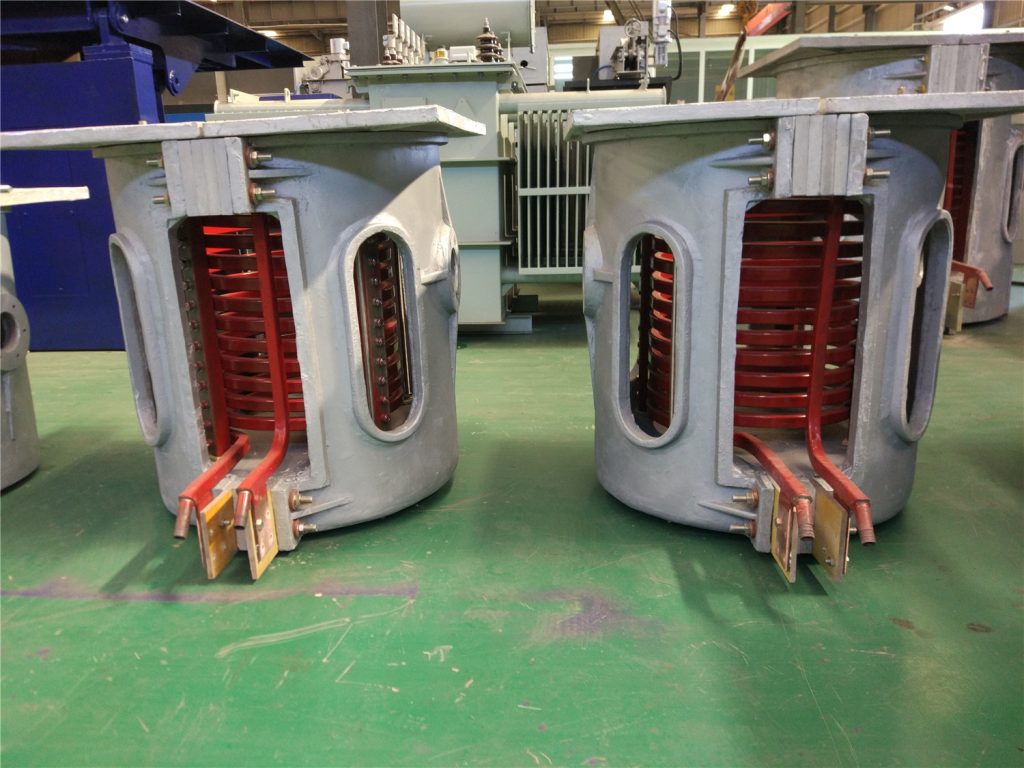
Featuring an aluminum alloy outer shell, these furnaces boast a compact overall structure. Their design centers around four core modules—“Heating-Control-Cooling-Safety”—with components working synergistically to ensure stable and efficient smelting. The specific structure is as follows:
2.2.1 Detailed Explanation of Core Components
- Furnace Body (Aluminum Alloy Shell): Cast from high-strength aluminum alloy, this serves as the core load-bearing component. It combines lightweight properties with corrosion resistance. Compared to steel-shell furnaces, it significantly reduces weight, facilitating installation and mobility while lowering manufacturing costs.
- Induction Coil and Magnetic Yoke System: The induction coil generates the alternating magnetic field, wound with high-temperature-resistant, well-insulated wire. The magnetic yoke system concentrates the magnetic field, minimizes leakage, enhances heating efficiency, and protects surrounding equipment and operators.
- Power Control Cabinet: This unit regulates core parameters like input power and frequency, enabling precise control over the melting process. It adapts to diverse material types and production capacities, featuring an intuitive interface for easy operator mastery.
- Cooling and Safety Systems: The cooling system primarily dissipates heat from the induction coil, magnetic yoke, and power components to prevent high-temperature damage. The safety system incorporates multiple protective devices, fortifying industrial production safety protocols.
2.2.2 Core Differences from Steel-Shell Steel Melting Furnaces
The fundamental distinctions between aluminum-shell and steel-shell furnaces lie in shell material, structural scale, and application scenarios: Aluminum-shell furnaces offer lightweight construction and lower manufacturing costs, suited for small-to-medium production capacities. Steel-shell furnaces provide higher strength and load-bearing capacity, primarily used for large-batch melting, but feature greater equipment weight and higher manufacturing/installation costs. Additionally, aluminum shell furnaces exhibit superior heat dissipation, reducing thermal losses during prolonged operation.
III. Core Technical Parameters and Capacity Range
3.1 Capacity and Model Selection
Aluminum shell steel melting furnaces cover a broad capacity spectrum to meet diverse enterprise needs, with mainstream models spanning 0.1T–20T.
- Models ranging from 0.1T to 1T are suitable for small foundries, laboratories, and pilot production.
- Models from 1T to 5T are designed for batch production in medium-sized foundry workshops and metal recycling facilities.
- Models from 5T to 20T meet the continuous melting demands of small to medium-sized steel mills, flexibly adapting to diverse production rhythms.
3.2 Key Melting Performance Parameters
- Single-Batch Melting Time: Influenced by capacity and material type, standard single-batch melting time ranges from 40 to 60 minutes. Compared to traditional flame steel melting furnaces, this represents over a 30% efficiency improvement, effectively shortening production cycles and enhancing capacity utilization.
- Compatible Materials: Primarily designed for ferrous metal melting, including carbon steel, alloy steel, and cast iron. It meets diverse material processing needs such as general casting, specialty alloy production, and scrap steel recycling, offering exceptional adaptability.
3.3 Power Supply and Frequency Configuration
Power supply specifications align with standard industrial power requirements, allowing matching to capacity needs without complex electrical modifications. Frequency options primarily utilize medium-frequency technology, balancing melting efficiency with temperature stability. No specialized personnel are required for complex adjustments, meeting the convenience demands of industrial-scale production.
IV. High-Efficiency Melting Performance Advantages
4.1 Efficient Heating with Controllable Energy Consumption
The aluminum-shell steel melting furnace employs induction heating, directing thermal energy directly into the metal material. This eliminates heat loss associated with open-flame heating, achieving thermal efficiency exceeding 85%. Compared to traditional flame-heated steel melting furnaces, energy consumption is significantly reduced. Additionally, rapid melting speeds minimize oxidation and burn loss during processing, enhancing metal recovery rates and reducing raw material waste.
4.2 Uniform Composition and High Melting Precision
The intense electromagnetic stirring effect generated during operation thoroughly mixes molten metal within the furnace. This effectively prevents issues like composition inconsistencies and inclusion residues, ensuring steel quality. Ideal for scenarios demanding high compositional precision—such as specialty alloy production and precision casting—it enhances product yield rates.
4.3 Stable Operation for Continuous Production
Equipped with a precise temperature control system, it maintains stable furnace temperatures throughout smelting and refining, preventing quality degradation from temperature fluctuations. Its industrial-grade optimized structure enables 24/7 continuous operation, meeting large-scale production demands while minimizing output losses from equipment downtime.
V. Advanced Safety and Intelligent Control System
5.1 Comprehensive Safety Monitoring and Protection
The equipment incorporates a comprehensive safety protection system with real-time, all-around monitoring capabilities to promptly identify operational hazards, ensuring both equipment and operator safety. Key monitoring and protection features include:
- Fluid Monitoring: Real-time detection of cooling water temperature and pressure prevents equipment overheating and damage caused by cooling system failures.
- Electrical Protection: Overcurrent, overvoltage, and phase loss protection safeguards electrical components and mitigates safety risks from circuit failures.
- Leakage Alarm: Equipped with leakage detection devices that trigger immediate alarms and shutdown upon detecting issues like cooling water leaks, preventing safety incidents from escalating.
5.2 Intelligent Control, User-Friendly Operation
Utilizing a PLC control system, the equipment achieves automated and precise control of the melting process. Pre-set melting parameters and automatic power/temperature adjustments reduce manual intervention and minimize human error. Additionally, the equipment features self-diagnostic capabilities, continuously monitoring operational status and promptly reporting fault information for rapid troubleshooting and maintenance, enhancing operational efficiency. Furthermore, the integrated melting management system records production data, providing essential support for production optimization.
VI. Durable Design and Premium Material Assurance
6.1 Core Advantages of the Aluminum Alloy Housing
The furnace body utilizes high-strength aluminum alloy material, offering three core advantages over traditional materials: First, lightweight construction facilitates transportation, installation, and relocation, adapting to diverse site layouts. Second, corrosion resistance withstands high-temperature fumes and corrosive substances generated during melting, extending equipment lifespan. Third, cost-effectiveness ensures lower manufacturing expenses, reducing initial investment and enhancing cost-performance for enterprises.
6.2 Durability Design of Key Components
- Cooling Piping: Utilizes carbon-free cooling hoses with high-temperature resistance and anti-aging properties to prevent blockages and leaks, extending service life and ensuring stable cooling system operation.
- Water Distribution Components: Equipped with 304 stainless steel water distributors and clamps, offering corrosion resistance and high strength to withstand high-pressure, high-temperature industrial environments, reducing component wear;
- Control Cabinet: Features a modular design with a compact structure, facilitating future maintenance and component replacement, minimizing equipment downtime for maintenance, and enhancing production continuity.
VII. Tilting Mechanism and Structural Selection
7.1 Design Features of Tilting Mechanism
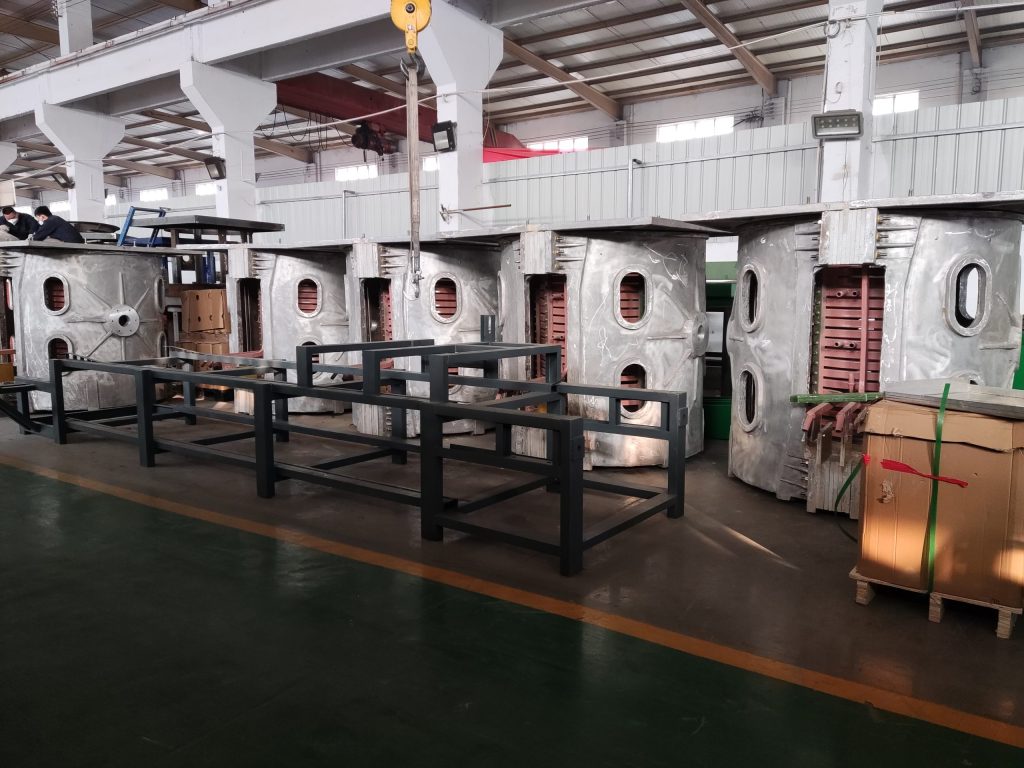
For aluminum shell steel melting furnaces with capacities below 1 ton, a dedicated tilting mechanism is provided. Utilizing a reducer-driven design, it features a simple structure and convenient operation, enabling effortless molten metal pouring. This mechanism is tailored to meet charging and tapping requirements in small-scale production scenarios. The tilting mechanism has low maintenance costs, requiring no complex upkeep procedures, thereby reducing equipment operation and maintenance burdens.
7.2 Structural Selection Principles
Structural selection must align with production capacity and operational requirements:
- Small-scale equipment under 1 ton prioritizes tilting aluminum shell structures for flexibility and convenience;
- For medium-sized equipment above 1 ton, fixed or tilting structures can be selected based on production scenarios to meet batch production pouring efficiency requirements;
- For large-scale capacities above 20 tons, steel shell furnace bodies are recommended. Their higher structural strength satisfies long-term heavy-duty melting demands. Additionally, site space and transportation conditions must be considered during selection to ensure precise alignment between equipment and production environments.
VIII. Energy Conservation, Cost Reduction, and Environmental Advantages
8.1 Energy Efficiency and Cost Reduction
Aluminum shell steel melting furnaces achieve high electrical efficiency, reducing energy consumption by over 30% compared to traditional flame melting furnaces. Optimized furnace structures minimize heat loss, further enhancing energy utilization. Long-term operation significantly lowers electricity costs for enterprises. Combined with automated controls that reduce labor input, this approach comprehensively compresses operational expenses.
8.2 Environmental Sustainability and Regulatory Compliance
The equipment employs a flame-free melting process, eliminating emissions of exhaust gases and slag from fuel combustion. This effectively reduces environmental pollution and aligns with modern industrial environmental compliance requirements. Furthermore, the melting process generates minimal noise and dust, improving workshop conditions and safeguarding operator occupational health. Additionally, the equipment supports recycled scrap steel melting, promoting metal resource recycling and advancing green production principles.
IX. Typical Application Scenarios and Industry Cases
9.1 Mainstream Application Fields
- Foundry Industry: Suitable for small-to-medium foundries and precision casting workshops, melting materials like carbon steel, alloy steel, and cast iron for producing automotive components, mechanical parts, and similar products.
- Metal Recycling: Ideal for scrap steel recycling plants, rapidly melting scrap steel and iron to achieve resource regeneration and enhance recycling value.
- Specialized Production: Used for small-batch specialty alloy production, laboratory testing, and pilot project steel melting trials, meeting high-precision, low-volume melting requirements.
9.2 Industry Application Value
In practical use, aluminum-shell steel melting furnaces address challenges faced by SMEs—such as large footprints, high energy consumption, and insufficient capacity of traditional melting equipment—through their compact design and efficient melting performance. For instance, after introducing a 5-ton aluminum shell steel melting furnace, a small-to-medium foundry reduced single-furnace melting time to 50 minutes, increased production capacity by 40%, and lowered energy consumption by 35%, significantly boosting operational efficiency. A scrap steel recycling plant utilizing a 2-ton model achieved rapid scrap steel regeneration, improving recovery efficiency by 50% and advancing resource circularity.
X. Selection Guide for Aluminum Shell Steel Melting Furnaces
10.1 Core Selection Factors
- Production Capacity Requirements: Select models ranging from 0.1T to 20T based on production scale to avoid overcapacity or undercapacity, balancing production flexibility and cost control.
- Production Rhythm: For 24-hour continuous operation, prioritize models with stable structures and robust cooling systems. For intermittent production, emphasize equipment convenience and cost-effectiveness.
- Power Supply Conditions: Match the unit's power rating and frequency to existing workshop specifications to avoid additional electrical retrofitting costs;
- Automation Requirements: For scenarios demanding high production precision and reduced manual intervention, select models equipped with PLC intelligent control systems and melting management systems.
10.2 Selection Decision Boundaries
Aluminum shell steel melting furnaces are optimally suited for small-to-medium production capacities (0.1T–20T) and enterprises prioritizing equipment flexibility and cost-effectiveness. They are particularly suitable for foundries, scrap steel recycling facilities, laboratories, and similar settings. For capacities exceeding 20 tons or requiring sustained heavy-duty melting, upgrading to a steel-shell furnace is recommended. Its superior structural strength and load-bearing capacity meet large-scale batch production demands. Where production space is limited or frequent equipment relocation is required, the lightweight advantage of aluminum-shell furnaces makes them the preferred choice.
XI. Core Reasons to Choose Our Aluminum Shell Steel Melting Furnaces
11.1 Reliable Quality, Industrial Standard Compliance
Equipment design strictly adheres to industrial melting standards. Core components utilize premium materials and undergo multiple rounds of industrial testing to ensure long-term stable operation. It meets the rigorous demands of 24/7 continuous industrial production, with a service life exceeding 10 years.
11.2 Globally Validated, Proven Performance
Our products are widely deployed across foundries and metal recycling industries in numerous countries and regions. With extensive proven applications across diverse industrial settings, our melting efficiency, safety, and stability have earned market recognition.
11.3 Flexible Customization for Tailored Solutions
We provide customized solutions based on your production capacity requirements, operational scenarios, and material types. This includes tailored equipment models, power configurations, and control system upgrades to precisely match your production needs and enhance efficiency.
11.4 Full-Cycle Service for Hassle-Free Operation
We deliver professional technical support and after-sales assurance, encompassing pre-installation services like equipment setup, commissioning, and operator training, as well as post-installation maintenance, component replacement, and system upgrades. This comprehensive lifecycle service ensures rapid response to customer needs and minimizes equipment downtime losses.
XII. Conclusion and Call to Action
12.1 Summary of Core Advantages
As an efficient solution for small-to-medium-scale melting applications, the aluminum shell steel melting furnace addresses modern foundry challenges with its core advantages: lightweight design, high efficiency, low cost, and superior safety. It adapts to diverse industries and materials, delivering energy savings, environmental compliance, and intelligent control. This enables enterprises to boost production efficiency, reduce operational costs, ensure product quality, and achieve scalable, precision manufacturing.
12.2 Call to Action
If you are seeking a steel melting solution tailored for small to medium production capacities, we invite you to contact us for detailed technical specifications, product quotations, and customized solutions. Our dedicated sales and technical teams will provide personalized one-on-one service, recommending the optimal aluminum shell steel melting furnace model based on your production requirements to help you enhance production efficiency and achieve industrial upgrading.