
I. Introduction: Overview of Metal Induction Heating Furnaces
1.1 Definition
Metal induction heating furnaces are industrial equipment that rapidly heat metallic materials based on the principle of electromagnetic induction. They complete the heating process without direct contact with the workpiece. Thanks to their high efficiency and precision, they have widely replaced traditional heating equipment, becoming core heating apparatus in industries such as metallurgy and mechanical manufacturing.
1.2 Core Parameters: Temperature Range
The standard heating temperature range for metal induction furnaces spans 200°C–1300°C. This range can be flexibly adjusted to meet specific workpiece processing requirements, accommodating both low-temperature processes like preheating and tempering, as well as demanding high-temperature applications such as forging and melting. This versatility covers the vast majority of metal thermal processing scenarios.
1.3 Core Application Industries
The equipment is primarily deployed across four major industrial sectors: forging (workpiece preheating, forging forming), heat treatment (workpiece modification), piping (welding preheating, anti-corrosion heating), and automotive (component processing heating). Its applications also extend to specialized fields like aerospace and hardware processing.
II. Working Principle: Efficient Heating via Electromagnetic Induction
2.1 Core Principle: Electromagnetic Induction Effect
Metal induction furnaces generate alternating magnetic fields via high-frequency, medium-frequency, or power-frequency power sources. When metal workpieces are placed within this magnetic field, electromagnetic induction creates eddy currents (closed-loop induced currents) within the workpiece. As these eddy currents flow through the metal, resistance causes electrical energy to be converted into thermal energy, causing the workpiece itself to heat up. This heating method eliminates the need for intermediate heat transfer media, as heat is generated directly within the workpiece, achieving significantly higher thermal efficiency than traditional methods.
2.2 Core Differences from Traditional Heating
Compared to conventional heating methods such as gas, flame, or resistance heating, metal induction furnaces offer three key advantages: First, faster heating speeds—eddy currents act directly within the workpiece with no heat loss, substantially reducing heating cycles; Second, it is clean and pollution-free, with no open flames, smoke, or harmful gas emissions during operation, aligning with environmental production requirements. Third, it delivers precise and uniform heating. By adjusting magnetic field strength and frequency, precise temperature control can be achieved for the entire workpiece or specific areas, preventing localized overheating or uneven heating.
III. Application Scenarios: Addressing Thermal Processing Needs Across Multiple Industries
3.1 Pre-forging Heating: Suited for Critical Component Processing
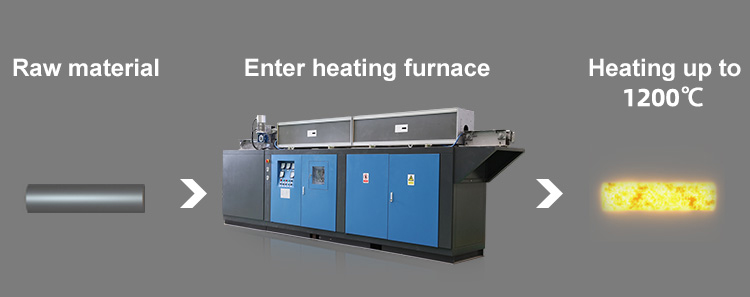
Pre-forging heating is a core application of metal induction furnaces, primarily used for preheating mechanical components like gears, connecting rods, bearings, and crankshafts. It heats workpieces to the high temperatures required for forging, enhancing metal plasticity, reducing cracking risks during forging, and ensuring dimensional accuracy and mechanical properties of forgings.
3.2 In-Line Heating: Adapted for Continuous Production
For long, linear, or batch-processed workpieces like pipes, rebar, and wire pipes, metal induction furnaces enable continuous in-line heating tailored to assembly line production. Applications include weld preheating and coating curing in pipe manufacturing, as well as straightening and preheating in rebar processing. This ensures heating consistency while boosting overall production efficiency.
3.3 Localized Heating: Precision-Tailored for Forming Processes
Leveraging precise magnetic field control, the equipment enables localized heating of workpieces. This is ideal for processes requiring localized shaping or modification, such as U-bolt bending, pipe forming, and flange heating. Localized heating prevents thermal deformation of non-processed areas, reduces subsequent processing difficulties, and improves product yield rates.
3.4 Heat Treatment: Optimizing Workpiece Properties
In metal heat treatment, induction furnaces perform core processes like tempering, annealing, and normalizing. By precisely controlling temperatures, they alter internal microstructures to enhance mechanical properties such as hardness, toughness, and wear resistance. For example, gear tempering reduces internal stresses to extend service life, while steel annealing improves ductility for easier subsequent machining.
IV. Core Characteristics: Adapted for Industrial Production Scenarios
4.1 Convenient Operation and Installation
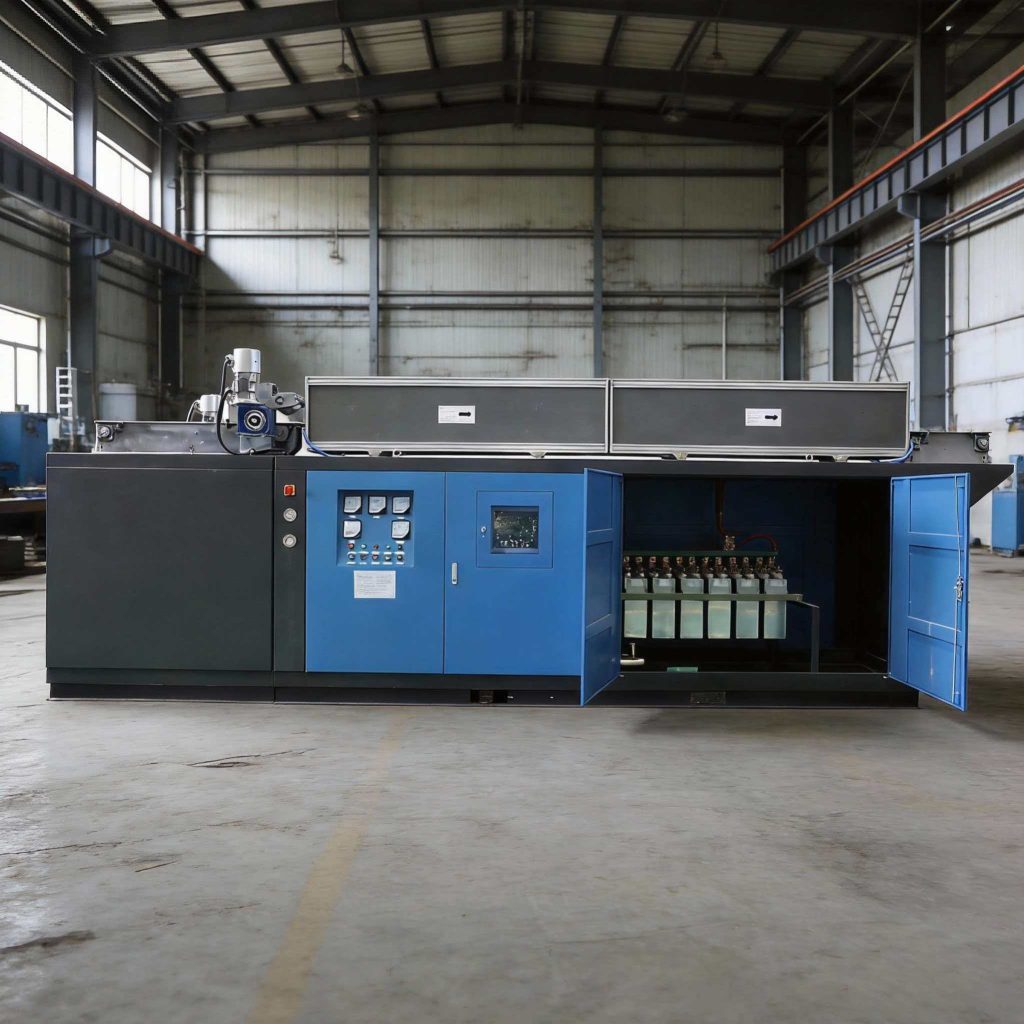
The equipment features a modular design with a straightforward installation process, eliminating the need for complex civil engineering. It can be rapidly commissioned and put into operation. The intuitive interface, equipped with a digital control panel, allows operators to become proficient after minimal training, lowering the skill threshold for manual operation.
4.2 Compact Footprint
Compared to traditional furnaces, metal induction heating furnaces eliminate the need for large combustion chambers and heat transfer devices. Their compact design significantly reduces floor space requirements, making them suitable for production environments with limited workshop space and enabling flexible integration into assembly lines.
4.3 Stable and Precise Temperature Control
Equipped with high-precision temperature sensors and an intelligent temperature control system, it monitors workpiece temperature in real time and automatically adjusts power parameters. Temperature control accuracy maintains an error margin within ±5°C, ensuring stable heating processes that meet the stringent requirements of high-end component manufacturing.
4.4 Energy Efficiency
The equipment boasts high electrical energy utilization without issues like open-flame heat dissipation or flue gas losses. Its energy consumption is approximately 380 kWh/ton, achieving over 30% energy savings compared to traditional resistance furnaces. Long-term use substantially reduces corporate energy costs.
V. Core Advantages: Empowering Efficient Production
5.1 Shortened Production Cycles, Enhanced Efficiency
Heating speed increases by 50%-80% compared to traditional methods, substantially shortening workpiece heating cycles. It also supports continuous and automated production, reducing process waiting times and helping enterprises enhance overall production efficiency.
5.2 Energy-Saving, Environmentally Friendly, and Cost-Reducing
No harmful gas or dust emissions, eliminating the need for combustion waste treatment and aligning with environmental policies; High electrical energy utilization substantially lowers energy costs compared to gas or oil heating while reducing environmental remediation expenditures.
5.3 Uniform Heating for Optimized Product Quality
Eliminates localized overheating and temperature inconsistencies common in traditional heating, ensuring even workpiece heating. This reduces defects like deformation and cracking, enhances dimensional accuracy and mechanical properties, lowers scrap rates, and indirectly reduces production costs.
5.4 Automated Compatibility, Reduced Labor Dependency
Supports digital control and integrates with automation equipment like PLCs and robots. Enables unattended, precision-controlled heating processes, minimizing manual operations to cut labor costs and human error.
VI. Material Compatibility: Suitable for Multiple Metal Types
6.1 Metal Compatibility
Metal induction heating furnaces accommodate most ferromagnetic materials, including ferrous metals like carbon steel, alloy steel, and stainless steel. They also process select non-ferrous metals such as copper and aluminum (requiring parameter adjustments based on material permeability and resistivity), covering mainstream industrial metals.
6.2 Workpiece Geometry Compatibility
Unrestricted by workpiece shape or size, it accommodates various forms including block, cylindrical, bar, and tubular components. Custom coils enable precise heating for everything from small precision parts to large pipes and steel sections.
VII. Selection Techniques: Precisely Matching Production Requirements
7.1 Core Selection Criteria
Selection hinges on four core factors: First, workpiece parameters—including dimensions, weight, and shape—directly determine furnace power and coil specifications. Second, material properties—selecting optimal heating frequencies based on magnetic permeability and resistivity (high-frequency for small precision parts, medium-frequency for medium-sized workpieces, power-frequency for large components). Third, temperature requirements—identifying maximum heating temperatures based on processing techniques and matching equipment temperature control ranges. Fourth, production capacity—determine equipment heating efficiency and continuous operation capability based on hourly and daily processing volumes.
7.2 Customized Adaptation Solutions
Enterprises can tailor coil specifications (for special-shaped workpieces), adjust equipment power (to match capacity and temperature requirements), and select automation levels ranging from basic manual control to fully automated systems—flexibly adapting to production scenarios.
VIII. Return on Investment and Comprehensive Benefits
8.1 Direct Cost Savings
On one hand, the equipment's significant energy-saving characteristics substantially reduce long-term energy expenditures. On the other hand, its automation capabilities minimize labor input while lowering defect rates, indirectly conserving raw materials and rework costs—effectively cutting operational expenses from two angles.
8.2 Efficiency and Production Capacity Enhancement
Shortened heating cycles and adaptation to continuous production effectively boost enterprise output capacity. simultaneously, stable improvements in product quality reduce post-sales maintenance and scrap disposal processes, further boosting production efficiency and overall benefits.
8.3 Short Investment Payback Period
Compared to traditional furnaces, while metal induction furnaces require slightly higher initial investment, their energy-saving, high-efficiency, and cost-reducing advantages result in a shorter payback period. Most enterprises can recover equipment investment within 1-2 years, yielding significant long-term returns.
IX. Conclusion
9.1 Core Value Summary
Metal induction heating furnaces leverage electromagnetic induction to deliver rapid heating, precise temperature control, energy efficiency, environmental sustainability, and automation compatibility. They address thermal processing needs across multiple industries, helping enterprises reduce costs, enhance efficiency, and improve product quality. Aligned with modern industrial trends toward greener, automated, and precision-driven production, they represent the preferred solution for replacing traditional heating equipment.
9.2 Customized Solution Invitation
Heating equipment requirements vary across industries and production scenarios. We offer tailored metal induction heating solutions based on your workpiece parameters, production capacity, and process specifications, empowering efficient, eco-friendly, and precise manufacturing. Contact us anytime to explore heating upgrade solutions optimized for your operations.