
I. Introduction
1.1 Overview of Induction Heating
Induction heating is a heating technology based on the principle of electromagnetic induction. Its core mechanism involves generating an alternating magnetic field through alternating current. When a metal workpiece is placed within this magnetic field, eddy currents and hysteresis losses are generated internally, causing the workpiece to heat itself. Unlike traditional heating methods, induction heating requires no direct contact with the workpiece, as heat is generated directly within the heated object. This characteristic confers significant technical advantages. In industrial applications, induction heating has become a core heating technology across numerous metal processing fields due to its high efficiency, energy savings, precise temperature control, stable heating process, and broad applicability. It is widely used in critical processes such as melting, forging, heat treatment, and welding.
1.2 The Importance of Induction Heating in the Aluminum Industry
Aluminum, a lightweight, corrosion-resistant metal with excellent electrical conductivity, holds an irreplaceable position in industries such as aerospace, automotive manufacturing, construction materials, and electronics. Every stage of aluminum processing—from raw material melting to finished product heat treatment—demands stringent heating technology requirements. Induction heating furnaces, with their unique technological advantages, perfectly align with the core demands of aluminum processing. They play a decisive role in critical processes such as aluminum melting, alloy production, casting, and component heat treatment. Not only do they significantly enhance production efficiency and product quality in aluminum processing, but they also drive the aluminum industry's transformation toward energy efficiency, environmental sustainability, and intelligent manufacturing, becoming a vital technological pillar for the development of modern aluminum industries.
II. Application Scenarios of Induction Furnaces in the Aluminum Industry
2.1 Aluminum Melting
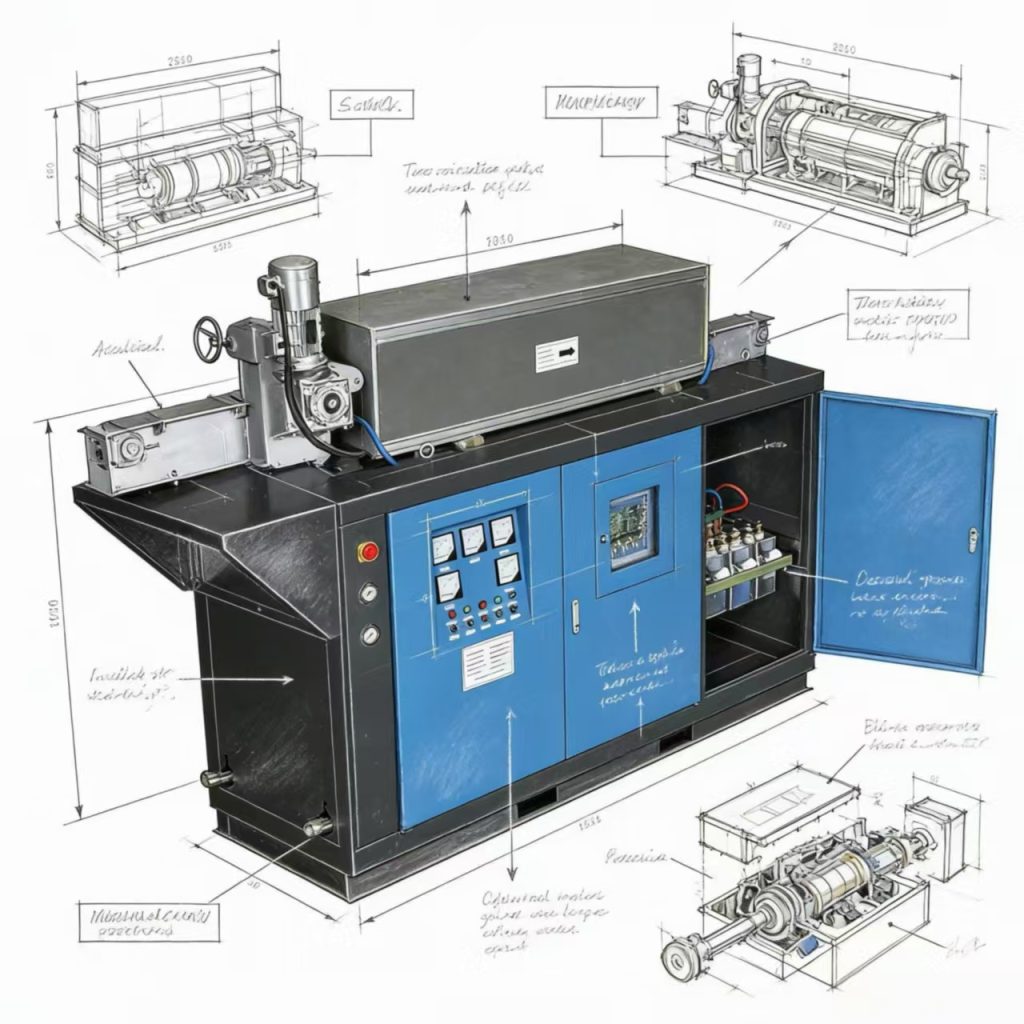
Induction furnaces have become the industry standard for aluminum melting. By generating an alternating magnetic field through induction coils, they induce internal heating to melt raw aluminum. Compared to gas furnaces and resistance furnaces, they offer three core advantages: melting speed increases by over 30%, energy utilization reaches 70%-80% (far exceeding the 40%-50% of traditional methods), and molten aluminum temperature deviation can be controlled within ±5°C.
In practical application, a renowned recycled aluminum enterprise achieved a 40% increase in melting efficiency and a 35% reduction in energy consumption per unit after introducing a 10-ton induction furnace, while significantly improving molten aluminum purity. In the production of aluminum components for new energy vehicles, its precise melting capability also provides stable assurance for subsequent processes.
2.2 Aluminum Alloy Production
Induction furnaces are indispensable in aluminum alloy production. Their electromagnetic stirring effect rapidly and uniformly disperses alloying elements like copper and magnesium throughout the molten aluminum, preventing performance variations. Simultaneously, their clean heating characteristics minimize molten aluminum contamination from fuel exhaust gases and component wear, ensuring alloy purity.
For instance, in aerospace high-strength aluminum alloy production, it guarantees stable material composition and mechanical properties. After adopting this equipment, an aerospace aluminum alloy manufacturer increased its product mechanical property qualification rate from 85% to 98%.
2.3 Aluminum Casting
In aluminum casting, induction furnaces primarily manage molten aluminum temperature maintenance and regulation. They prevent defects like shrinkage cavities caused by excessive heat or insufficient filling due to low temperatures. Their precise temperature control and rapid heating capabilities also reduce oxidation and gas absorption in molten aluminum, enhancing casting density.
In the production of automotive wheels and engine blocks, it significantly enhances casting quality stability. After adoption by an automotive parts manufacturer, casting scrap rates dropped from 12% to 3%, with markedly improved production efficiency.
2.4 Heat Treatment of Aluminum Components
Induction heating furnaces serve as ideal equipment for heat treatment (quenching, annealing, tempering, etc.) of aluminum components. Heating speeds exceed those of traditional box furnaces by over tenfold, minimizing oxidation and decarburization. During annealing, uniform heating releases internal stresses, enhancing part plasticity and toughness.
In the production of precision aluminum components for mobile phones and laptops, induction heating ensures dimensional accuracy and surface finish. After implementation at an electronics manufacturer, aluminum casing deformation rates dropped from 5% to 0.5%, with significantly reduced surface oxide layers.
III. Other Industries Benefiting from Induction Heating
3.1 Automotive Industry
The automotive sector represents a key application domain for induction heating technology, particularly in aluminum component processing. As automotive lightweighting advances, aluminum parts increasingly dominate vehicle structures—including pistons, crankshafts, gears, and chassis components. Induction heating plays a vital role in forging and heat treatment processes for these aluminum automotive parts. During piston forging, induction heating furnaces rapidly heat aluminum billets to forging temperatures, ensuring optimal plasticity and thereby enhancing the precision and mechanical properties of forged components. In the heat treatment of crankshafts and gears, induction heating's precise temperature control guarantees uniform hardness across components, improving wear resistance and extending service life.
Additionally, induction heating technology is employed for preheating and post-heat treatment in welding automotive aluminum components, effectively reducing welding stresses and preventing weld cracks. For instance, a major automaker achieved a 20% increase in strength and a 30% extension in service life for aluminum chassis components after heat treatment using induction furnaces. This process also reduced component weight, contributing to the vehicle's energy efficiency and emissions reduction.
3.2 Aerospace Industry
The aerospace sector imposes extremely stringent requirements on material performance. Aluminum and aluminum alloys, valued for their lightweight yet high-strength properties, find extensive application in aircraft manufacturing—particularly in critical components like fuselages, wings, and engine blades. Induction heating technology, renowned for its high precision and stability, has become a core processing method for aerospace aluminum components. During aircraft engine blade production, induction heating furnaces enable precise heat treatment of aluminum alloy blades, ensuring excellent high-temperature strength and corrosion resistance. In the welding of aluminum structural components for aircraft fuselages, induction-heated preheating effectively reduces welding stresses, enhances joint strength and toughness, and guarantees structural integrity.
Given the extremely high precision requirements for aerospace components, the uniform heating capability and precise temperature control of induction furnaces effectively prevent deformation and performance fluctuations during processing. After an aerospace manufacturer employed induction furnaces for heat treatment of aluminum structural components in aircraft wings, dimensional accuracy errors were controlled within ±0.01mm, meeting the stringent demands for high-precision components in the aerospace sector.
3.3 General Metal Processing Industry
Beyond aluminum processing, induction heating technology is widely applied in the processing of other metals such as steel, copper, and zinc. In the steel industry, induction furnaces are used for forging, heat treatment, welding, and other processes, enhancing steel processing efficiency and product quality. For instance, during the heat treatment of reinforcing bars, induction heating rapidly heats the bars to quenching temperatures followed by water cooling, significantly enhancing their strength and hardness. In copper processing, induction furnaces are employed for melting copper ingots and preheating rolling, effectively reducing oxidation losses and improving surface quality and machining precision.
In zinc alloy production, the uniform heating capability of induction furnaces ensures even distribution of alloying elements, thereby improving the alloy's overall performance. Furthermore, induction heating technology is applied in surface hardening and annealing processes for metals. Heating parameters can be flexibly adjusted according to the characteristics and processing requirements of different metallic materials, enabling customized processing solutions.
IV. Advantages of Induction Heating Furnaces in Aluminum Applications
4.1 High Energy Efficiency
Compared to traditional gas-fired or resistance heating furnaces, induction heating furnaces exhibit exceptionally high energy utilization efficiency. In conventional heating methods, heat must be transferred to the heated object via combustion media or heating elements, resulting in significant thermal losses during transmission. Energy utilization typically ranges only between 40% and 50%. Induction furnaces, however, utilize electromagnetic induction to generate heat directly within the object itself. This eliminates transmission losses, achieving energy utilization rates of 70% to 80%.
Taking aluminum melting as an example, melting one ton of aluminum using an induction furnace consumes approximately 500-600 kWh of energy. In contrast, gas-fired furnaces consume about 800-1000 kWh, and resistance furnaces consume roughly 700-800 kWh. This demonstrates that induction furnaces effectively reduce corporate energy consumption and lower energy costs. Simultaneously, high energy efficiency translates to less energy waste, aligning with national energy conservation and emission reduction policies and supporting enterprises in achieving green production.
4.2 Rapid Heating Speed and High Precision
Induction furnaces achieve heating speeds far exceeding traditional equipment due to their unique heat generation mechanism. During induction heating, an alternating magnetic field directly interacts with the metal interior, rapidly inducing eddy currents and raising temperatures without requiring intermediate heat transfer steps. For aluminum processing, this rapid heating significantly reduces oxidation and gas absorption during heating, preventing deterioration in molten aluminum quality. For instance, heating an aluminum billet to forging temperature takes only minutes with an induction furnace, whereas conventional furnaces require tens of minutes or longer.
Simultaneously, induction furnaces feature advanced temperature control and frequency regulation systems, enabling precise heating temperature management. By continuously monitoring the heated object's temperature and automatically adjusting output power and frequency according to preset heating curves, temperature deviations can be maintained within ±5°C. This precise temperature control capability is critical for processes such as aluminum melting, alloy production, and heat treatment. It ensures stable and consistent product quality while reducing scrap rates caused by temperature fluctuations.
4.3 Minimal Environmental Impact
Induction furnaces operate without fuel combustion, eliminating harmful emissions like carbon monoxide, carbon dioxide, sulfur dioxide, and dust. They also produce no noise pollution, making them highly environmentally friendly. In contrast, traditional gas-fired furnaces generate significant exhaust gases and dust during combustion, polluting the environment and posing health risks to operators. The clean heating characteristics of induction furnaces effectively improve workshop conditions and reduce corporate environmental compliance costs.
Additionally, induction furnaces exhibit high thermal efficiency, minimizing waste heat emissions and preventing undue workshop temperature fluctuations. Their closed-loop cooling systems conserve water resources, further reducing environmental impact. Against the backdrop of increasingly stringent environmental regulations, these advantages make induction furnaces an ideal choice for aluminum processors pursuing green manufacturing.
V. Operation and Maintenance of Induction Furnaces
5.1 Working Principle and Operation of Induction Heating Furnaces
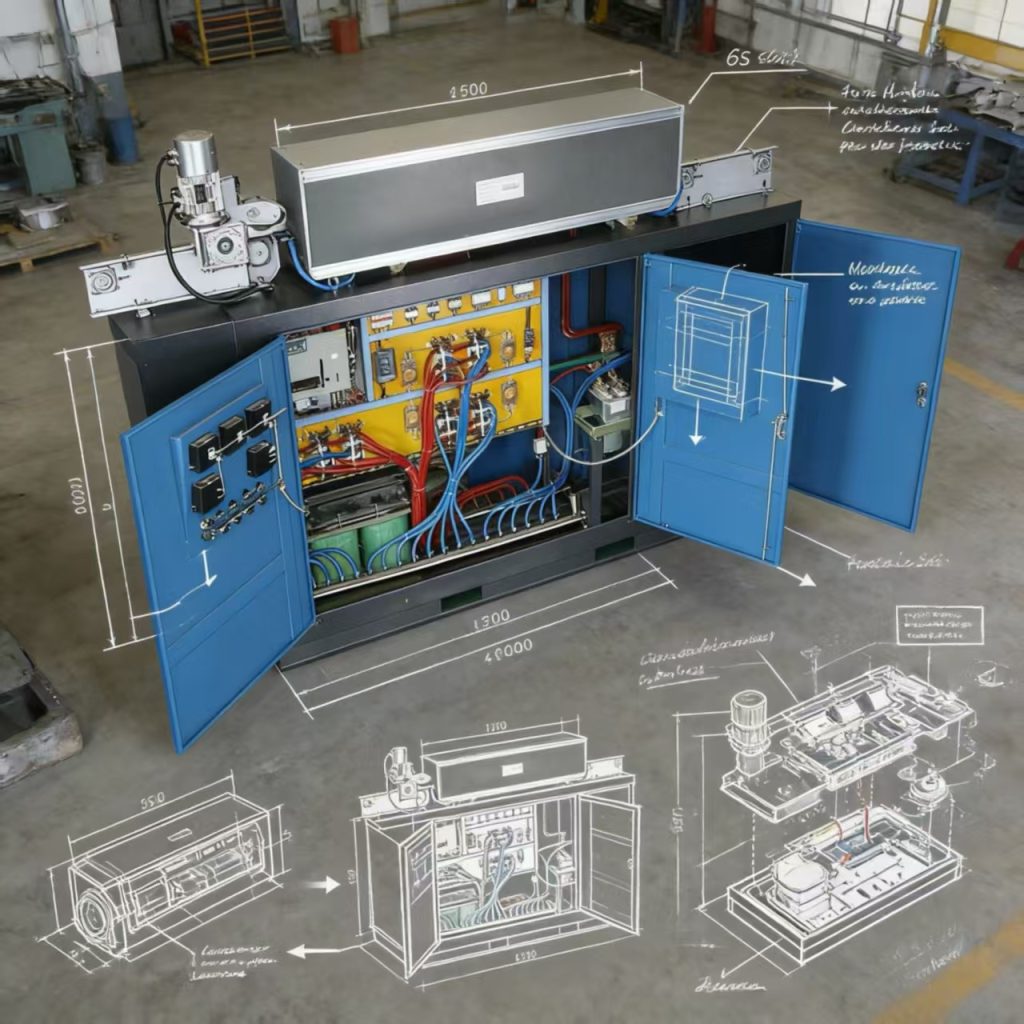
The core components of induction heating furnaces include six major modules such as induction coils and power supply systems. Their principle involves converting power frequency alternating current into high-frequency alternating current via power supplies and frequency generators, thereby generating alternating magnetic fields. Aluminum raw materials or components placed within these fields generate heat through eddy current and hysteresis losses.
Operation involves the operator setting key parameters via the PLC or touchscreen control system to start the equipment. The system incorporates multiple built-in protection functions to ensure operational safety. During operation, only periodic checks of the core components' operational status are required, eliminating the need for complex manual adjustments.
5.2 Key Points for Daily Maintenance
Daily maintenance is crucial for extending equipment lifespan and ensuring operational efficiency. Core maintenance points include:
- Induction Coils: Inspect insulation integrity and connection stability. Remove surface debris. Repair or replace damaged coils promptly.
- Power Supply System: Check electrical components and wiring connections within cabinets. Conduct regular insulation testing.
- Cooling System: Focus on water level, pump operation, and pipeline flow. Replace cooling water periodically. Shut down immediately for repairs during malfunctions.
- Furnace body: Inspect the integrity of the inner lining and the sealing of the furnace door. Clean internal residues and repair any damage to the lining promptly.
Proactive maintenance can extend equipment lifespan by 30%-50% and reduce failure rates. Enterprises should establish a comprehensive maintenance system, develop regular maintenance schedules, and assign qualified personnel to execute them.
VI. Innovations and Future Trends of Induction Heating in the Aluminum Industry
6.1 Technological Innovation Progress
Recent years have witnessed significant innovations in induction heating technology:
- Power supply: IGBT high-frequency power supplies enhance conversion efficiency and stability while reducing equipment size.
- Control systems: Achieve fully automated monitoring of heating processes; high-end equipment integrates AI technology to optimize process parameters.
- Energy efficiency: Reduce heat loss through high-efficiency coils and insulation materials; some equipment incorporates waste heat recovery systems.
6.2 Future Development Trends
Future induction heating technology in the aluminum industry will follow three major trends: intelligence, automation, and environmental sustainability. Intelligence involves integration with smart factory systems for remote monitoring and AI-driven process optimization. Automation focuses on establishing fully automated production lines and adopting flexible manufacturing technologies to accommodate diverse requirements. Environmental sustainability emphasizes enhancing energy efficiency, utilizing eco-friendly materials, and prioritizing recycled aluminum processing to advance the circular economy.
VII. Conclusion
7.1 Summary of Advantages
As a highly efficient, precise, and environmentally friendly heating solution, induction furnaces offer significant advantages in aluminum applications. They substantially boost production efficiency in aluminum melting, alloy production, casting, and component heat treatment while ensuring stable and consistent product quality. Simultaneously, the high energy utilization efficiency of induction furnaces effectively reduces corporate energy consumption and production costs. Their clean heating characteristics minimize environmental pollution, aligning with national policies on energy conservation, emission reduction, and green development. Furthermore, induction furnaces feature simple operation, low maintenance costs, and extended service life, delivering substantial economic and social benefits to aluminum processing enterprises.
7.2 Concluding Remarks
With the continuous development of the aluminum industry and increasingly diverse market demands, the application prospects of induction heating technology in aluminum processing will become even broader. For aluminum processing enterprises, adopting induction heating furnaces for production is not only a crucial means to enhance core competitiveness but also an inevitable choice for achieving sustainable development. In the future, as induction heating technology continues to innovate and upgrade, its application in the aluminum industry will become more in-depth and widespread, providing robust technical support for the high-quality development of the aluminum sector.
7.3 Call to Action
If your enterprise is seeking solutions to enhance aluminum processing efficiency, improve product quality, reduce production costs, and achieve green manufacturing, consider adopting induction heating furnace technology. Our team of technical experts, backed by extensive industry experience, can provide customized induction heating furnace solutions tailored to your specific production requirements. This includes comprehensive support covering equipment selection, process design, installation and commissioning, as well as after-sales service. Feel free to contact us anytime to learn more about induction heating furnaces or schedule a professional technical consultation. Let us work together to empower your enterprise's high-quality development.