
I. Introduction
1.1 Definition, Importance and Core Objectives
Metal heat treatment equipment modifies metal internal structures and optimizes properties via controlled thermal cycles. As a complex regulatory system, it is crucial in metal processing, with its technical level determining product quality and application scope, and serving as an indicator of manufacturing strength. Its core goal is to directionally optimize metal properties in four aspects, which is a prerequisite for metal products to meet industrial needs.
II. Types of Metal Heat Treatment Equipment
2.1 Heating Furnaces: Core Heating Units for Heat Treatment
Heating furnaces are core heating and holding equipment. By production method, they are batch furnaces (suitable for small-batch, multi-variety production with flexibility but limited efficiency) and continuous furnaces (ideal for large-scale production with high efficiency and precise temperature control).
By heating environment, they include vacuum furnaces (anti-oxidation/decarburization, for high-end materials and aerospace), atmosphere furnaces (enabling carburizing and anti-oxidation), and salt bath furnaces (fast heating but high energy consumption and environmental pressure, with declining applications).
2.2 Induction Heating Equipment: Efficient and Precise Heating Solutions
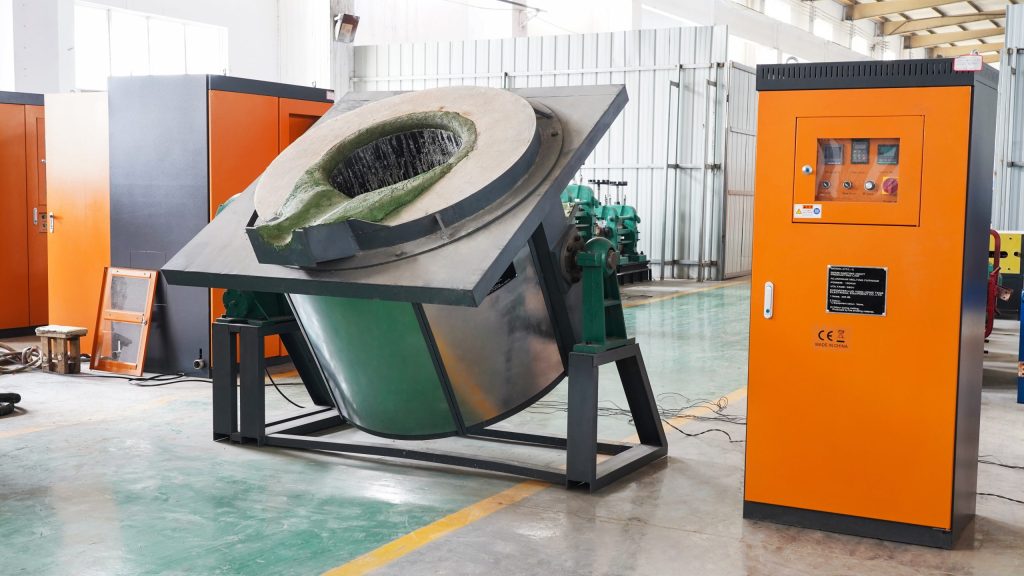
Induction heating equipment achieves rapid heating via electromagnetic induction, mainly used for induction hardening (realizing "hard exterior and tough core") and annealing (reducing hardness and eliminating stress), applicable to auto parts and metal wires.
It features high energy efficiency, precise heating, local heating capability and easy automation, being a key development direction in modern heat treatment.
2.3 Quenching Systems: Key Cooling Units for Performance Regulation
Quenching systems control cooling rates, classified by medium into oil quenching tanks (widely used with moderate cooling), water quenching tanks (fast cooling but high deformation risk), and polymer quenching tanks (controllable cooling for high-precision workpieces).
Modern quenching systems realize automated precise control, with high-end ones adopting advanced technologies to meet high-end material needs.
2.4 Tempering Equipment: Stress Relief Units for Performance Optimization
Tempering equipment eliminates quenching internal stress and optimizes workpiece performance. It has automated systems (for large-batch production with high efficiency) and manual systems (for small-batch customization with flexibility).
Similar in structure to heating furnaces, it requires higher temperature control accuracy, with high-end equipment equipped with atmosphere protection systems.
III. Core Features and Key Technologies
3.1 Temperature Control and Uniformity
Temperature control accuracy and in-furnace uniformity are core performance indicators. Modern equipment achieves precise closed-loop control and improved uniformity via sensors, PLCs, and optimized structures; special equipment further optimizes performance through pressure and atmosphere regulation.
3.2 Automation and Programmable Systems
Automation and programmable control boost efficiency, reduce errors and ensure process stability. High-end equipment has full-process automation and parameter storage/editing functions, with some equipped with human-machine interfaces for easy operation.
3.3 Energy Efficiency and Sustainability
Driven by energy conservation policies, energy efficiency and sustainability are core R&D directions. Equipment reduces energy consumption via energy-saving technologies and improves environmental friendliness to meet green manufacturing needs.
3.4 Safety Features and Industry Standard Compliance
Safety is crucial for heat treatment equipment involving high risks. Modern equipment has complete safety protection systems and complies with relevant industry standards to ensure personnel and equipment safety.
3.5 Production Line Integration and Industry 4.0 Solutions
Under Industry 4.0, heat treatment equipment integrates deeply with production lines, realizing data interconnection and full-process traceability. High-end equipment has intelligent diagnosis and AI-based parameter optimization functions.
IV. Application Fields of Metal Heat Treatment Equipment
4.1 Automotive Industry: Performance Guarantee for Core Components
The automotive industry is the largest application field, with core components relying on heat treatment. New energy vehicles further drive demand for high-end equipment.
4.2 Aerospace Industry: Precision Processing of High-End Materials
The aerospace industry requires high-precision processing for high-end materials, relying on advanced heat treatment equipment to meet extreme environment needs.
4.3 Tool and Die Manufacturing: Improvement of Service Life and Precision
Tool and die manufacturing relies on heat treatment for service life and precision, with higher requirements for equipment performance as the industry develops.
4.4 Construction and Heavy Industry: Structural Safety and Durability Guarantee
Construction and heavy industry use heat treatment to enhance metal structural strength and durability, ensuring safety and reliability of key components.
V. Advantages of Using Advanced Heat Treatment Equipment
5.1 Enhancing Metal Material Performance and Expanding Application Scenarios
Advanced heat treatment equipment optimizes metal internal structures and comprehensive properties, with higher performance consistency than traditional equipment, expanding application scenarios and supporting high-end equipment manufacturing.
5.2 Improving Production Efficiency and Ensuring Process Stability
Advanced equipment features automated continuous production, greatly improving efficiency and process stability, with fault diagnosis functions reducing downtime.
5.3 Reducing Energy Consumption and Operational Costs
Adopting energy-saving technologies, advanced equipment has high energy efficiency, reducing energy and operational costs for enterprises.
5.4 Extending Equipment Service Life and Reducing Maintenance Difficulty
With high-quality components and optimized design, advanced equipment has longer service life, and its fault diagnosis and remote monitoring functions reduce maintenance difficulty and costs.
VI. Key Considerations for Equipment Selection
6.1 Material Type and Production Volume
Material type and production volume are core for equipment selection. Different materials and production scales require matching equipment types, with workpiece size and shape also needing consideration.
6.2 Required Heat Treatment Process
Equipment selection depends on required heat treatment processes, with process parameter requirements also needing to be met.
6.3 Energy Efficiency and Operational Costs
Energy efficiency and operational costs are important economic considerations, requiring comprehensive evaluation of equipment purchase, operation and maintenance costs.
6.4 Automation and Control System Requirements
Automation level should match enterprise production and management needs, with control system compatibility and scalability considered for subsequent upgrading.
6.5 Safety and Environmental Compliance
Safety and environmental compliance are basic requirements, requiring equipment to meet relevant standards and have necessary safety and environmental protection devices.
VII. Maintenance and Operation Tips
7.1 Daily Inspection and Preventive Maintenance
Daily inspection and preventive maintenance ensure stable equipment operation, including daily status checks, regular cleaning, vulnerable parts replacement and formulation of maintenance plans.
7.2 Precision Calibration and Temperature Monitoring
Regular calibration of temperature control systems and monitoring of in-furnace uniformity are crucial for heat treatment quality, with real-time temperature monitoring during production required.
7.3 Operator Safety Procedures
Operators must abide by safety procedures, including pre-operation training, wearing protective equipment, prohibiting improper operation during equipment operation, and participating in safety training and drills.
7.4 Troubleshooting Common Issues
Mastering common fault troubleshooting methods reduces downtime, including solutions for temperature control, uniformity, vacuum degree, cooling and transmission system faults.
VIII. Future Trends in Metal Heat Treatment Equipment
8.1 Intelligent Furnaces and IoT Integration
Intelligent furnaces integrated with IoT are a core future trend. Equipped with multiple sensors, they enable real-time multi-dimensional data collection and cloud interconnection for remote monitoring, operation and diagnosis. Combined with AI, they realize automatic process parameter optimization and autonomous production decision-making, advancing the industry towards intelligence and unmanned operation.
8.2 Energy-Efficient and Eco-Friendly Technologies
Driven by global energy conservation and emission reduction policies, energy-efficient and eco-friendly technologies are key R&D focuses. Energy-saving measures include optimized furnace design, efficient components, waste heat recovery and new heating methods. Environmental protection efforts cover low-pollution systems/media, clean processes and pollutant treatment/recycling devices.
8.3 Advanced Simulation and Process Optimization
Advanced simulation technology will be widely applied in equipment R&D and process optimization. It simulates heat treatment process changes to predict workpiece performance and deformation, enabling equipment structure and process parameter optimization, reducing test costs and solving deformation issues of complex workpieces.
8.4 Customized Solutions for Special Alloys
With the growing use of special alloys in high-end equipment manufacturing, demand for customized heat treatment solutions is rising. Manufacturers will develop tailored equipment for different alloys' characteristics and process requirements, improving heat treatment quality and supporting high-end equipment development.
IX. Conclusion
As core metal processing equipment, metal heat treatment equipment's technical level determines product quality and supports multiple industries. Advanced equipment brings significant benefits by enhancing metal performance, improving efficiency, reducing costs and ensuring safety.
Enterprises should consider multiple factors in equipment selection and strengthen operation and maintenance. Future development will be driven by intelligent, energy-efficient and eco-friendly technologies, and enterprises should invest in advanced equipment to enhance core competitiveness.