
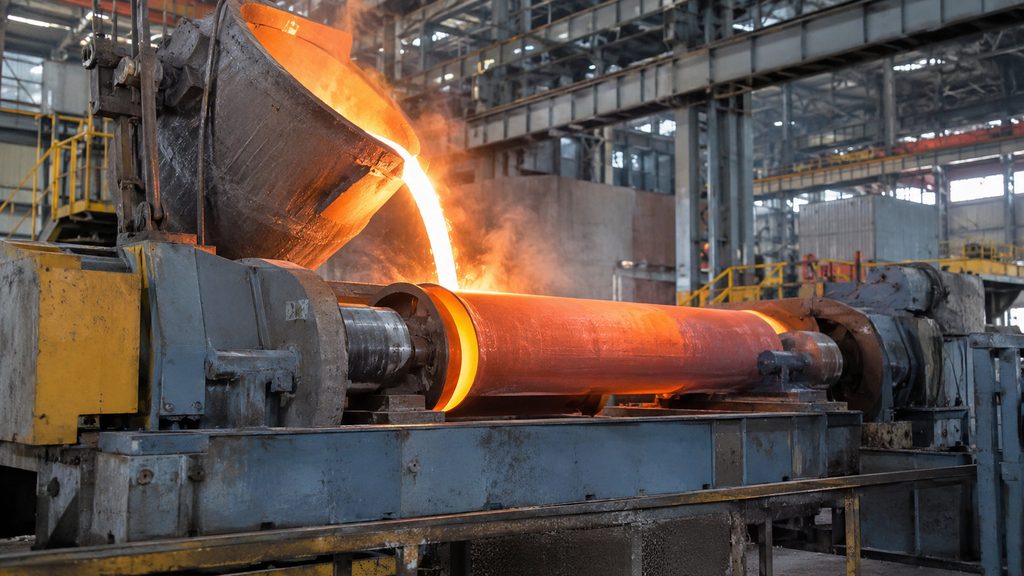
Centrifugal casting is a metal forming process widely used to produce hollow cylindrical components, including steel pipes, tubes and sleeves. By rotating a mold during pouring, the process uses centrifugal force to distribute molten metal along the mold's inner surface, forming a hollow casting as the metal solidifies.
For steel pipe manufacturers, this method offers advantages in producing cylindrical products with controlled dimensions and a relatively consistent structure. However, the final quality depends on more than mold rotation. Molten steel preparation, mold condition, pouring operations and solidification all require proper control.
This article explains the centrifugal casting process, the equipment involved, its advantages and limitations, and common production problems. It also introduces equipment considerations for manufacturers planning a steel pipe centrifugal casting line.
1. How Does the Centrifugal Casting Process Work?
In true centrifugal casting, molten metal is poured into a rotating cylindrical mold. Centrifugal force pushes the liquid metal outward against the mold wall, where it solidifies to form a hollow component.
For long cylindrical products such as steel pipes, horizontal centrifugal casting is a commonly used arrangement. The mold rotates around a horizontal axis while molten metal is introduced into it.
The typical production sequence includes the following stages:
Mold preparation: The mold is cleaned, inspected and prepared with a suitable refractory coating when required. Its dimensions and surface condition should be checked before production.
Mold rotation: The cylindrical mold is rotated under operating conditions established for the specific machine and casting requirements.
Molten metal pouring: Molten steel enters the rotating mold and spreads along its inner surface through centrifugal force.
Solidification and cooling: The metal solidifies against the mold wall. Heat transfer and cooling conditions influence the casting structure and final dimensions.
Casting removal and finishing: After sufficient cooling, the pipe casting is removed. End preparation, internal or external machining and inspection may follow according to the product specification.
The exact process arrangement depends on the steel grade, pipe dimensions, mold design and production requirements.
2. Steel Pipe Centrifugal Casting Equipment
A centrifugal casting machine must provide stable mold rotation and a suitable arrangement for introducing molten metal.
For steel pipe production, the main equipment considerations include:
| Equipment or system | Main function |
|---|---|
| Cylindrical mold | Determines the casting's outer dimensions and shape |
| Drive and support system | Rotates and supports the mold |
| Pouring arrangement | Introduces molten steel into the rotating mold |
| Mold preparation system | Supports mold protection and surface preparation |
| Cooling arrangement | Controls heat removal during solidification |
| Extraction and finishing equipment | Supports casting removal and subsequent processing |
These are general functional requirements, not a fixed equipment configuration for every production line.
The quality of the finished pipe also depends on upstream molten metal preparation. Steel composition, cleanliness and pouring temperature should be controlled according to the material specification and casting process.
For this reason, a complete project may need to consider both the casting machine and the upstream steel melting furnace.
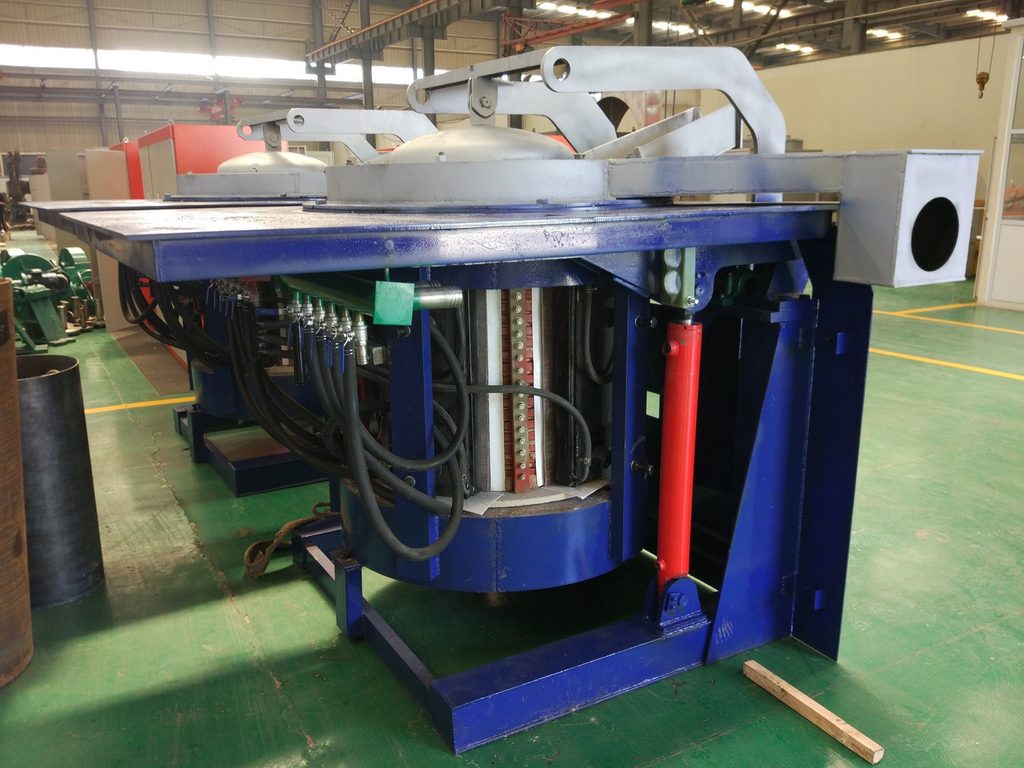
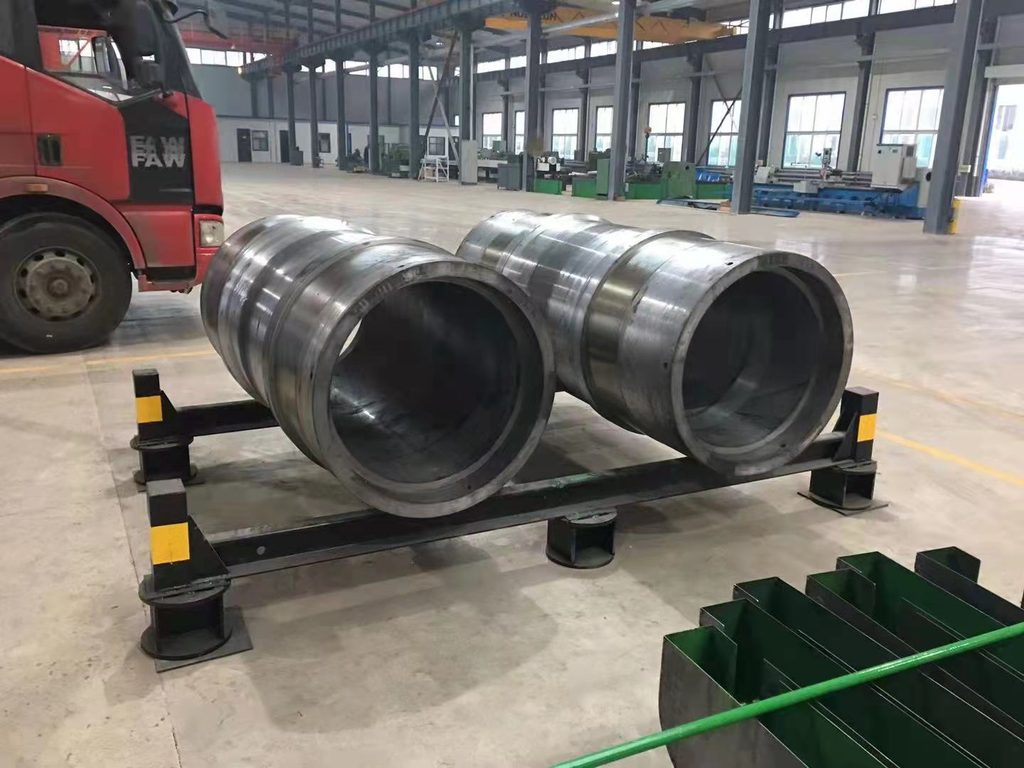
The steel pipe centrifugal casting equipment listed in the product range is intended for producing steel pipes used in wear-resistant, corrosion-resistant and high-strength applications. Actual product suitability must be confirmed according to steel grade, dimensions and service requirements.
3. Advantages and Limitations of Centrifugal Casting
Centrifugal casting offers several benefits for hollow cylindrical products, but it is not suitable for every casting application.
| Advantages | Limitations |
|---|---|
| Suitable for hollow cylindrical components | Limited to suitable product geometries |
| Can form hollow products without a conventional central core in true centrifugal casting | Product dimensions require a matching mold and machine configuration |
| Centrifugal force helps distribute metal along the mold wall | Rotational speed and pouring conditions require careful control |
| Directional solidification can support casting soundness | It does not guarantee defect-free castings |
| May reduce conventional gating and feeding requirements, depending on the process design | Inner-surface machining or additional inspection may still be necessary |
Compared with conventional static casting, centrifugal casting is particularly suitable for long pipes and other rotationally symmetrical products.
However, if the required component has a complex shape or does not have a cylindrical geometry, another casting method may be more appropriate.
The process should therefore be selected according to the finished product rather than simply the availability of a centrifugal casting machine.
4. Common Centrifugal Casting Defects and Their Causes
Although centrifugal casting can support good casting quality, production problems may still occur. Operators should investigate the actual cause rather than assume that all defects are related to rotational speed.
| Quality problem | Possible contributing factors | What to check |
|---|---|---|
| Uneven wall thickness | Inconsistent metal distribution, pouring conditions or mold alignment | Mold dimensions, alignment and pouring consistency |
| Non-metallic inclusions | Slag, oxides or contamination in molten metal | Melt cleanliness, ladle and pouring equipment |
| Inner-surface defects | Mold coating condition, local overheating or material segregation | Mold surface, coating and bore inspection |
| Shrinkage or internal porosity | Solidification conditions and molten metal quality | Material preparation and casting solidification |
| Metal sticking to the mold | Inadequate mold protection or localized overheating | Mold coating, surface condition and pouring behavior |
Wall Thickness Variation
Uniform wall thickness is an important requirement for steel pipes. Uneven metal distribution can affect the finished dimensions and may result in additional machining or rejected products.
Mold alignment, rotational stability and pouring conditions should be checked when investigating wall thickness variations.
Research on centrifugal ductile iron pipe production has also shown that pouring flow rate and mold rotational speed influence wall thickness uniformity. However, the numerical parameters from that particular ductile iron production setup should not be applied directly to steel pipe equipment.
Inclusions and Molten Metal Cleanliness
Slag and non-metallic inclusions can affect the internal quality of a casting.
During centrifugal casting, some lighter inclusions may move toward the inner region of the hollow casting, where they can potentially be removed during bore machining.
This behavior does not eliminate the need for proper steel melting, slag removal and molten metal handling. Metal cleanliness remains an important part of the production process.
Mold Surface Problems
Mold condition and coating quality also affect production stability.
An ASM failure-analysis case involving centrifugal casting of gray and ductile iron pipes identified localized mold overheating and insufficient mold-wash thickness as contributing factors in metal sticking to the mold surface.
Although that case concerned cast iron rather than steel, it demonstrates why mold inspection, coating application and thermal conditions should be reviewed when similar problems occur.
5. How to Select a Centrifugal Casting Machine for Steel Pipes
Selecting a suitable centrifugal casting machine starts with the required finished pipe specifications.
Before requesting an equipment proposal, manufacturers should prepare the following information:
| Information | Why it matters |
|---|---|
| Steel grade | Determines material and melting requirements |
| Outside and inside diameter | Establishes required mold dimensions |
| Pipe length | Influences machine and mold arrangement |
| Wall thickness | Affects metal quantity and casting requirements |
| Production quantity | Helps determine the production arrangement |
| Product application | Identifies relevant material and quality requirements |
| Inspection standards | Defines dimensional and quality acceptance criteria |
| Workshop conditions | Helps evaluate installation and supporting systems |
Buyers should also confirm the mold arrangement, rotational speed control, pouring system, cooling method, extraction arrangement and finishing requirements with the equipment supplier.
A quotation based only on a general product name is insufficient for establishing whether a machine can meet the intended production requirements.
The steel casting equipment range provides an overview of related melting and casting equipment. The overall foundry project services also describe technical support for steel pipe centrifugal casting production lines, including melting equipment, molds, modeling, training and cleaning.
The final equipment scope and technical configuration should be confirmed according to the actual project.
Conclusion
Centrifugal casting is suitable for manufacturing hollow cylindrical products such as steel pipes and tubes. The process uses mold rotation to distribute molten steel along the mold surface and form a hollow casting during solidification.
Its advantages include suitability for tubular products, controlled metal distribution and the potential for sound casting structures. However, mold preparation, rotational conditions, molten metal cleanliness and cooling still require careful control.
For manufacturers planning a steel pipe centrifugal casting project, equipment selection should be based on pipe dimensions, steel grade, production requirements and finishing standards rather than equipment capacity alone.
For project inquiries, contact the equipment supplier with the required pipe specifications and production information to discuss a suitable casting machine and production-line configuration.