
I. Introduction
Within the aluminum processing industry chain, aluminum billet casting serves as the critical link between molten aluminum preparation and downstream processes such as extrusion, rolling, and forging. The technical level of the casting process directly determines the billet’s internal crystallization quality, dimensional accuracy, surface finish, and subsequent formability.
The Hot Top Aluminum Billet Deep Well Continuous Casting Machine, as a new-generation intelligent casting system integrating hot top precision temperature control with deep well continuous casting technology, has become the preferred solution for industries with stringent billet quality requirements, including aerospace, automotive manufacturing, and high-end architectural applications. Through innovative process and structural design, this equipment effectively overcomes the limitations of traditional casting technologies in terms of production capacity, quality stability, and energy consumption. It enables continuous, stable production of multi-alloy, large-volume, high-quality aluminum billets, providing strong equipment support for aluminum processors seeking cost reduction, efficiency improvement, product upgrading, and industrial transformation.
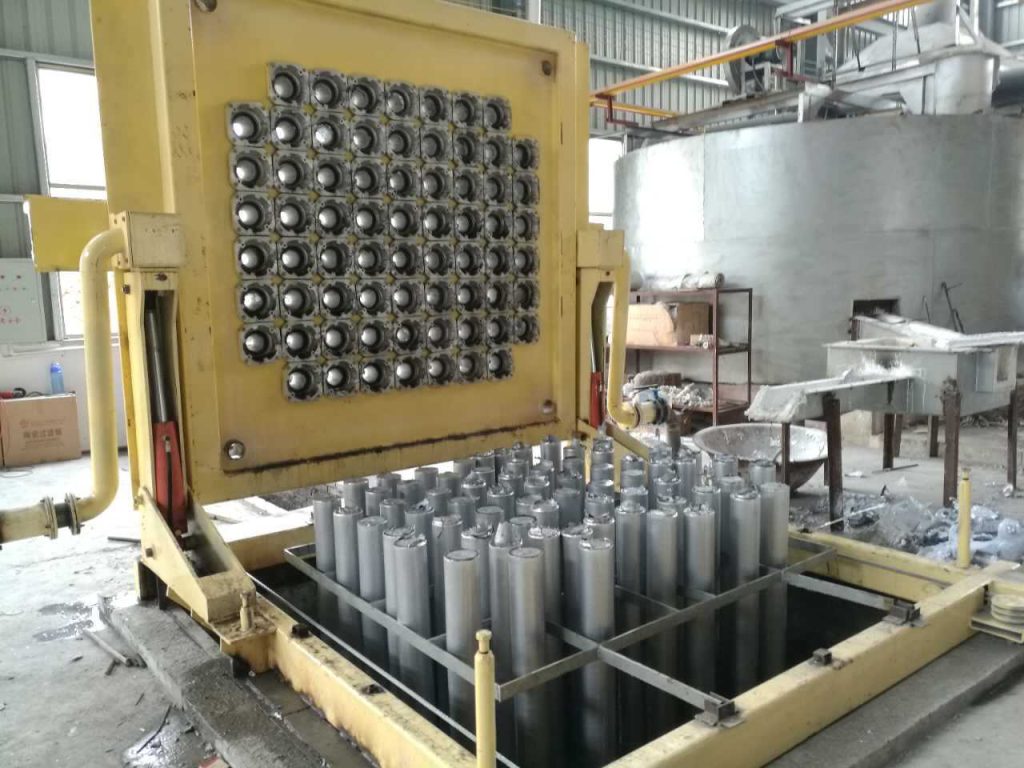
II. Core Principles of Hot Top Aluminum Billet Deep Well Continuous Casting Technology
The hot top aluminum billet deep well continuous casting process is built on the core concept of “precise temperature control combined with continuous forming.” By integrating the thermal insulation and anti-oxidation advantages of hot top technology with the gradient cooling characteristics of deep well casting, the process optimizes billet solidification behavior and crystallization structure.
A hot top component with excellent thermal insulation performance is installed at the top of the mold to slow the initial cooling rate of the molten aluminum in the upper region. This design maintains a stable molten metal head and fundamentally prevents common casting defects such as cold shuts, shrinkage cavities, and porosity caused by premature solidification. Meanwhile, the lower part of the mold is equipped with a high-efficiency counter-flow water cooling system. Through controlled circulation and gradient cooling, a uniform solidification shell is formed on the billet surface, creating a well-defined solidification front and significantly reducing peripheral segregation and reverse segregation depth. This ensures consistency between the internal and external properties of the aluminum billet.
The deep well structural design further enhances overall process stability and production safety. The fully enclosed casting environment minimizes contact between high-temperature molten aluminum and air, substantially reducing oxidation loss and oxide dross formation, thereby improving raw material utilization. At the same time, the system does not require complex deep foundation construction; only basic site preparation is needed for rapid commissioning, significantly shortening project implementation and capacity ramp-up time.
Throughout the entire casting process, fully automated control is realized. Molten aluminum is held at a constant temperature in the holding furnace before being steadily fed into the hot top mold. Under the coordinated action of intelligent temperature control and efficient cooling systems, continuous billet formation is achieved. The billet is then uniformly withdrawn by a variable-frequency traction system, enabling an integrated, uninterrupted production process from molten aluminum to finished aluminum billets.
III. Core Features and Advantages
3.1 Wide Product Adaptability to Meet Diverse Production Requirements
The hot top aluminum billet casting process offers excellent alloy compatibility and is a highly adaptable, precise casting method. It is widely suitable for pure aluminum and aluminum alloys such as the 1xxx and 6xxx series, enabling stable production of billets with various alloy compositions and diameters (commonly φ90–φ300 mm).
Whether for 6063 aluminum alloy used in architectural profiles and curtain wall systems, 6061 aluminum alloy for industrial structural parts and automotive components, or high-purity and high-performance alloy materials with stringent mechanical property requirements, the equipment can meet diversified production needs through precise composition control and process parameter adjustment. Billet diameters and lengths can be flexibly customized according to customer orders, perfectly matching downstream extrusion, forging, and machining processes. This flexibility provides a solid technical and equipment foundation for enterprises to expand product categories and access diversified markets.
3.2 Outstanding Production Efficiency for Rapid Delivery
High-efficiency continuous production is one of the core competitive advantages of the hot top aluminum billet deep well continuous casting machine. The equipment adopts a fully continuous casting mode, enabling uninterrupted batch production of aluminum billets. Compared with traditional intermittent casting processes, daily output per production line can be increased by more than 30%, significantly shortening production cycles and improving space utilization efficiency.
The system is equipped with a high-precision automated control platform covering molten aluminum feeding, casting, cooling, billet withdrawal, and cutting. Minimal manual intervention reduces quality fluctuations caused by human factors while further enhancing production continuity and stability. This efficient production mode allows manufacturers to meet short lead-time and large-volume delivery requirements, improving order responsiveness and overall market competitiveness.
3.3 Superior Product Quality with Both Precision and Performance
The equipment is equipped with high-precision fixed rod structures that continuously calibrate billet movement paths, ensuring uniform force distribution and stable operation at both ends during casting. This effectively prevents billet deviation, vibration, and uneven end surfaces.
As a result, the finished aluminum billets exhibit excellent surface finish (surface roughness up to Ra ≤ 1.6 μm), high dimensional accuracy (diameter tolerance controlled within ±0.5 mm), and uniform internal density. In most cases, no additional surface treatment is required before downstream processing.
The thermal insulation effect of the hot top structure and the uniform cooling characteristics of the deep well system jointly optimize the internal crystallization structure, refine grain size, and reduce internal defects such as porosity, inclusions, and segregation. Billets produced using this process demonstrate superior mechanical properties and processing stability, significantly reducing cracking, deformation, and delamination during subsequent operations and improving downstream yield and efficiency.
3.4 Outstanding Energy Efficiency and Environmental Performance
Compared with traditional open casting processes, the hot top aluminum billet deep well continuous casting process offers significant advantages in energy saving and resource utilization. The fully enclosed casting environment greatly reduces oxidation loss of high-temperature molten aluminum, increasing material utilization to over 98%.
The equipment is equipped with an intelligent energy-saving control system that dynamically adjusts power consumption based on molten aluminum temperature and casting speed. Power consumption per ton of aluminum can be controlled at a relatively low level (approximately 340 kWh/ton), achieving energy savings of 15–20% compared with conventional equipment.
In addition, the process generates no large quantities of harmful gases, wastewater, or solid waste. Only a small amount of recyclable oxide dross is produced, making it easy to meet environmental regulations and green manufacturing standards. This helps enterprises reduce energy and raw material costs while minimizing environmental compliance risks.
3.5 Excellent Plasticity to Support Complex Processing Requirements
Leveraging the inherent plasticity of aluminum alloys and the optimized microstructure achieved through hot top continuous casting, the produced billets exhibit excellent formability and processing performance. They are well suited for extrusion, bending, stretching, forging, and other complex forming processes, enabling the production of various complex-shaped components.
These billets are widely used in automotive manufacturing, aerospace, home appliances, electronics, and rail transportation industries, where high precision and structural complexity are required. Superior plasticity also ensures dimensional stability and shape consistency during processing, reducing deformation and rework rates and providing reliable raw material support for mass production of high-end aluminum alloy components.
3.6 Simple Structure and Easy Maintenance to Reduce Operating Costs
The hot top aluminum billet deep well continuous casting machine features a compact and rational structural design. Core components are manufactured from high-quality, heat-resistant, wear-resistant, and corrosion-resistant alloys and graphite materials, ensuring long service life and convenient maintenance.
Routine maintenance mainly involves simple operations such as cleaning oxide residues in the furnace, replacing consumable graphite components, and checking cooling system sealing. These tasks do not require complex procedures or specialized maintenance teams; trained operators can perform them independently.
Compared with traditional casting equipment that requires complex maintenance and high upkeep costs, this system significantly reduces maintenance frequency and overall maintenance expenses by more than 30%, minimizing unplanned downtime and improving overall equipment utilization.
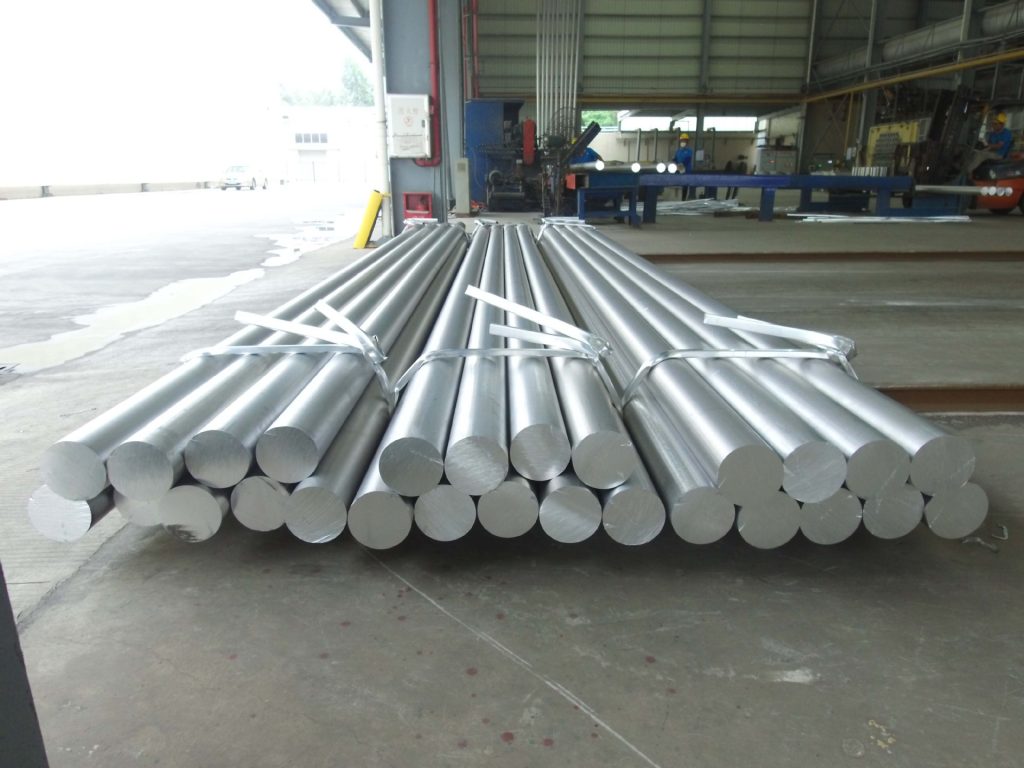
IV. Application Fields and Market Value
High-quality aluminum billets produced by hot top aluminum billet deep well continuous casting machines are widely used across automotive manufacturing, aerospace, high-end construction materials, electronics, and rail transportation industries.
In the automotive sector, billets are used to manufacture engine blocks, body frames, wheels, and chassis components. In construction, they serve as premium raw materials for aluminum profiles, curtain wall systems, and decorative structures. In aerospace, they meet the requirements for high-precision, high-performance structural components. In electronics, they are used for heat sinks and housing components.
For aluminum processing enterprises, this equipment not only enhances core competitiveness through improved efficiency and product quality but also reduces overall production costs and environmental compliance risks through its outstanding energy-saving and environmental performance. Its flexible product adaptability enables rapid response to market changes, easy switching between different alloys and specifications, and expansion into high-end markets with greater profit potential.
V. Conclusion
With its comprehensive advantages—wide product adaptability, high production efficiency, superior quality and precision, excellent energy-saving performance, and low maintenance cost—the Hot Top Aluminum Billet Deep Well Continuous Casting Machine provides an efficient, stable, and sustainable solution for aluminum billet casting.
By integrating innovative process design with intelligent control systems, the equipment overcomes the limitations of traditional casting technologies in capacity, quality, and energy consumption, while precisely aligning with the development trends of the modern aluminum processing industry. Whether for medium-sized enterprises pursuing scaled production or large manufacturers focusing on high-end product upgrading, this equipment delivers reliable performance and strong economic value.
Looking ahead, as industry requirements for quality and efficiency continue to rise, hot top aluminum billet deep well continuous casting technology will further evolve, incorporating more intelligent and digital features to drive high-quality, sustainable development across the aluminum processing industry.