
Introduction
Induction heating has become an important heating method in modern metal processing due to its fast heating speed, accurate temperature control, and ability to integrate with automated production systems. Unlike conventional heating methods that rely on external heat transfer, induction heating generates heat directly inside conductive materials through electromagnetic induction, improving heating efficiency and process control.
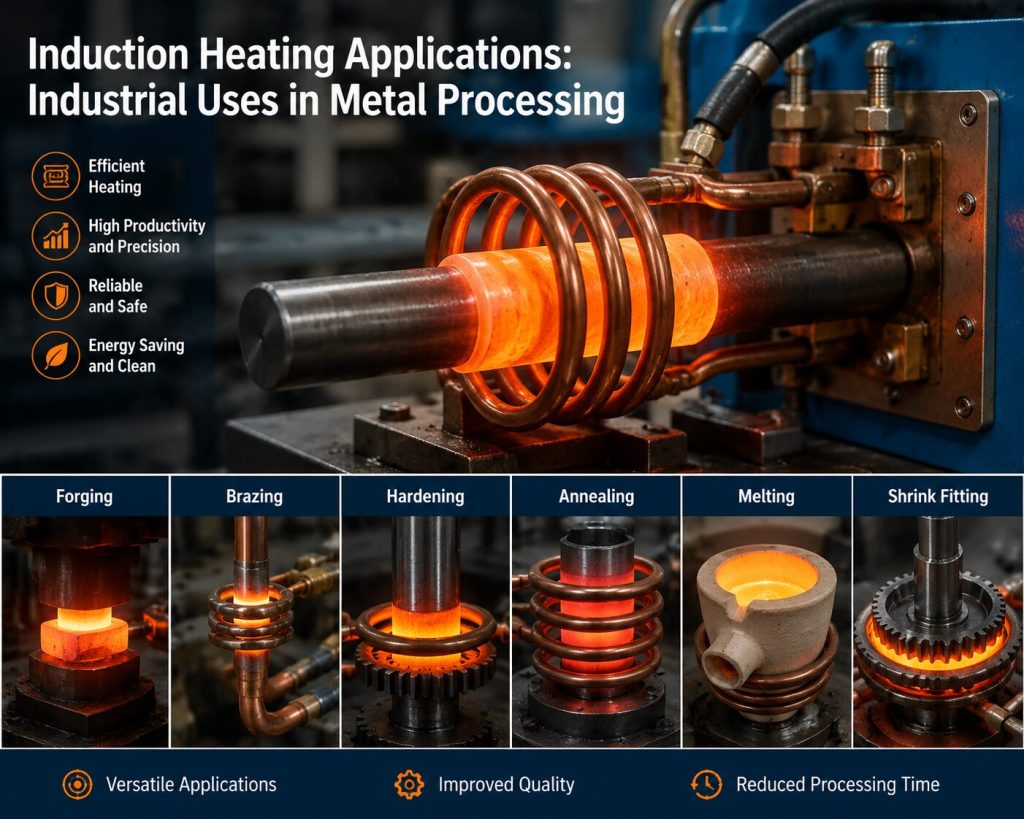
Today, induction heating applications cover various industrial processes, including billet heating, forging, heat treatment, brazing, and metal forming. For manufacturers processing steel, aluminum, copper, and other conductive metals, choosing the right induction heating system can help improve production consistency, reduce material loss, and optimize energy consumption.
Among these applications, billet heating is one of the most widely used industrial applications, especially in extrusion, forging, and rolling production lines where stable temperature control directly affects product quality.
Induction Heating for Billet Heating
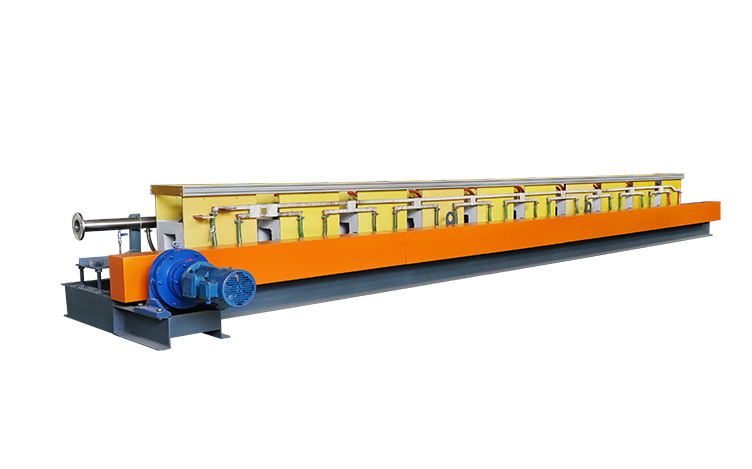
Billet heating is one of the most important applications of industrial induction heating technology. Before extrusion, forging, or rolling, metal billets must be heated to a suitable temperature range to improve plasticity and reduce deformation resistance.
Traditional gas-fired furnaces can heat billets effectively, but they often have limitations such as longer heating cycles, slower temperature response, and uneven temperature distribution between the surface and core of the material.
An induction billet heating furnace uses electromagnetic energy to generate heat inside the billet itself, allowing faster and more controlled heating. This makes it particularly suitable for continuous production environments that require stable heating performance.
Why Use Induction Heating for Billets?
| Production Requirement | How Induction Heating Helps |
|---|---|
| Fast heating speed | Heat is generated directly inside the billet, reducing heating time |
| Temperature consistency | Precise power control helps maintain uniform billet temperature |
| Reduced oxidation | Shorter heating cycles reduce exposure time at high temperatures |
| Production automation | Easily integrated with automatic feeding and production lines |
Applications of Induction Billet Heating
Induction billet heating systems are commonly used for different metal materials:
| Material | Typical Applications |
|---|---|
| Aluminum billets | Aluminum extrusion, profile production, industrial components |
| Steel billets | Forging, rolling, automotive and mechanical parts |
| Copper billets | Electrical components and copper processing |
For aluminum and other non-ferrous metals, temperature control is especially important because excessive heating can increase oxidation, material loss, and surface defects. A properly designed induction heating system allows manufacturers to maintain stable heating conditions according to alloy characteristics and production requirements.
How Induction Heating Improves Metal Processing Efficiency
The main advantage of induction heating is that energy is transferred directly into the workpiece instead of being transferred through air or furnace atmosphere.
This provides several practical benefits for industrial production.
Faster Heating and Shorter Production Cycles
In conventional heating systems, heat must first warm the furnace chamber and then transfer to the material. Induction heating eliminates this additional heat transfer step by generating heat directly inside the metal.
This is especially valuable in continuous production lines where heating speed directly affects overall production capacity.
Better Temperature Control
Temperature uniformity is critical in processes such as extrusion, forging, and heat treatment.
Uneven heating may cause:
- Inconsistent material deformation
- Reduced product quality
- Increased rejection rates
Induction heating equipment allows precise adjustment of heating power and process parameters, helping maintain stable temperature conditions.
Lower Oxidation and Material Loss
During high-temperature heating, metals can react with oxygen and form oxide scale. Longer heating times and excessive temperatures generally increase oxidation.
Because induction heating provides rapid heating, it can reduce the time that metal remains at elevated temperatures, helping minimize oxidation-related losses.
Other Industrial Applications of Induction Heating
Although billet heating is one of the major applications, induction heating technology is also widely used in other metal processing industries.
Induction Heating for Forging
Before forging, metal materials need to reach a suitable temperature to improve formability.
Induction heating is commonly used for:
- Steel bars
- Shafts
- Gears
- Fasteners
- Mechanical components
Compared with traditional heating methods, induction heating provides more precise temperature control and faster response, which helps improve forging consistency.
Induction Heating for Heat Treatment
Induction heating is widely applied in surface hardening and other heat treatment processes.
Typical applications include:
- Gear hardening
- Shaft hardening
- Wear-resistant component treatment
One of the key advantages is selective heating. Manufacturers can heat specific areas of a component while keeping the core material relatively unaffected, improving surface performance without changing the entire structure.
Induction Heating for Brazing and Welding
Induction heating is also used for joining processes that require localized and controlled heating.
Common applications include:
- Copper pipe brazing
- Heat exchanger manufacturing
- Electrical components
- Automotive parts
The precise heating area and repeatable process control make induction heating suitable for automated production environments.
How to Select the Right Induction Heating System
Selecting an induction heating system requires considering both material characteristics and production requirements.
Important factors include:
| Selection Factor | Why It Matters |
|---|---|
| Material type | Aluminum, steel, and copper have different electrical and thermal properties |
| Workpiece size | Determines required power and coil design |
| Heating temperature | Affects equipment configuration and process parameters |
| Production capacity | Determines whether batch or continuous heating is required |
| Heating depth | Influences frequency selection |
Frequency Selection
The operating frequency of an induction heating system affects heating depth and application suitability.
Generally:
- Lower frequencies are suitable for deeper heating of larger components.
- Medium frequencies are commonly used for billet heating, forging, and melting applications.
- Higher frequencies are often used for surface heating and smaller components.
The correct frequency should be selected according to material size, heating requirements, and production objectives.
Why Induction Heating Is Suitable for Modern Manufacturing
With increasing demand for higher efficiency and automation, manufacturers are looking for heating solutions that provide stable performance while reducing operating costs.
Induction heating offers advantages such as:
- Rapid heating response
- Accurate temperature control
- Reduced material oxidation
- Easy automation integration
- Cleaner working environment
For industries including aluminum extrusion, forging, metal forming, and heat treatment, induction heating systems provide a reliable alternative to traditional heating methods.
Conclusion
The applications of induction heating extend across many areas of industrial metal processing, from billet heating and forging to heat treatment and brazing.
Among these applications, induction billet heating plays an important role in modern manufacturing because it provides fast heating, stable temperature control, and compatibility with automated production lines.
For manufacturers selecting an induction heating solution, the key is choosing equipment that matches the material type, production capacity, heating requirements, and manufacturing process.
A properly designed induction heating furnace can help improve production efficiency, reduce material waste, and achieve more consistent product quality.
Contact Us for Customized Induction Heating Solutions
Choosing the right heating equipment depends on factors such as material characteristics, billet dimensions, production speed, and required temperature accuracy.
We provide customized induction heating solutions for billet heating, forging, heat treatment, and other industrial metal processing applications.