
When purchasing an induction furnace, many buyers focus first on the equipment price. However, the actual induction furnace cost is determined by much more than the furnace itself.
The final investment depends on several factors, including melting capacity, metal type, power supply configuration, furnace structure, automation requirements, and supporting systems.
A suitable induction furnace is not always the one with the lowest quotation. For foundries and metal processing companies, the more important question is whether the equipment can provide stable production, reliable operation, and a reasonable return on investment.
This article explains the key factors that influence induction furnace cost and how to evaluate different furnace solutions before making a purchase decision.
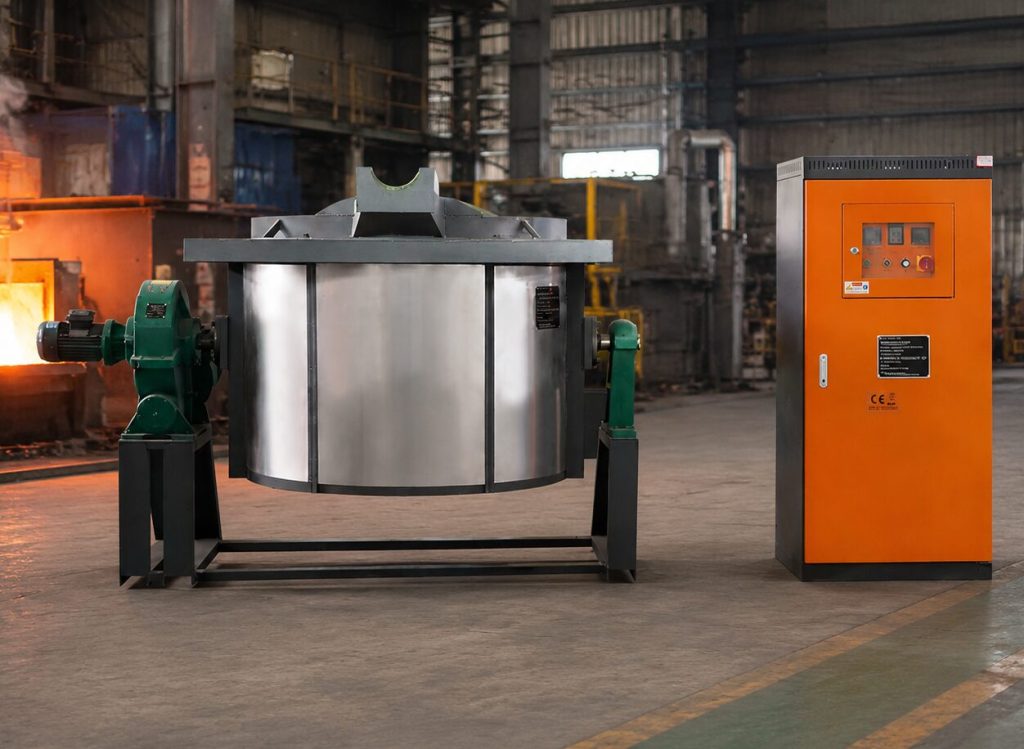
Why Does Induction Furnace Cost Vary Between Suppliers?
It is common for buyers to receive different quotations for induction furnaces with similar capacities. This does not necessarily mean that one supplier is overpriced or another is offering a better deal.
The difference usually comes from the configuration and manufacturing details behind the equipment.
For example, two furnaces with the same rated capacity may have differences in:
- Power supply system
- Furnace design
- Cooling system
- Control method
- Component quality
- Automation level
- Technical support
The furnace capacity is only one part of the investment. A complete evaluation should consider whether the equipment is suitable for the actual production environment.
Main Factors Affecting Induction Furnace Cost
1. Furnace Capacity and Production Requirements
The capacity of an induction furnace is one of the most important factors affecting the overall cost.
However, selecting a furnace is not simply about choosing the largest available capacity. The correct size depends on:
- Daily production requirements
- Melting frequency
- Batch size
- Required melting speed
- Future production plans
A furnace used for small-batch casting has completely different requirements from a furnace used for continuous industrial production.
Larger-capacity systems usually require:
- Higher power supply capacity
- Larger induction coils
- Stronger furnace structures
- More powerful cooling systems
- More advanced control systems
Therefore, when evaluating induction furnace cost, buyers should consider production requirements rather than only furnace capacity.
2. Type of Metal Being Melted
The material being melted has a direct impact on furnace configuration and cost.
Different metals require different operating conditions.
Aluminum Melting
Aluminum melting applications usually focus on:
- Stable temperature control
- Reduced oxidation loss
- Efficient charging and melting processes
- Good melt quality control
An aluminum melting furnace may have different requirements compared with equipment designed for steel or stainless steel melting.
Steel and Stainless Steel Melting
Steel and stainless steel require higher operating temperatures and more demanding working conditions.
The furnace system may require:
- Higher power capability
- More durable refractory materials
- Stronger electrical components
- Optimized cooling design
As a result, even furnaces with similar capacities can have different costs depending on the melting application.
3. Power Supply Configuration
The power supply system is another major factor influencing induction furnace cost.
The power system determines important operating characteristics such as:
- Melting performance
- Energy efficiency
- Control accuracy
- Equipment stability
Industrial induction furnaces commonly use different frequency and power configurations depending on the application.
For example, a medium frequency induction furnace is widely used in foundries because it provides a practical balance between melting performance and production flexibility.
The choice of power supply should be based on:
- Material type
- Production volume
- Melting requirements
- Factory power conditions
A properly selected power system can help avoid unnecessary investment and ensure better equipment performance.
4. Furnace Structure and Supporting Systems
An induction furnace is not only a furnace body. Several supporting systems influence the total equipment cost.
A complete system may include:
Induction Coil
The coil is one of the core components of an induction furnace. Its design affects heating efficiency and operating reliability.
Cooling System
Because induction furnaces generate significant heat during operation, a reliable cooling system is essential for protecting:
- Induction coil
- Electrical components
- Power supply system
Hydraulic Tilting System
For industrial production, hydraulic tilting systems improve:
- Pouring safety
- Operation efficiency
- Production consistency
Control System
Modern induction furnaces may include:
- Digital control panels
- Temperature monitoring
- Operation parameter adjustment
- Fault protection systems
Different levels of configuration will directly influence the final equipment cost.
5. Automation Level and Customization Requirements
Automation requirements are another important factor when calculating induction furnace cost.
A basic furnace configuration may focus on manual operation, while larger production facilities may require more advanced functions.
Examples include:
- PLC control systems
- Automatic temperature control
- Production data monitoring
- Integration with other casting equipment
Customization also affects cost.
For example, a furnace designed according to a customer's specific production process may require adjustments in:
- Furnace layout
- Electrical design
- Control functions
- Auxiliary equipment
A customized solution usually provides better production compatibility compared with a standard configuration.
What Should Be Included in an Induction Furnace Quotation?
When comparing different suppliers, buyers should carefully check what is included in the quotation.
A complete induction furnace quotation should clearly describe:
Furnace Main Unit
Including:
- Furnace body
- Coil design
- Crucible structure
- Tilting mechanism
Electrical System
Including:
- Power supply
- Control cabinet
- Electrical protection system
Cooling System
Including:
- Cooling equipment
- Water circulation components
- Safety monitoring
Technical Support
Including:
- Installation guidance
- Commissioning support
- Operator training
- After-sales service
A lower quotation may sometimes exclude important components or services, which can increase the actual investment later.
How to Compare Different Induction Furnace Suppliers?
Choosing an induction furnace supplier should not be based only on the initial quotation.
A professional evaluation should include:
Equipment Reliability
A furnace must operate continuously under industrial conditions. Component quality and manufacturing experience directly affect equipment stability.
Production Experience
A supplier with experience in different metal melting applications can provide more suitable recommendations.
Technical Support
Installation, commissioning, and after-sales support are important parts of the overall equipment value.
Long-Term Maintenance
The availability of spare parts and technical assistance can influence the long-term operating cost of the furnace.
How to Choose the Right Induction Furnace for Your Factory?
Before purchasing an induction furnace, companies should evaluate several key questions:
What metal will be melted?
Aluminum, copper, steel, and stainless steel require different furnace configurations.
What is the required production capacity?
The furnace should match current production needs while considering future expansion.
What power supply conditions are available?
The factory electrical system should be checked before selecting furnace specifications.
What level of automation is required?
Different production environments require different levels of control and operation.
Choosing the correct furnace configuration at the beginning can prevent unnecessary modifications and additional costs later.
Conclusion
The cost of an induction furnace is influenced by many factors beyond the equipment price itself. Furnace capacity, melting material, power configuration, supporting systems, and customization requirements all affect the final investment.
For foundries and metal processing companies, the best choice is not simply the cheapest furnace, but a solution that matches production requirements and provides reliable long-term operation.
By understanding the factors behind induction furnace cost, buyers can make better decisions and select equipment that delivers stable performance throughout its service life.
Need help selecting the right induction furnace for your production requirements? Contact our engineers to discuss a solution based on your material, capacity, and operating conditions.