
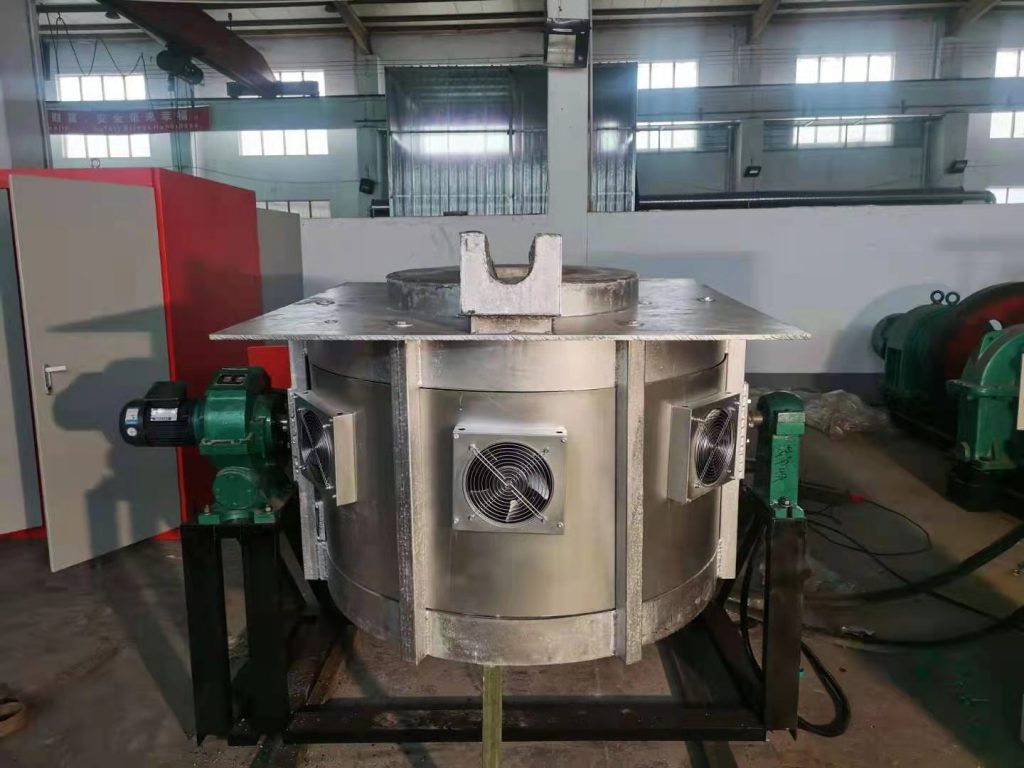
An industrial furnace is a high-temperature processing system used to heat, melt, or thermally treat materials under controlled conditions. Industrial furnaces are used across metal processing, foundries, forging, heat treatment, ceramics, glass manufacturing, and other industrial processes where precise and repeatable heating is required.
Unlike basic heating equipment, an industrial furnace must provide stable temperature control, sufficient heating capacity, and reliable operation throughout the production cycle. The appropriate furnace depends on what material is being processed, the required temperature, production capacity, heating method, and the desired heating or thermal treatment process.
Understanding these factors is important when comparing different industrial furnace types and selecting equipment for a specific production process.
What Is an Industrial Furnace?
An industrial furnace is equipment designed to generate and transfer heat to a material for a specific manufacturing process. Depending on its design, the furnace may heat a solid workpiece, melt a metal charge, maintain molten material at a target temperature, or create controlled conditions for thermal treatment.
Industrial furnaces can use different heat sources, including electricity, gas, fuel oil, or electromagnetic energy. Their structures also vary considerably. Some furnaces operate as batch systems in which materials are loaded, heated, and removed after each cycle, while others are designed for continuous production.
The operating temperature can range from relatively low temperatures used for drying and preheating to well above 1,000°C for metal melting and high-temperature processing.
Because industrial furnaces are used for such different purposes, there is no single furnace design that is suitable for every application.
How Does an Industrial Furnace Work?
Although the construction of an industrial furnace varies according to its heating method, the basic process is similar: energy is converted into heat, the heat is transferred to the material, and the furnace maintains the required temperature for a defined period.
In a gas-fired furnace, fuel combustion produces heat that is transferred to the material through radiation and convection. In an electric resistance furnace, electrical current passes through resistance elements, which become hot and transfer heat to the workpiece or furnace chamber.
An induction furnace works differently. Instead of heating the furnace chamber first, an alternating electromagnetic field induces electrical currents directly in conductive metal. The resistance of the metal to these currents generates heat within the material itself.
Temperature sensors and control systems are then used to monitor the process. Depending on the application, the furnace may also need insulation, atmosphere control, cooling systems, exhaust systems, or mechanisms for loading and unloading materials.
The heating method therefore has a direct influence on heating speed, temperature uniformity, energy consumption, and furnace design.
What Are the Main Types of Industrial Furnaces?
There are several ways to classify industrial furnace types. The most common approach is to classify them according to their heating method, although application and furnace construction are also important.
Induction Furnace
An induction furnace uses electromagnetic induction to heat conductive metals. An alternating current passes through an induction coil and generates an electromagnetic field. This field induces eddy currents inside the metal, producing heat directly in the charge.
Induction furnaces are widely used for melting steel, stainless steel, aluminum, copper, and other metals. Their ability to provide rapid heating, precise power control, and relatively clean operation makes them particularly useful in foundries and metal recycling operations.
The required frequency and power depend on the material, furnace capacity, and melting process.
Electric Resistance Furnace
A resistance furnace generates heat through electrical resistance elements. When electric current passes through these elements, they heat up and transfer energy to the furnace chamber and workpiece.
Resistance furnaces are commonly used for heat treatment, annealing, tempering, drying, and other processes that require controlled chamber temperatures.
One of their main advantages is accurate temperature control. Since the heating elements are distributed around the working chamber, resistance furnaces can provide relatively uniform heating for appropriately sized workpieces.
Gas-Fired Furnace
Gas-fired furnaces use the combustion of natural gas or another fuel to generate heat. Burners introduce heat into the furnace chamber, where it is transferred to the material through radiation and convection.
They are widely used in forging, reheating, heat treatment, and other processes involving large quantities of material.
The furnace design must account for burner arrangement, combustion efficiency, exhaust gases, insulation, and temperature distribution. Compared with electric heating methods, gas-fired systems can also introduce combustion products into the furnace atmosphere, which may be important for processes sensitive to oxidation or contamination.
Electric Arc Furnace
An electric arc furnace uses an electric arc between electrodes and the metal charge to generate extremely high temperatures. It is particularly important in steelmaking and scrap metal recycling.
The electric arc can deliver very high amounts of energy directly to the metal, allowing large quantities of scrap steel to be melted within a relatively short production cycle.
Because of their high capacity and operating conditions, electric arc furnaces require substantial electrical infrastructure and sophisticated control systems.
How Are Industrial Furnaces Classified by Application?
The heating method is only one way to classify an industrial furnace. The actual production process is often a more useful starting point when selecting equipment.
Melting Furnaces
Melting furnaces are designed to raise solid materials above their melting temperature and produce molten metal.
They are used in foundries and metal recycling facilities to process materials such as steel, cast iron, aluminum, copper, and other alloys.
The furnace capacity, melting rate, power input, refractory lining, and temperature control system all affect melting performance.
For example, an aluminum melting operation has different requirements from a steel melting process because aluminum has a much lower melting temperature and different thermal and electrical properties.
Heat Treatment Furnaces
Heat treatment furnaces are used to change the physical and mechanical properties of materials without necessarily melting them.
Processes such as annealing, normalizing, hardening, tempering, and stress relieving require carefully controlled heating and cooling cycles.
Temperature uniformity is particularly important in these applications because differences in temperature across a workpiece can result in inconsistent material properties.
Reheating Furnaces
Reheating furnaces heat metal before processes such as forging, rolling, or extrusion.
The objective is generally not to melt the material but to raise it to a temperature at which it can be plastically deformed more easily.
In steel production, for example, reheating furnaces are used to bring billets, blooms, or slabs to the appropriate temperature before rolling. Heating uniformity is important because temperature differences can affect deformation behavior and the quality of the finished product.
Drying and Baking Furnaces
Not every industrial furnace operates at the extremely high temperatures associated with metal processing.
Drying and baking furnaces are used to remove moisture, cure coatings, dry materials, or complete controlled thermal processes.
These systems are commonly found in coating, chemical, ceramics, electronics, and other manufacturing industries.
The required temperature may be relatively low, but accurate airflow and temperature distribution can still be critical to product quality.
Furnaces for Ceramics, Glass, and Other Materials
Industrial furnaces are also widely used outside the metal industry.
Ceramic manufacturing requires high-temperature firing to develop the required physical properties of ceramic products. Glass production uses furnaces capable of maintaining temperatures high enough to melt raw materials and maintain molten glass.
Other industries may use industrial furnaces for chemical processing, material sintering, thermal decomposition, or controlled-atmosphere treatment.
The furnace design must therefore be matched to both the material and the specific thermal process.
What Factors Affect Industrial Furnace Performance?
The performance of an industrial furnace cannot be evaluated by maximum temperature alone. A furnace may reach a very high temperature but still perform poorly if heating is uneven, energy consumption is excessive, or the production cycle is difficult to control.
Temperature Control
Temperature accuracy and stability are essential for most industrial heating processes.
For melting applications, the furnace must reach and maintain the required temperature without unnecessary overheating. For heat treatment, the temperature profile throughout the heating and holding stages can directly affect the final properties of the material.
Modern furnace systems commonly use temperature sensors, controllers, and programmable heating cycles to maintain more consistent process conditions.
Energy Efficiency
Energy consumption is one of the largest operating costs associated with industrial heating.
Efficiency depends on much more than the heat source. Furnace insulation, heat losses, loading methods, operating temperature, heating cycle, and equipment utilization all affect the amount of energy required for each production batch.
A furnace operating below its intended capacity may also consume more energy per unit of product because a significant portion of the energy is used to heat the furnace structure itself.
Heating or Melting Rate
Production requirements determine how quickly the material must reach the target temperature.
A higher heating rate can increase production capacity, but simply increasing power is not always enough. The heating method, workpiece geometry, material properties, and heat transfer conditions must all be considered.
In metal melting, for example, the relationship between furnace power, charge weight, melting rate, and heat losses determines the actual production capacity.
Furnace Capacity
Capacity should match the production process rather than simply being selected as large as possible.
A furnace that is too small may require frequent charging and reduce productivity. An oversized furnace may operate below its optimal load, increasing energy consumption and initial investment.
For batch melting, capacity is often considered in terms of the amount of metal charged per batch. For continuous heating systems, throughput may be expressed as tons per hour or pieces per hour.
Atmosphere Control
Some materials require more than temperature control.
Heat treatment, brazing, sintering, and certain metallurgical processes may require a controlled atmosphere to reduce oxidation or prevent unwanted chemical reactions at the material surface.
Depending on the process, the furnace atmosphere may be controlled using air, nitrogen, argon, hydrogen-containing gases, or other gases.
Atmosphere requirements should therefore be considered when comparing furnace designs.
Maintenance and Reliability
An industrial furnace operates under repeated thermal cycles, and many of its components are exposed to high temperatures, electrical loads, mechanical stress, or corrosive environments.
Refractory linings, heating elements, induction coils, burners, temperature sensors, cooling systems, and control components may all require inspection or periodic replacement.
A furnace with a suitable maintenance design can reduce unexpected downtime and make routine servicing easier.
How to Choose the Right Industrial Furnace
Choosing the right industrial furnace starts with defining the actual production process rather than selecting a furnace based only on its advertised temperature or capacity.
The first consideration is the material. Steel, aluminum, copper, ceramics, and other materials have different melting points, thermal properties, electrical characteristics, and atmosphere requirements.
The second is the required process temperature and heating cycle. A furnace used for metal melting has fundamentally different requirements from one used for annealing or reheating steel billets.
Production capacity is another important factor. The required output determines furnace size, heating power, loading method, and whether a batch or continuous furnace is more appropriate.
The heating method should then be evaluated based on the process requirements. Electric, gas-fired, resistance, induction, and arc heating each have different advantages in terms of heating speed, controllability, energy consumption, and application range.
Finally, operating conditions should be considered. Insulation quality, maintenance requirements, available utilities, working environment, automation level, and expected operating hours can all influence the actual cost and performance of a furnace over its service life.
Common Mistakes When Choosing an Industrial Furnace
One common mistake is choosing equipment based only on the initial purchase price. The cost of electricity or fuel, maintenance, refractory replacement, downtime, and production losses can have a much greater impact over the lifetime of the furnace.
Another mistake is selecting a furnace with significantly more capacity than the production process requires. An oversized system may not operate efficiently when production loads are consistently low.
Heating requirements are also sometimes underestimated. Two materials may require similar target temperatures but completely different heating methods because their physical properties and processing requirements are different.
Ignoring the complete production cycle can create similar problems. Furnace loading, heating, holding, unloading, cooling, and material transfer should all be considered when evaluating the overall process.
Industrial Furnace vs. Industrial Heating Furnace
The terms industrial furnace and industrial heating furnace are sometimes used interchangeably, but they can have slightly different meanings depending on the industry.
Industrial furnace is a broad term covering equipment used for high-temperature processing, including melting, heat treatment, reheating, firing, and other thermal processes.
Industrial heating furnace generally places more emphasis on heating a material to a specified temperature rather than melting it. Reheating furnaces used before forging or rolling are typical examples.
The distinction is not always strict, and manufacturers may use the two terms differently. The actual process requirements are more important than the terminology when selecting equipment.
Conclusion
An industrial furnace is not a single type of heating machine but a broad category of equipment used for melting, heating, heat treatment, reheating, drying, firing, and other industrial thermal processes.
Induction, resistance, gas-fired, and electric arc furnaces use different methods to generate and transfer heat, while melting furnaces, heat treatment furnaces, reheating furnaces, and other designs are classified according to their applications.
The right choice depends on the material, target temperature, production capacity, heating cycle, energy source, atmosphere requirements, and operating conditions. Understanding these factors makes it easier to compare different industrial furnace types and select a system that fits the actual production process rather than relying on temperature or capacity alone.