
1. Equipment Positioning and Technical Background
The Regenerative Gas Aluminum Melting Furnace is an industrial melting system designed for aluminum and aluminum alloy production processes that require stable temperature control, high melting efficiency, and reliable sealing performance.
By placing scrap aluminum, aluminum alloy, and other aluminum-based raw materials into a molten bath and applying a controlled combustion flame, the furnace completes melting, impurity removal, and alloy composition adjustment in a single integrated process. This makes it suitable for aluminum foundries and processing plants with strict requirements on process stability and metallurgical consistency.
The adoption of regenerative combustion technology combined with PLC-based automatic control ensures that the furnace operates in a controlled, repeatable, and safe manner throughout the entire melting cycle.
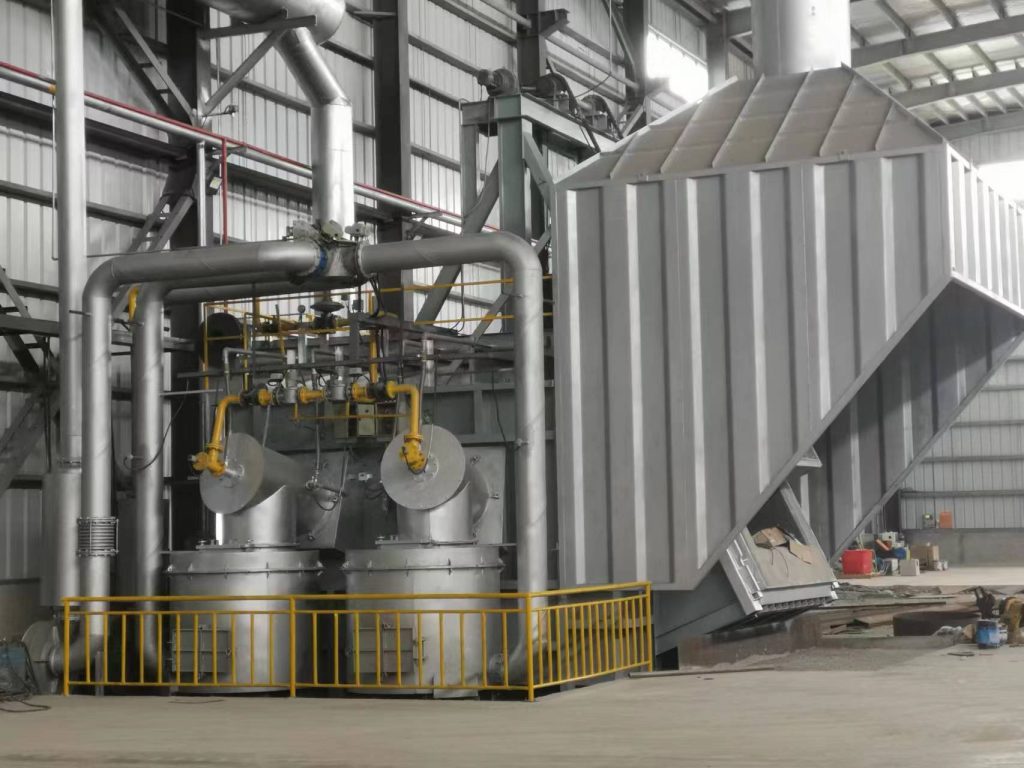
2. Furnace Configuration and Capacity Range
The furnace series is available in multiple configurations to meet different production scales and workshop layouts.
| Item | Specification |
|---|---|
| Loading Capacity | 2–100 tons |
| Melting Speed | 3–12 tons/hour |
| Furnace Structure | Tilting / Fixed |
| Furnace Shape | Rectangular / Circular |
| Applicable Materials | Scrap aluminum, aluminum alloy |
| Fuel Types | Natural gas, liquefied gas, heavy oil, diesel |
The wide capacity range allows users to select an appropriate model according to production demand, whether for small-batch melting or continuous high-volume aluminum processing.
3. Furnace Body Structure and Mechanical Strength
The furnace body adopts a profile steel framework as the primary structural skeleton. This design provides sufficient mechanical strength to support the furnace load and withstand long-term thermal cycling during continuous operation.
The furnace surface is constructed using steel plates with a thickness of 8 mm or more, which are welded to form a rigid and sealed furnace shell. After welding, the furnace body exhibits:
- Good structural integrity
- Stable geometric shape under high temperature
- Minimal heat dissipation loss
This construction method improves overall furnace durability while supporting consistent thermal conditions inside the melting chamber.
4. Furnace Door and Furnace Mouth Sealing Technology
Heat loss control is a critical factor in aluminum melting operations. To address this, the furnace door and furnace mouth are designed with specialized sealing structures.
The sealing system includes:
- Spring-type compression structures
- Soft-edge sealing devices
This design ensures close contact between sealing surfaces, effectively preventing internal heat from leaking out of the furnace during operation. Improved sealing performance contributes to:
- Stable furnace temperature
- Reduced unnecessary heat loss
- Improved operational efficiency
5. Regenerative Combustion Principle
The furnace utilizes regenerative combustion technology, which enhances the utilization of combustion heat during the melting process.
Through controlled combustion and commutation, the system improves thermal efficiency while maintaining uniform heat distribution inside the furnace. This technology supports:
- Stable flame characteristics
- Consistent melting conditions
- Controlled temperature rise
The regenerative system is fully integrated with the automatic control platform to ensure coordinated operation.
6. PLC Automatic Control System
The furnace is equipped with a PLC regenerative combustion automatic control system, enabling fully automated management of the entire melting process.
The control system covers the following functions:
| Control Function | Description |
|---|---|
| Automatic Ignition | Controlled startup of the combustion system |
| Automatic Combustion | Real-time combustion adjustment |
| Automatic Commutation | Coordinated regenerative switching |
| Automatic Temperature Control | Continuous monitoring and regulation |
| System Self-Check | Automatic status detection |
| Flameout Protection | Immediate response to flame abnormalities |
| Safety Protection | Multi-level safety interlock mechanisms |
If any abnormal condition is detected during operation, the system immediately triggers an alarm signal, ensuring timely intervention and safe operation.
7. Operational Characteristics and Automation Level
The regenerative gas aluminum melting furnace is designed for simple operation and high automation. Once parameters are set, the melting process proceeds automatically without frequent manual adjustment.
Key operational characteristics include:
- Fully automatic combustion control
- Stable temperature regulation
- Continuous safety monitoring
- Reduced operator workload
This automated operation mode improves process repeatability and supports consistent aluminum melting quality across multiple production cycles.
8. Fuel Adaptability and Application Flexibility
The furnace supports multiple fuel options, including:
- Natural gas
- Liquefied gas
- Heavy oil
- Diesel
This flexibility allows the equipment to adapt to different energy supply conditions and regional fuel availability, providing practical deployment options for various industrial environments.
9. Application Scope
Thanks to its structural design, sealing performance, regenerative combustion system, and automated control architecture, the furnace is suitable for:
- Aluminum foundries
- Aluminum alloy processing plants
- Scrap aluminum recycling lines
- Industrial aluminum melting workshops
It is particularly applicable in production scenarios where melting stability, operational safety, and process control are key considerations.
Conclusion
The Regenerative Gas Aluminum Melting Furnace combines robust mechanical structure, effective sealing design, regenerative combustion technology, and PLC-based automatic control into a complete and logically closed melting system.
From material loading and combustion management to temperature control and safety protection, the furnace forms a closed-loop operational system that supports stable, controlled, and reliable aluminum melting under industrial conditions.