
Introduction
Small and mid-scale rolling mills play an important role in the global steel production chain, particularly in regional markets and specialized steel product segments. Compared with large integrated steel plants, these facilities are typically more flexible in production but face significant operational and economic constraints.
In recent years, increasing raw material volatility, stricter energy efficiency regulations, and rising expectations for product quality have placed additional pressure on these producers. At the same time, many small and mid-scale mills still rely on legacy systems with limited automation, making modernization a critical but challenging task.
This article analyzes the key operational challenges faced by small and mid-scale rolling mill owners and provides a structured overview based on production economics, equipment performance, and industry trends.
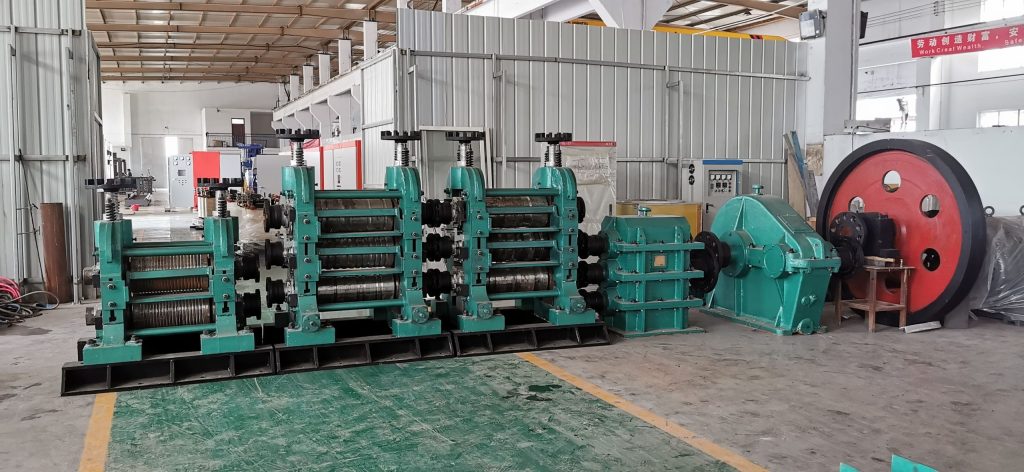
1. High Raw Material Cost Volatility
Raw material cost remains one of the most unstable factors affecting rolling mill profitability.
Key issues include:
- Fluctuation in scrap steel prices
- Unstable ferroalloy and additive costs
- Lack of long-term procurement strategies
- Dependency on regional supply chains
Impact on Operations
| Factor | Operational Impact |
|---|---|
| Scrap price fluctuation | Unstable production cost planning |
| Alloy price increase | Reduced profit margins |
| Supply chain disruption | Production delays |
For small and mid-scale mills, limited purchasing power makes it difficult to secure stable long-term contracts, unlike large steel producers.
2. High Energy Consumption and Efficiency Pressure
Energy consumption is one of the largest operational costs in rolling mill production.
Common inefficiencies include:
- Outdated heating systems
- Low thermal efficiency in billet reheating furnace
- High electricity consumption in rolling processes
- Lack of energy recovery systems
Key Observation
Modern rolling mills are increasingly shifting toward energy-optimized systems such as:
- Regenerative heating technologies
- High-efficiency induction heating system
- Automated temperature control systems
Energy Comparison (Industry Average Reference)
| System Type | Energy Efficiency | Operating Cost Level |
|---|---|---|
| Traditional gas furnace | Medium | High |
| Older electric heating system | Low-Medium | High |
| Modern induction heating system | High | Medium-Low |
Energy inefficiency directly reduces competitiveness, especially in export-oriented markets.
3. Equipment Aging and Maintenance Challenges
Many small and mid-scale rolling mills operate equipment that has been in service for 10–20 years or longer.
Typical problems include:
- Frequent mechanical failures
- Low rolling precision
- Increased downtime and maintenance cost
- Difficulty sourcing spare parts
Aging systems often lack compatibility with modern automation modules, limiting upgrade potential.
Critical equipment affected includes:
- Rolling stands
- Cooling systems
- continuous casting line
- Drive and control systems
4. Product Quality Consistency Issues
Maintaining consistent product quality is a major challenge for mid-scale operations.
Common quality issues:
- Dimensional deviation in rolled products
- Surface defects (cracks, scaling, uneven texture)
- Inconsistent hardness and mechanical properties
Root Causes
- Manual control systems
- Lack of real-time monitoring
- Outdated process control in steel rolling mill equipment
- Temperature instability during production
5. Limited Automation and Digitalization
Compared with large-scale producers, small and mid-scale mills often lag in automation adoption.
Key limitations include:
- Manual operation dependency
- Lack of centralized control systems
- Absence of real-time production data tracking
- Low integration of smart manufacturing systems
Modern industry standards increasingly require:
- PLC-based control systems
- Digital temperature monitoring
- Integrated production management systems
This gap significantly affects competitiveness in high-end steel markets.
6. Market Competition and Pricing Pressure
Small and mid-scale rolling mills face intense competition from large integrated steel plants.
Main challenges:
- Price undercutting by large producers
- Limited access to premium market segments
- High sensitivity to demand fluctuations
- Export competition from low-cost regions
As a result, many small mills operate in low-margin product categories such as:
- Construction steel bars
- Basic structural steel profiles
7. Regulatory and Environmental Pressure
Environmental regulations are becoming increasingly strict in many regions.
Key compliance challenges:
- Emission control requirements
- Energy efficiency standards
- Waste heat recovery expectations
- Carbon footprint reporting
Failure to meet standards can result in:
- Production restrictions
- Increased operational costs
- Forced equipment upgrades
8. Summary of Key Challenges
| Category | Core Challenge | Severity |
|---|---|---|
| Raw materials | Price volatility | High |
| Energy | High consumption | Very High |
| Equipment | Aging systems | High |
| Quality | Inconsistency | Medium-High |
| Automation | Low digitalization | High |
| Market | Price competition | Very High |
| Regulation | Compliance pressure | Increasing |
9. Strategic Direction for Improvement
To remain competitive, small and mid-scale rolling mill owners are increasingly focusing on:
- Upgrading to energy-efficient induction heating system
- Modernizing continuous casting line
- Implementing automated steel rolling mill equipment
- Improving process control and digital monitoring systems
Investment in modernization is no longer optional but a necessary step for long-term survival.
FAQ
Q1: What is the biggest challenge for small rolling mills today?
The most critical challenge is rising energy costs combined with strong price competition from large steel producers.
Q2: Why is energy efficiency so important in rolling mills?
Because heating and rolling processes consume a large portion of operational cost, inefficient systems directly reduce profitability.
Q3: How does equipment aging affect production?
Aging equipment increases downtime, reduces precision, and raises maintenance costs, all of which negatively impact delivery schedules.
Q4: Can automation significantly improve rolling mill performance?
Yes. Automation improves process stability, reduces manual error, and enables real-time monitoring, which enhances product quality and efficiency.
Q5: What is the most effective upgrade for small and mid-scale mills?
Upgrading heating systems (such as induction-based systems) and modernizing rolling and casting lines provide the highest ROI in most cases.
Conclusion
Small and mid-scale rolling mills are operating in an increasingly competitive and cost-sensitive environment. Challenges such as raw material volatility, high energy consumption, aging equipment, and limited automation are not isolated issues—they are interconnected factors that directly influence production efficiency and long-term profitability.
However, these challenges can be effectively mitigated through targeted modernization strategies, including energy-efficient heating systems, upgraded continuous casting line, and advanced steel rolling mill equipment with improved automation and process control capabilities.
Upgrading production systems is no longer only about improving output—it is about ensuring long-term operational sustainability and maintaining competitiveness in both domestic and international markets.
Contact Us
If you are planning to upgrade your rolling mill system or looking for tailored solutions for your production line, our engineering team is ready to support you.
We provide customized solutions for:
- Steel rolling mill equipment
- Billet reheating furnace systems
- Induction heating systems
- Continuous casting production lines
- Complete steel production line optimization
Feel free to contact us for technical consultation, project evaluation, or customized quotations. Our team will help you identify the most suitable solution based on your production capacity and operational requirements.