
1. Real Production Scenario: Why Billet Heating Determines Final Product Quality
In real-world hot rolling and forging production lines, one critical yet often underestimated process is billet heating.
Before entering rolling mills or forging equipment, steel billets must be heated uniformly to the required temperature. Any deviation—such as uneven heating or poor temperature control—can directly lead to surface cracks, dimensional inaccuracies, or even batch rejection.
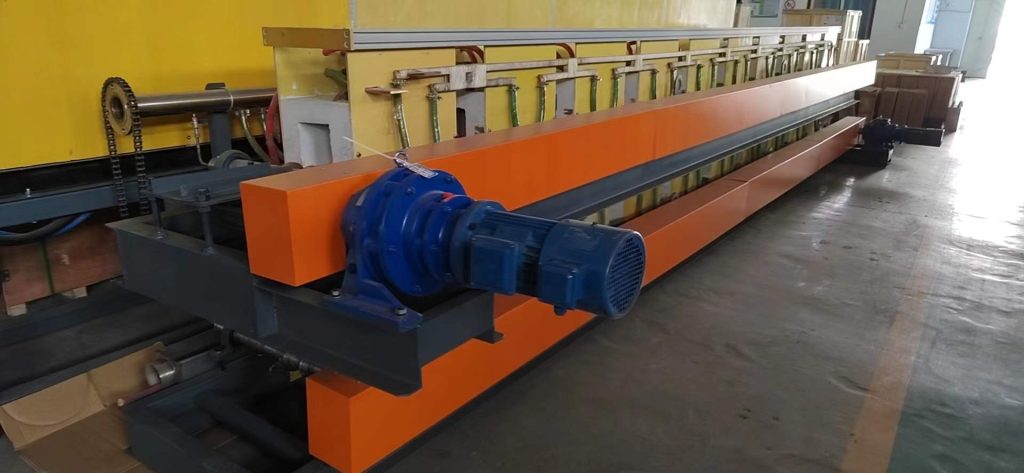
A Billet Reheating Furnace is a specialized industrial system designed to heat steel billets (square billets, round billets) uniformly and maintain them at a controlled temperature before deformation.
However, many users face a common question:
Why do different billet reheating furnaces show huge differences in energy consumption, yield rate, and operational stability?
This article answers that question from a practical engineering perspective.
2. What Does a Billet Reheating Furnace Actually Do?
A industrial billet reheating furnace is not just a heating device—it directly impacts product quality, production rhythm, and operating costs.
• Process Value
- Eliminates internal stress within billets
- Ensures uniform metallurgical structure
- Prevents cracking during rolling or forging
• Production Value
- Matches continuous rolling and forging lines
- Stabilizes production rhythm and throughput
• Cost Value
- Reduces scrap rate
- Optimizes fuel or electricity consumption
- Improves overall production efficiency
3. Types of Billet Reheating Furnace (Based on Real Industry Use)
Understanding furnace types is essential when selecting the right steel billet heating equipment.
3.1 Pusher Type Furnace
- Traditional design widely used in older plants
- Simple structure, lower investment
Limitations:
- Billet surface damage due to pushing friction
- Poor temperature uniformity
- Higher energy consumption
Application:
Small-scale or low-end production lines
3.2 Walking Beam Furnace
- Current mainstream solution in medium and large steel plants
- Billets move step-by-step without surface contact
Advantages:
- Excellent temperature uniformity
- Reduced billet deformation
- Stable operation for continuous production
Application:
Medium to large-scale rolling lines
3.3 Continuous Energy-Saving Furnace
- Represents the latest development trend
- Designed for high efficiency and automation
Advantages:
- Optimized heat circulation
- Lower energy consumption
- Compatible with intelligent control systems
This category is where modern upgrades—and competitive advantages—are concentrated.
4. Common Problems in Traditional Billet Reheating Furnaces
From an engineering and operational perspective, most traditional furnaces suffer from several key issues:
• Uneven Temperature Distribution
Large internal-external temperature differences lead to unstable product quality.
• High Energy Consumption
Significant heat loss due to outdated insulation and poor heat recovery systems.
• Low Automation Level
Heavy reliance on manual operation results in unstable production rhythm.
• Environmental Pressure
Excessive emissions and heat dissipation make compliance more difficult.
• High Maintenance Cost
Frequent wear of refractory materials and mechanical parts leads to downtime.
These issues directly affect profitability and production reliability.
5. Modern Solution: Steel Billet Heating Furnace
To address the above challenges, a new generation of energy-efficient systems—Steel Billet Heating Furnace—has become the preferred choice for modern steel plants.
• Precision Temperature Control
Multi-zone temperature control ensures uniform heating, significantly improving yield rate and product consistency.
• Energy-Efficient Structural Design
Optimized insulation and advanced heat recovery systems reduce fuel or electricity consumption.
• Full Automation Operation
Automatic charging, heating, and discharging systems enable stable and continuous production.
• Environmental Compliance
Low-emission design meets modern industrial environmental standards.
• Low Maintenance Design
Durable furnace structure minimizes downtime and reduces long-term operating costs.
6. Application Scenarios
The continuous billet reheating furnace is widely used in:
- Carbon steel, alloy steel, and stainless steel rolling lines
- Forging processes for round bars, square bars, and profiles
- Production upgrades in small and medium-sized steel plants
- Metal processing enterprises seeking efficiency improvement
7. How to Choose the Right Billet Reheating Furnace (Practical Guide)
When selecting a billet reheating furnace, focus on the following key parameters:
• Heating Temperature Range
Typically 1100°C–1250°C depending on steel grade
• Production Capacity
Must match upstream and downstream equipment
• Furnace Type
Choose between pusher, walking beam, or continuous systems
• Energy Consumption Standard
Evaluate fuel type, heat recovery, and insulation performance
Common Mistakes to Avoid
- Focusing only on price while ignoring temperature control accuracy
- Overlooking heat recovery systems
- Ignoring automation compatibility with existing production lines
These mistakes often lead to higher long-term costs.
8. Conclusion: Billet Reheating Furnace Is the Core of Rolling Efficiency
A Billet Reheating Furnace is not just auxiliary equipment—it is the backbone of the entire hot rolling or forging process.
Its performance directly determines:
- Product quality
- Production efficiency
- Energy consumption
- Operational stability
We specialize in advanced industrial heating solutions, providing customized Steel Billet Heating Furnace systems tailored to different production capacities and steel grades.
From design to implementation, we help optimize your entire heating process and improve overall plant performance.
Contact us today to get a tailored solution for your production line.