
Introduction
In modern steel production, rolling mills play a critical role in shaping metal into finished products with specific dimensions and mechanical properties. However, different types of rolling mills are designed for different product categories, production capacities, and application scenarios.
Among all categories, section mills, bar mills, and plate mills are the most widely used in industrial production. Understanding their differences is essential for selecting the right equipment and optimizing production efficiency.
This article provides a clear comparison of these three mill types, focusing on their applicable products, working characteristics, and selection criteria.
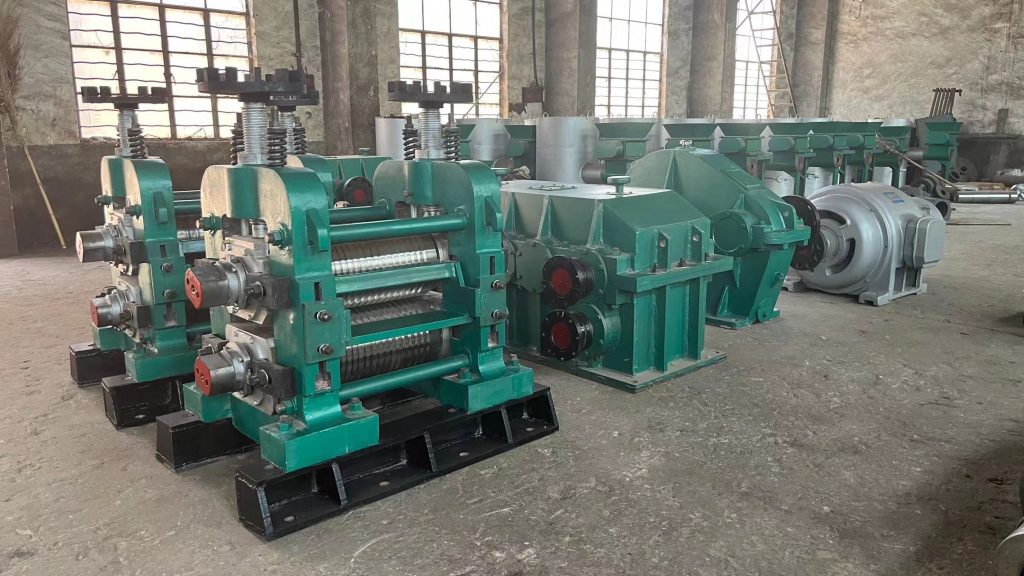
What Are the Main Types of Rolling Mills?
Rolling mills can be classified based on product shape and processing method. Common types include:
- section rolling mill
- rebar rolling mill
- plate rolling mill
- strip mills
- wire rod mills
Among them, section mills, bar mills, and plate mills are the most relevant for structural steel and construction materials.
Section Mills: Products and Applications
A section rolling mill is designed to produce structural steel profiles with complex cross-sections.
Typical Products
- H-beams (H-section steel)
- I-beams
- Channel steel
- Angle steel
- T-sections
- Rail profiles
Key Characteristics
- Rolling involves multi-pass deformation using shaped rolls
- High dimensional accuracy required for structural use
- Requires precise control of rolling force and temperature
Application Industries
- Construction (steel structures, bridges)
- Infrastructure
- Shipbuilding
- Railway systems
Section mills are ideal when the final product has a non-solid, complex geometry.
Bar Mills: Products and Applications
A rebar rolling mill (bar mill) is used to produce long, solid steel products with relatively simple cross-sections.
Typical Products
- Rebar (reinforcement steel)
- Round bars
- Square bars
- Hexagonal bars
- Wire rods (in some configurations)
Key Characteristics
- High-speed continuous rolling
- Typically operates with billets as raw material
- Focus on productivity and output efficiency
- Can reach production speeds of 10–40 m/s depending on configuration
Application Industries
- Construction (reinforced concrete)
- Machinery manufacturing
- Fasteners and hardware
Bar mills are best suited for high-volume production of standard solid profiles.
Plate Mills: Products and Applications
A plate rolling mill is used to produce flat steel products with large width and thickness.
Typical Products
- Steel plates
- Heavy plates
- Shipbuilding plates
- Pressure vessel plates
- Boiler plates
Key Characteristics
- Processes slabs instead of billets
- Rolling force is significantly higher than bar mills
- Plate thickness range typically: 5 mm to 200 mm
- Width can exceed 3,000 mm in large mills
Application Industries
- Shipbuilding
- Oil & gas (pipelines, pressure vessels)
- Heavy machinery
- Energy sector
Plate mills are essential for large-scale flat products requiring high strength and thickness control.
Key Differences Between Section Mill, Bar Mill, and Plate Mill
| Mill Type | Raw Material | Product Shape | Typical Products | Production Focus | Industry Use |
|---|---|---|---|---|---|
| Section Mill | Billet/Bloom | Complex profiles | H-beam, channel, angle steel | Precision + shaping | Construction, infrastructure |
| Bar Mill | Billet | Solid long products | Rebar, round bar, wire rod | High speed + volume | Construction, manufacturing |
| Plate Mill | Slab | Flat products | Steel plate, heavy plate | High force + thickness | Shipbuilding, energy |
How to Choose the Right Rolling Mill
Selecting the right rolling mill machine depends on several key factors:
1. Product Type
- Complex profiles → section rolling mill
- Standard bars → rebar rolling mill
- Flat plates → plate rolling mill
2. Production Capacity
- High-volume continuous production → bar mill
- Medium batch with complex shapes → section mill
- Heavy-duty low-speed rolling → plate mill
3. Investment Budget
- Bar mills → relatively lower investment, faster ROI
- Section mills → medium complexity
- Plate mills → highest investment due to large equipment and rolling force
4. Application Industry
- Construction steel → bar + section mills
- Heavy industry → plate mills
Practical Selection Insight
In real projects, the choice is often not just about product type, but also:
- Future product expansion capability
- Automation level (PLC, digital control systems)
- Energy consumption per ton (typically 300–450 kWh/ton depending on process)
- Integration with upstream continuous casting machine
A well-matched mill can significantly reduce operating costs and improve product consistency.
Conclusion
Understanding the differences between section mills, bar mills, and plate mills is essential for making informed investment decisions in steel production.
Each type serves a distinct purpose:
- Section mills → complex structural profiles
- Bar mills → high-speed solid products
- Plate mills → heavy flat steel products
Choosing the right solution depends on your product range, production scale, and long-term business goals.
Need Help Choosing the Right Rolling Mill?
If you are planning a new production line or upgrading your existing equipment, selecting the right configuration is critical.
We can help you evaluate your requirements and recommend the most suitable rolling mill machine solution based on your production goals.