
I. Introduction
1.1 Definition and Core Role of Steel Rolling Mills
A steel rolling mill is a key industrial facility that shapes steel billets through the rolling process, achieving desired forms and enhancing material properties. The core principle involves using rotating rolls to plastically deform the steel billet, producing steel with specific cross-sections, dimensional accuracy, and mechanical properties. Compared with casting and forging, rolling refines the grain structure, increases material density and strength, and allows for continuous large-scale production, making it a crucial step in steel processing.
From an industry perspective, steel rolling mills do more than convert raw billets into usable steel—they deliver customized products with precise process control, directly impacting the quality, performance, and cost of downstream products. High-precision or high-strength components rely on the rolling mill’s process capabilities for optimal material properties.
1.2 Importance of Choosing the Right Steel Rolling Mill / Equipment
For manufacturers and steel processing plants, selecting the right rolling mill or equipment is critical for production efficiency, product quality, and market competitiveness. High-quality equipment can:
- Increase production efficiency while reducing labor and operational costs
- Ensure product consistency with stable dimensional and mechanical properties
- Lower overall costs by minimizing material waste and optimizing equipment operation
- Expand product capabilities, enabling enterprise product upgrades
Conversely, improper equipment selection can result in low product yield, high energy consumption, increased maintenance costs, and inability to meet downstream requirements, affecting company reputation and growth.
1.3 Core Industries Benefiting from Rolling Equipment
Rolled steel, with its wide range of specifications and superior properties, serves many core sectors of the economy, including:
- Automotive industry: High-precision, high-strength steel for body panels, chassis components, etc.
- Construction industry: Bridge steel, rebar, structural profiles ensuring structural stability
- Energy industry: High-pressure, corrosion-resistant steel for boilers, pipelines, and electrical steel
- Railway industry: Specialized steel for rails, wheels, and other components
Additionally, industries such as home appliances, machinery, and shipbuilding rely heavily on rolled steel.
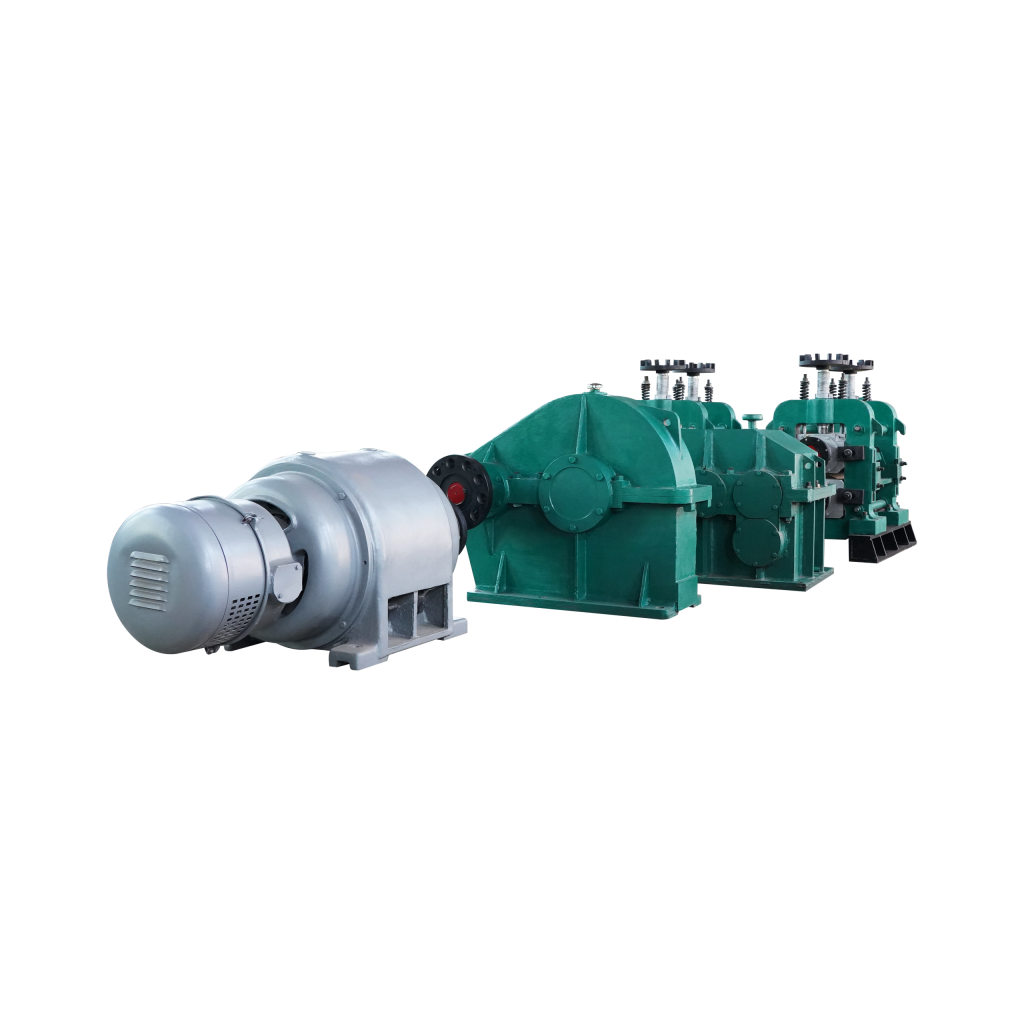
II. Main Types of Steel Rolling Mills
2.1 Classification by Rolling Temperature
2.1.1 Hot Rolling Mills: Large-Scale Steel Shaping and Structural Production
Hot rolling mills perform high-temperature rolling, heating billets above 1000°C (above the recrystallization temperature). At this stage, steel is highly plastic with lower deformation resistance, facilitating large-scale shaping while reducing energy consumption and equipment load.
Key products include hot-rolled steel plates, structural profiles, and rebar, mainly used in construction and bridges. Advantages include high production efficiency and low cost. However, hot rolling can produce scale on the surface and lower dimensional precision, requiring subsequent processing.
2.1.2 Cold Rolling Mills: High-Precision, High-Quality Thin Steel
Cold rolling mills operate at room temperature using hot-rolled steel as raw material. Although plastic deformation resistance is higher, cold rolling improves dimensional accuracy, surface finish, and enhances strength and hardness through work hardening.
Main products include cold-rolled thin sheets and strips, used in automotive panels, home appliance shells, and as substrates for galvanizing or tin-plating processes.
2.2 Classification by Rolling Method
2.2.1 Longitudinal Rolling: Mainstream for Long Products
Longitudinal rolling aligns the roll rotation with the steel’s forward movement. Billets move along the roll axis and undergo multiple passes to achieve long products.
Suitable for plates, profiles, and most steel products, advantages include mature technology, high efficiency, continuous production, and easy automation for stable quality.
2.2.2 Cross Rolling: For Rotational Components
In cross rolling, the roll rotation is perpendicular to the steel’s forward movement. Billets rotate along their axis while moving axially, mainly producing wheels, gears, and other rotational components.
Compared with forging, cross rolling improves material utilization, reduces machining allowance, optimizes grain structure, and allows continuous production at lower cost.
2.2.3 Special Rolling Methods: Custom or Complex Shapes
Special rolling methods address complex shapes, including:
- Cycle rolling: High-precision, complex cross-sections
- Spinning: Producing thin-walled parts like heads and pipes
- Bending/Forming Rolling: For bent tubes or irregular profiles
Special rolling is highly precise, reduces downstream processes, but equipment is complex and efficiency is lower, suitable for high-value, customized products.
2.3 Classification by Product Stage
2.3.1 Semi-Finished Mills: Supplying Billets for Further Rolling
Semi-finished mills process continuous cast billets or ingots into semi-finished products, primarily rough and intermediate rolling, ensuring cross-section, precision, and internal quality for subsequent finishing.
Common products include billets and blooms, serving as raw material for finished product mills. Efficiency and stability are critical.
2.3.2 Finished Product Mills: Producing Market-Ready Steel
Finished product mills use semi-finished steel as raw material, performing precision rolling to produce ready-to-use steel. Emphasis is on dimensional accuracy, surface quality, and mechanical performance, often equipped with advanced inspection and automation systems.
Products include plates, tubes, and customized high-strength or precision steel profiles.
III. Key Application Areas of Rolled Steel
3.1 Automotive Industry: High-Precision, High-Strength Steel
Automotive steel accounts for over 60% of rolling applications. Key uses:
- Body panels: Cold-rolled or galvanized steel with high formability and surface finish
- Chassis components: High-strength profiles ensuring driving stability
- Engine parts: Precision-rolled round steel with high wear resistance
- Wheels and axles: Specialized steel meeting load and fatigue requirements
3.2 Construction Industry: Large-Scale, Versatile Applications
Construction is the largest consumer of rolled steel:
- Bridges: Require weldable, weather-resistant steel
- Rebar: Reinforces concrete in all types of construction
- Structural profiles: Ensure building framework stability
- Roof and wall materials: Color-coated cold-rolled sheets, combining aesthetics and corrosion resistance
3.3 Energy Industry: High-Strength, Corrosion-Resistant Steel
Energy applications demand steel for extreme conditions:
- Boilers: High-temperature, high-pressure resistant steel
- Oil & Gas pipelines: High-strength, corrosion-resistant X80 steel
- Electrical steel: Excellent magnetic properties for electrical equipment
- Wind and nuclear energy: High-strength, weather-resistant steel ensuring operational stability
3.4 Special Products: Customized Rolling Applications
Special products include:
- Galvanized sheets: Automotive, appliances
- Tinplate: Food packaging
- Railway wheels and rails: Safety-critical
- Precision instrument components: High-accuracy cold-rolled steel
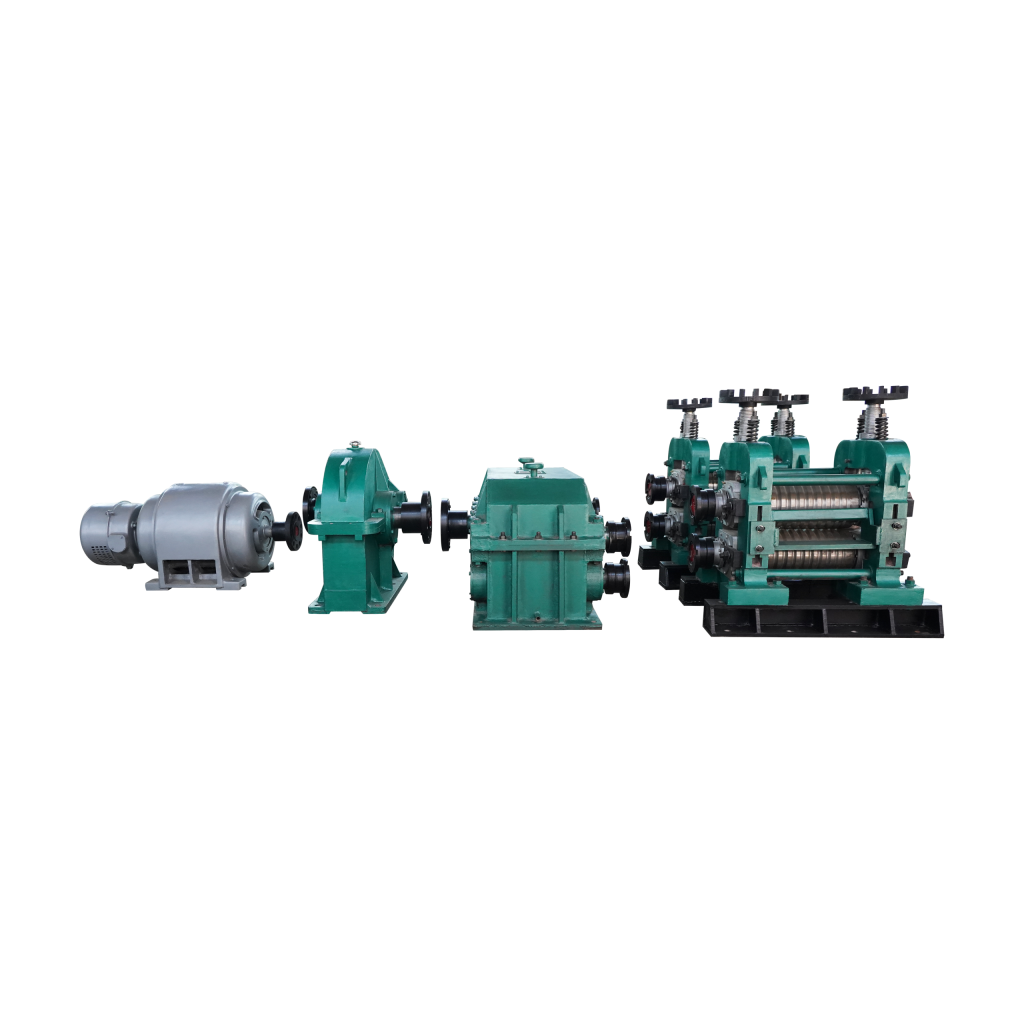
IV. Why Choose Modern Steel Rolling Mill / Equipment Suppliers
- Ensuring product quality & dimensional accuracy via automation & online monitoring
- Advanced automation & energy-saving features (PLC/AI, heat recovery)
- Flexible for diverse steel types and specifications
- Comprehensive after-sales support: installation, maintenance, training, process optimization
V. How to Select the Right Steel Rolling Mill / Equipment
- Match equipment capacity with production requirements (include buffer for expansion)
- Align with product types & specifications: precision thin sheets, large structural steel, customized products
- Evaluate supplier reliability & service network: certifications, reputation, proximity, warranty
- Analyze ROI: purchase cost, operational cost, efficiency & revenue improvements
VI. Conclusion
Steel rolling mills are central to deep steel processing; process & equipment determine quality & cost. Buyers should evaluate production needs, product specifications, supplier capabilities, service, and ROI. Prioritize automation, flexibility, and full support for efficiency, quality, and competitiveness.
Future trends: smart, high-efficiency, green rolling mills. Buyers should choose suppliers with innovation and sustainability potential, driving high-quality development for both enterprises and the industry.