
I. Introduction
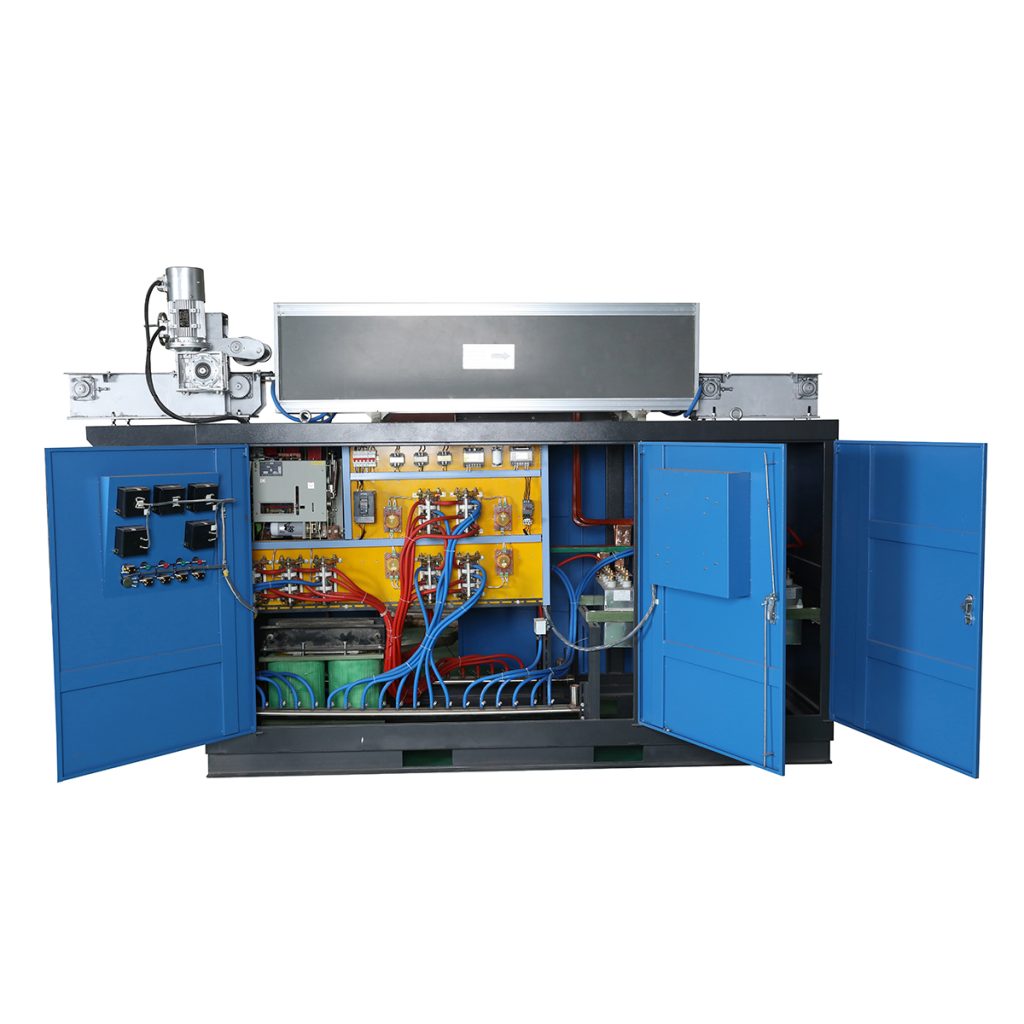
Based on the principle of electromagnetic induction, induction heating furnaces generate eddy currents within conductive materials through alternating magnetic fields, producing Joule heat to achieve rapid self-heating of materials. As advanced industrial heating equipment widely used in metallurgy, machinery manufacturing and other fields, they outperform traditional heating furnaces such as flame furnaces and resistance furnaces in heating efficiency, temperature control, energy conservation, environmental protection and production stability. They can meet the high-precision and high-efficiency heating needs of modern industry.
II. Fast Heating Speed and High Production Efficiency
Induction heating furnaces adopt an internal heat generation method, avoiding heat transfer losses of traditional furnace bodies. Alternating magnetic fields enable materials to heat up rapidly and intensively. For example, when heating a carbon steel workpiece with a diameter of 50mm to 800℃, a traditional resistance furnace takes 60-90 minutes, while an induction heating furnace only needs 10-20 minutes, improving efficiency several times. With quick startup, no long preheating time required and on-off capability, they can significantly shorten the production cycle and increase output, especially suitable for multi-variety and small-batch production.
III. Uniform Heating and High Temperature Control Precision
By optimizing the structure of induction coils and the frequency of alternating currents, induction heating furnaces can achieve uniform magnetic field distribution, ensuring consistent eddy current density inside materials and effectively reducing temperature differences between the surface and core. They are suitable for heating workpieces with complex shapes. Equipped with advanced temperature measurement and intelligent control systems, their temperature control precision can reach ±1℃ (far higher than the ±5-10℃ of traditional furnaces), which can ensure heating quality and process consistency, reduce workpiece defects and improve product qualification rates.
IV. Low Oxidation, Decarburization Reduction, and Significant Energy-Saving & Environmental Benefits
Induction heating furnaces adopt a closed heating environment without the need to introduce combustion air, which can greatly reduce material oxidation and decarburization, minimize the generation of oxide scale and carbon loss, and lower material and mold consumption. They are particularly suitable for processing precious metals. Their heat utilization rate is as high as 70%-90%, which is much better than that of traditional heating furnaces. Moreover, no fuel combustion occurs during operation, no harmful gases, dust or noise are produced, complying with the concept of green production.
V. Improved Working Environment and Outstanding Economic Benefits
Induction heating furnaces have low surface temperatures, no harmful emissions or noise, which can significantly optimize the workshop working environment and reduce the risk of safety accidents. They feature high operational efficiency, low energy consumption, simple structure, low failure rate and convenient maintenance, which can reduce operation and maintenance costs. Meanwhile, their excellent automation adaptability can seamlessly connect with PLC and robot systems to realize full-process automated operations, helping enterprises upgrade production.
VI. Conclusion
In summary, relying on core advantages such as fast and uniform heating, high-precision temperature control, energy conservation, environmental protection and good automation adaptability, induction heating furnaces comprehensively outperform traditional heating furnaces in production efficiency, processing quality and economic benefits. Against the backdrop of industrial manufacturing transforming towards high precision, greenization and intelligence, they have become key equipment for heating process innovation in various industries and have broad application prospects in the future.