
In the modern steel industry, manufacturers are under increasing pressure to reduce energy consumption, shorten production cycles, and improve product quality. Traditional rolling processes, which separate casting and rolling into independent stages, often result in higher fuel consumption, larger plant layouts, and longer production times.
A Wire Rod / Section Bar Continuous Casting and Rolling Production Line integrates billet casting and multi-stand rolling into a continuous, coordinated production system. By directly rolling high-temperature continuous casting blanks, this advanced process significantly enhances efficiency, reduces operational costs, and improves overall metal forming performance.
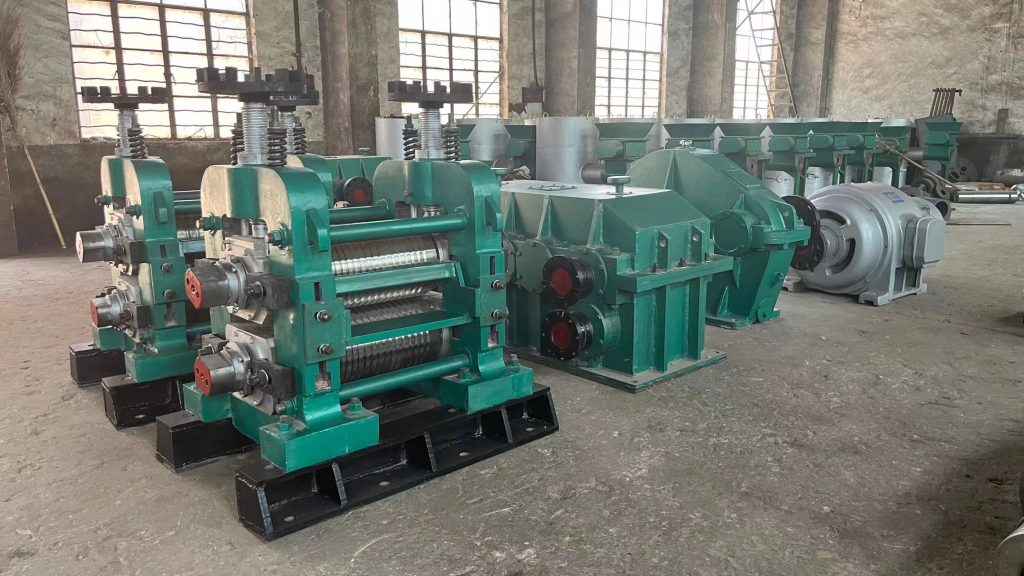
1. Process Overview and Working Principle
In a conventional steel rolling process, billets are first cast, cooled, transported, reheated in a furnace, and then sent to the rolling mill. Each step introduces energy loss, oxidation, handling costs, and time delays.
In contrast, a continuous casting and rolling production line connects:
- Continuous casting machine
- Billet transfer system
- Multi-stand continuous rolling mill
- Cooling and finishing systems
The high-temperature casting blank is directly fed into the rolling mill without full reheating. The metal passes through multiple rolling stands in the same direction, and deformation occurs progressively in each frame until the required cross-sectional shape—such as wire rod or section bar—is formed.
This synchronized rolling process improves deformation control and production continuity.
2. Significant Energy Savings Through Process Integration
Energy efficiency is one of the most important advantages of continuous casting and rolling technology.
By utilizing high-temperature continuous casting blanks:
- The reheating furnace load is significantly reduced or eliminated
- Fuel or electric energy consumption decreases
- Thermal efficiency improves
- Overall production energy cost is lowered
Compared with traditional separate processes, the integrated system reduces redundant heat loss and improves energy utilization efficiency. For steel plants facing rising electricity and fuel prices, this advantage directly enhances competitiveness.
3. Reduction of Metal Loss and Improved Material Yield
Repeated heating in conventional processes often leads to surface oxidation and metal burning loss. These losses directly reduce material yield and increase raw material costs.
With a continuous casting and rolling line:
- Fewer reheating stages reduce oxidation
- Scale formation is minimized
- Metal loss during processing decreases
- Overall material utilization rate improves
Higher yield means more finished product from the same amount of raw steel, which improves economic returns for steel manufacturers.
4. Shortened Production Cycle and Higher Throughput
Process continuity greatly reduces production time.
Because casting and rolling are connected in one integrated line:
- Intermediate cooling and storage are minimized
- Billet transportation between workshops is reduced
- Production flow becomes streamlined
- Output capacity increases
The greatly shortened production cycle improves delivery speed and production flexibility, enabling manufacturers to respond faster to market demands.
5. Simplified Plant Layout and Reduced Infrastructure Investment
Traditional steel production lines often require:
- Separate casting workshop
- Reheating furnace area
- Multiple transfer systems
- Large plant area
In contrast, the continuous casting and rolling production line features a compact and integrated layout. This design:
- Reduces plant area requirements
- Simplifies material handling systems
- Lowers civil engineering investment
- Cuts transportation equipment costs
- Reduces overall production expenses
For new plant construction or production line upgrades, this simplified configuration significantly lowers initial capital investment.
6. Improved Product Quality and Forming Consistency
Product quality is strongly influenced by temperature uniformity and deformation control.
In a continuous rolling system:
- The metal is simultaneously located in several rolling stands
- Rolling occurs in the same direction
- Deformation is gradual and well-controlled
- Temperature fluctuations are minimized
As a result, the final products show:
- Stable cross-sectional dimensions
- Improved surface quality
- Uniform internal structure
- Enhanced mechanical properties
This makes the system especially suitable for producing high-quality wire rods and section bars used in construction, industrial manufacturing, and alloy steel applications.
7. Reduced Labor Intensity and Improved Automation
Continuous rolling mills are designed with higher automation levels. Compared with traditional systems:
- Manual handling is reduced
- Process control becomes more precise
- Rolling speed increases
- Production becomes more stable
Lower labor intensity not only reduces operational risks but also improves long-term production reliability.
8. Application Scope
Wire Rod and Section Bar Continuous Casting and Rolling Production Lines are widely applied in:
- Construction steel production
- Wire rod manufacturing
- Section bar production
- Alloy steel and special steel processing
- Medium and small steel plant modernization projects
The system is particularly suitable for manufacturers seeking energy-efficient, high-speed, and high-quality steel production solutions.
Conclusion
The Wire Rod / Section Bar Continuous Casting and Rolling Production Line represents a major technological advancement in steel manufacturing. By integrating casting and rolling into a continuous process, it achieves:
- Significant energy savings
- Reduced metal consumption
- Shortened production cycles
- Lower infrastructure investment
- Improved product quality
- Enhanced operational efficiency
For steel plants aiming to upgrade production technology and enhance market competitiveness, this integrated production line provides a reliable and economically sustainable solution.