
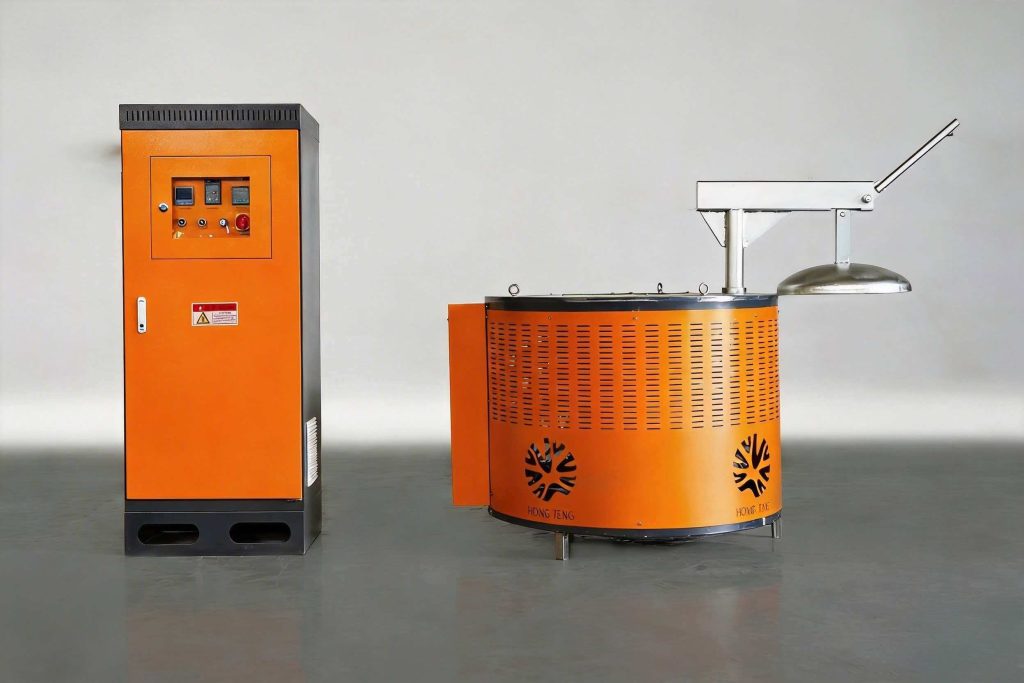
Core Equipment: Aluminum Melting Furnace
I. The Growing Demand for Efficient Aluminum Scrap Recycling
Aluminum recycling is no longer just an environmental option — it has become a strategic industrial necessity. With global industries expanding and sustainability regulations tightening, scrap recycling plants must operate more efficiently, more cleanly, and more profitably than ever before.
1.1 The Global Shift Toward Aluminum Recycling
Across automotive, construction, packaging, and electronics industries, aluminum consumption continues to grow rapidly. Compared with primary aluminum production, recycled aluminum saves up to 95% of the energy, dramatically reducing both production costs and carbon emissions.
At the same time, governments worldwide are strengthening environmental regulations, pushing manufacturers toward circular production models. Recycling aluminum scrap is now one of the most energy-efficient and environmentally responsible industrial practices.
1.2 Challenges Faced by Scrap Recycling Plants
Despite strong market demand, recycling plants face serious operational challenges:
- Mixed scrap composition and alloy variation
- Surface contamination from paint, oil, and coatings
- Oxidation losses due to high surface area scrap
- High energy consumption in melting
- Inconsistent melt quality
- Increasing environmental compliance pressure
To overcome these issues, equipment selection becomes the decisive factor.
1.3 Why Choosing the Right Aluminum Melting Furnace Is Critical
The aluminum melting furnace directly determines:
- Energy consumption per ton
- Scrap recovery rate
- Production capacity
- Melt quality consistency
- Emission control performance
- Long-term profitability
A well-designed melting system is not just equipment — it is the profit center of a recycling plant.
II. Understanding Aluminum Scrap Characteristics
2.1 Types of Aluminum Scrap
Scrap recycling plants typically process:
- Post-industrial scrap
- Post-consumer scrap
- UBC (Used Beverage Cans)
- Automotive aluminum scrap
- Mixed alloy scrap
- Scrap aluminum doors and windows
- Used wires and aluminum castings
Each type presents unique melting challenges.
2.2 Key Technical Challenges in Scrap Melting
Aluminum scrap often has a high surface-to-volume ratio, leading to oxidation and metal loss during melting. Additional challenges include:
- Paint and oil contamination
- Alloy mixing issues
- Dross formation
- Composition instability
Without precise temperature control and stable heating, recovery rates drop significantly.
2.3 Pre-Treatment Requirements Before Melting
Efficient recycling requires proper preparation:
- Sorting and grading
- Crushing and baling
- Decoating or preheating
- Magnetic separation
Pre-treatment improves furnace efficiency and metal yield.
III. Core Equipment: Aluminum Melting Furnace for Scrap Recycling Plants
The heart of any recycling facility is the aluminum melting furnace.
3.1 Types of Aluminum Melting Furnaces Used in Recycling
3.1.1 Induction Aluminum Melting Furnace
- Fast melting speed
- Precise temperature control
- High energy efficiency
- Ideal for clean and sorted scrap
- Stable alloy composition
3.1.2 Rotary Furnace
- Suitable for heavily contaminated scrap
- Strong adaptability
- Handles mixed materials
- Higher dross generation
3.1.3 Reverberatory Furnace
- Large capacity continuous production
- Widely used in large-scale plants
- Integrated with charging and holding systems
Among these options, modern recycling plants increasingly favor induction systems for their energy efficiency and environmental performance.
IV. Why Induction Aluminum Melting Furnaces Are Ideal for Modern Recycling Plants
A medium frequency induction aluminum melting furnace offers clear operational advantages.
4.1 Higher Metal Recovery Rate
- Scrap recovery rate reaches 92%
- Reduced oxidation due to stable heating
- Aluminum liquid has no excessive flow or tumbling
- Lower burning loss
- Alloy composition remains stable
During the smelting process, controlled electromagnetic heating minimizes oxidation and ensures consistent metal quality.
4.2 Lower Energy Consumption
- Electricity consumption: approximately 360 kWh per ton
- Electromagnetic heating efficiency
- Faster melting cycles
- Reduced heat loss
Compared with fuel-fired systems, induction furnaces eliminate combustion losses and significantly reduce energy waste.
4.3 Better Temperature Control
- Fully digital control system
- High stability and reliability
- Precise temperature regulation
- Suitable for high-grade aluminum production
Stable heating ensures uniform and consistent melting, critical for casting and die-casting applications.
4.4 Environmental Advantages
- No fuel combustion
- Lower emissions
- Easier dust collection integration
- Reduced carbon footprint
This makes induction furnaces highly suitable for plants facing strict environmental regulations.
V. How to Select the Right Aluminum Melting Furnace for Scrap Recycling
Choosing the right system requires balancing production goals and investment cost.
5.1 Capacity Selection
Available systems include:
- 300 kg
- 500 kg
- 1 ton
- 3 ton
- 5 ton
Capacity should match daily output targets and shift schedules. Equipment below 3 tons can use air cooling, eliminating the need for water cooling systems and reducing infrastructure costs.
5.2 Power Supply Options
- Medium frequency induction systems
- Optimized transformer configuration
- IGBT power technology
- Intelligent load matching
Efficient power systems reduce operating costs and improve system stability.
5.3 Automation Level
- Manual charging
- Semi-automatic feeding
- Fully automated scrap charging
With integration into automatic aluminum ingot production lines, continuous operation becomes possible.
5.4 Auxiliary Equipment
- Dust collection system
- Hydraulic tilting or bottom discharge system
- Automatic temperature monitoring
- Holding furnace integration
- Cooling system
Flexible discharge options allow metal to be released either through bottom tapping or by tilting the furnace body.
VI. Integrated Aluminum Scrap Melting Production Line
A modern recycling plant integrates multiple systems for maximum efficiency.
6.1 Typical Plant Layout
- Scrap sorting area
- Charging system
- Aluminum melting furnace
- Holding furnace
- Casting system (ingot or billet)
The melting furnace can be directly connected to an automatic casting line for continuous production.
6.2 Workflow Optimization
- Continuous feeding
- Heat recovery systems
- Reduced downtime
- Improved output per shift
Integrated production significantly increases plant efficiency.
VII. Cost Analysis: Investment vs Long-Term Profitability
7.1 Initial Investment Components
- Furnace body
- Medium frequency power supply
- Transformer
- Cooling system
- Installation and commissioning
High-quality silicon crucibles are used to ensure uniform and stable heating. The average crucible life can be extended by more than 50%.
7.2 Operating Costs
- Electricity consumption (approx. 360 kWh/ton)
- Labor cost
- Maintenance
- Refractory or crucible replacement
The equipment life exceeds 10 years, ensuring long-term reliability.
7.3 ROI Calculation for Scrap Recycling Plants
Key financial advantages include:
- Energy savings
- 92% scrap recovery rate
- Reduced oxidation loss
- Faster melting cycles
- Increased daily output
With stable production and improved metal yield, payback periods can be significantly shortened.
VIII. Case Study: Aluminum Scrap Recycling Plant Upgrade
8.1 Customer Background
- Medium-scale recycling plant
- Mixed aluminum scrap processing
8.2 Problems Before Upgrade
- High energy cost
- Low recovery rate
- High dross ratio
- Unstable alloy composition
8.3 Solution Provided
- Medium frequency aluminum melting furnace
- Optimized power and transformer system
- Automated charging
- Integrated casting line
8.4 Results Achieved
- Reduced energy consumption
- Increased metal recovery
- Shortened melting cycle
- Increased daily output
- Improved product consistency
IX. Future Trends in Aluminum Scrap Melting Technology
9.1 Smart Control Systems
- PLC automation
- Remote monitoring
- Data-driven efficiency optimization
9.2 Energy-Saving Innovations
- IGBT power modules
- Heat recovery systems
- Intelligent load matching
9.3 Environmental Compliance Upgrades
- Advanced dust filtration
- Carbon footprint reduction
- ESG-driven investment strategies
The future of aluminum recycling is digital, efficient, and environmentally responsible.
X. Conclusion: Build a Profitable Aluminum Scrap Recycling Plant with the Right Melting Furnace
Aluminum recycling is a high-growth, high-potential industry.
The right aluminum melting furnace directly impacts:
- Energy consumption
- Recovery rate
- Product quality
- Production stability
- Long-term profitability
A medium frequency induction aluminum melting furnace offers fast smelting speed, low burning rate, 92% scrap recovery, flexible discharge methods, digital stability, long equipment life, and compatibility with automatic casting lines.
Partnering with an experienced manufacturer ensures not only equipment supply, but also process optimization, installation support, and long-term operational success.
In today’s competitive recycling market, efficiency and control are profit. Choosing the right melting solution means building a recycling plant designed for sustainable growth.