
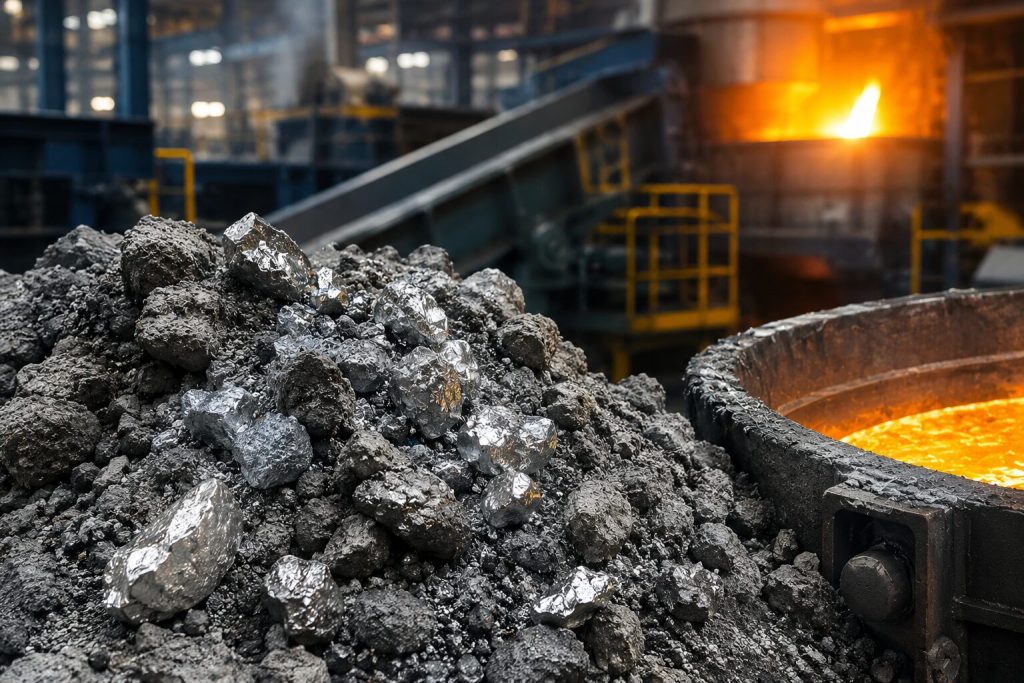
Aluminum dross is a by-product generated during aluminum melting. It contains aluminum metal mixed with aluminum oxides and other non-metallic materials. Although dross is often treated as waste, it can still contain a significant amount of recoverable aluminum.
Aluminum dross processing is used to separate metallic aluminum from oxide-rich dross, recover valuable metal, and reduce material losses during aluminum production and recycling.
This article explains what aluminum dross processing is, why it is important, and how the main processing methods work.
What Is Aluminum Dross?
Aluminum dross forms on the surface of molten aluminum when the metal reacts with oxygen during melting, holding, stirring, and other furnace operations.
The resulting dross is not a uniform material. Its composition depends on factors such as the aluminum alloy, charge material, melting temperature, furnace conditions, and time that the metal remains molten.
Aluminum dross generally contains:
- Metallic aluminum
- Aluminum oxide
- Other oxides and non-metallic compounds
- Flux or salt residues in some processes
The metallic aluminum trapped in dross is the main reason it is processed rather than simply discarded.
Why Is Aluminum Dross Processing Important?
Dross processing is mainly intended to recover aluminum that would otherwise be lost with furnace waste.
Recover Valuable Aluminum
Metallic aluminum can remain trapped between oxide particles. Proper processing helps release and separate this aluminum so it can be recovered.
Reduce Metal Loss
If dross is removed and discarded without recovery, the aluminum contained in it becomes a direct material loss. Processing can improve overall metal utilization.
Reduce Waste
After metallic aluminum has been separated, the remaining oxide-rich material contains less recoverable metal and can be handled separately.
Improve Recycling Efficiency
For aluminum recycling operations that process large amounts of scrap, effective dross management can contribute to better overall material efficiency.
How Does Aluminum Dross Processing Work?
The exact process depends on the dross composition, temperature, and required recovery level. However, a typical process follows several basic stages:
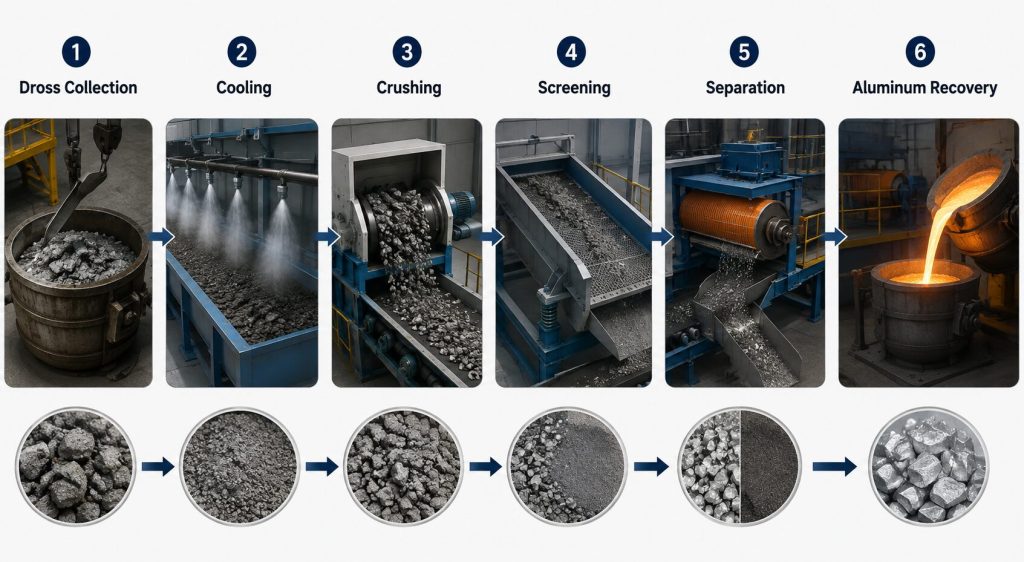
Dross Collection → Cooling → Crushing → Screening → Separation → Aluminum Recovery
1. Dross Collection
Dross is removed from the surface of the molten aluminum and collected for further processing.
Handling conditions are important at this stage because freshly generated dross remains hot and can continue to oxidize when exposed to air.
2. Dross Cooling
The dross is cooled to a suitable temperature before further treatment.
Cooling helps stabilize the material and makes subsequent crushing, screening, and separation easier to control.
The cooling method depends on the processing system and whether the plant uses hot or cold dross processing.
3. Dross Crushing
After cooling, the dross is crushed to break apart the oxide structure and release metallic aluminum trapped inside it.
The crushing process should be controlled carefully. Excessive mechanical treatment can generate too many fine particles, while insufficient crushing may leave recoverable aluminum locked inside larger pieces.
4. Screening
The crushed dross is classified according to particle size.
Screening helps separate different material fractions and improves the efficiency of subsequent recovery. Particle size is important because aluminum-rich particles and oxide-rich fines can behave differently during separation.
5. Separation
After crushing and screening, aluminum-rich material is separated from oxide-rich residues.
The specific separation method depends on the characteristics of the processed dross and the desired recovery performance.
6. Aluminum Recovery
The recovered metallic aluminum can be returned to the aluminum melting process when its condition and composition are suitable.
The remaining residue contains a much lower proportion of metallic aluminum and can be managed separately.
Main Aluminum Dross Processing Methods
There is no single processing method suitable for every aluminum plant. Different methods are selected according to dross composition, production conditions, recovery requirements, and plant capacity.
Mechanical Aluminum Dross Processing
Mechanical processing uses physical operations such as crushing, screening, and separation to recover metallic aluminum from dross.
It does not rely on chemical reactions to separate the materials and can be integrated into a relatively straightforward processing flow.
Its main advantage is that the process focuses on physical recovery of metallic aluminum while allowing the oxide-rich fraction to be separated for further handling.
Hot Dross Processing
Hot dross processing takes place shortly after dross is removed from the furnace.
Because the dross is still at a high temperature, the process aims to recover metallic aluminum before additional oxidation occurs.
Hot processing can reduce the time between dross generation and metal recovery, but the high temperature also creates greater requirements for equipment design, material handling, and process safety.
Cold Dross Processing
In cold dross processing, the material is cooled before crushing and separation.
The lower temperature makes mechanical handling easier and allows the dross to be collected and processed in a more controlled manner.
This method can be suitable for plants where dross is generated continuously but processed in batches.
Salt-Free Aluminum Dross Processing
Salt-free processing avoids the addition of salt during dross treatment.
This can simplify the composition of the processed residue and avoid generating additional salt-containing waste. It is particularly relevant where reducing secondary waste and simplifying residue management are important considerations.
What Affects Aluminum Recovery from Dross?
The amount of aluminum that can be recovered is not determined by the processing method alone.
Several factors can influence recovery performance.
Dross Composition
Dross with a higher metallic aluminum content has greater recovery potential. The composition can vary significantly between different melting operations.
Melting Temperature
Excessive temperatures can increase aluminum oxidation and dross generation. Appropriate temperature control is therefore important for minimizing unnecessary metal loss from the beginning.
Holding Time
Long holding times can increase oxidation at the surface of molten aluminum. Efficient furnace operation can help reduce the amount of dross generated.
Dross Handling
Once dross is removed from the furnace, unnecessary exposure to air can cause further oxidation. Rapid and controlled handling is therefore important.
Particle Size
The efficiency of crushing and screening affects how effectively metallic aluminum can be released from the dross matrix and separated from oxide-rich material.
Aluminum Dross Processing vs. Direct Disposal
Direct disposal of untreated dross can result in the loss of metallic aluminum contained in the material.
Processing takes a different approach: first recover as much valuable metallic aluminum as practical, then handle the remaining residue separately.
For aluminum foundries and aluminum recycling plants, this can improve material utilization while reducing the amount of recoverable metal sent out with waste.
However, the remaining dross residue should still be handled according to its composition and applicable local environmental and waste-management requirements.
How to Improve Aluminum Dross Processing Efficiency
Efficient dross processing starts before the dross reaches the processing stage.
Several practices can help improve overall performance:
- Maintain appropriate aluminum melting temperatures.
- Avoid unnecessary holding of molten aluminum.
- Minimize excessive stirring and turbulence during melting.
- Remove dross using controlled operating procedures.
- Process dross promptly after removal where practical.
- Use suitable crushing and screening conditions.
- Monitor the composition and recovery performance of processed dross.
The objective is not simply to process more dross, but to minimize aluminum losses throughout the entire melting and recovery cycle.
Frequently Asked Questions
Can Aluminum Dross Be Recycled?
Yes. Aluminum dross can be processed to recover metallic aluminum. The remaining oxide-rich material can then be handled separately according to its composition and applicable requirements.
How Do You Process Aluminum Dross?
A typical aluminum dross processing flow includes collection, cooling, crushing, screening, separation, and aluminum recovery. The exact process depends on the characteristics of the dross and the required recovery performance.
Why Is Aluminum Dross Generated?
Aluminum dross is mainly generated when molten aluminum reacts with oxygen during melting and holding. Furnace temperature, alloy composition, charge materials, and operating conditions can all affect dross generation.
What Is the Difference Between Hot and Cold Dross Processing?
Hot dross processing treats the material shortly after it is removed from the furnace, while cold dross processing cools the dross before mechanical treatment. Each approach has different requirements for handling, equipment, and process control.
Conclusion
Aluminum dross processing is an important part of aluminum melting and recycling because dross still contains recoverable metallic aluminum. Through controlled cooling, crushing, screening, and separation, valuable aluminum can be recovered while reducing unnecessary metal losses.
The effectiveness of the process depends not only on the selected processing method, but also on melting conditions, dross composition, handling practices, and particle-size control. For aluminum producers and recyclers, managing dross as a recoverable material rather than simply as waste can improve overall metal utilization and production efficiency.