
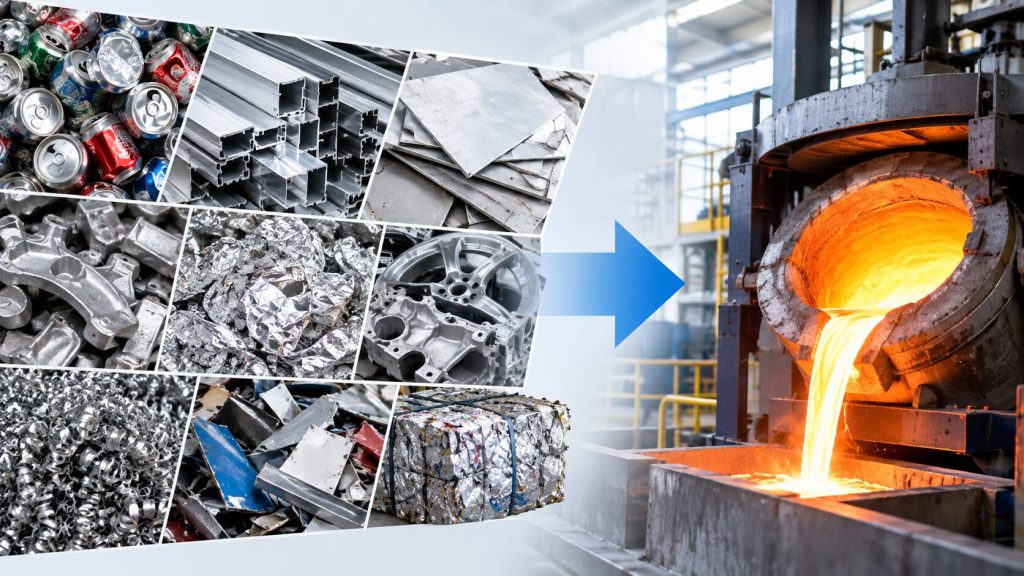
Aluminum scrap is an important source of secondary aluminum for foundries, recyclers, and metal processing plants. Recycling aluminum scrap through melting can reduce raw material consumption, energy use, and production waste.
But what types of aluminum scrap can actually be melted?
Most aluminum-containing scrap can be recycled through melting, including cans, extrusion scrap, casting returns, foil, automotive components, machining chips, and production offcuts. However, different scrap types require different preparation methods because coatings, moisture, oil, alloy composition, and scrap size can affect melting efficiency and metal recovery.
Types of Aluminum Scrap That Can Be Melted
1. Aluminum Cans
Aluminum beverage cans are one of the most common types of recyclable aluminum scrap.
Because cans are thin and lightweight, they have a relatively large surface area compared with their weight. This can increase oxidation and metal loss during melting.
Before charging, cans are often sorted, crushed, or baled to improve handling and charging efficiency.
2. Aluminum Extrusion Scrap
Aluminum extrusion scrap comes from window frames, doors, industrial profiles, and manufacturing offcuts.
Clean extrusion scrap is generally easy to recycle. However, painted, anodized, or coated profiles may require additional preparation.
Sorting extrusion scrap by alloy can also help maintain consistent molten metal chemistry.
3. Aluminum Sheet and Plate Scrap
Aluminum sheet and plate scrap is generated by fabrication, stamping, construction, transportation, and industrial manufacturing.
Large pieces may need to be cut or reduced in size before charging into the furnace. If the scrap contains different alloys, sorting is recommended before melting.
4. Aluminum Casting Scrap
Aluminum casting scrap includes rejected castings, runners, risers, gates, and other foundry returns.
This type of scrap is often relatively clean and can be returned to the melting operation. However, alloy composition should be controlled because mixing incompatible alloys can affect the properties of the final product.
5. Aluminum Foil
Aluminum foil can be melted and recycled, but its very thin structure makes it more sensitive to oxidation.
Loose foil has a large surface area and can be difficult to charge efficiently. Baling or compacting the material before melting can improve handling and reduce unnecessary losses.
6. Automotive Aluminum Scrap
Automotive components such as wheels, engine parts, transmission housings, and body components can provide valuable aluminum scrap.
However, automotive scrap often contains steel, copper, plastics, rubber, paint, and other materials.
Proper separation and scrap preparation are therefore important before the material enters the melting process.
7. Aluminum Machining Chips
Machining chips and turnings are common by-products of CNC machining, milling, drilling, and other manufacturing processes.
Although they contain valuable aluminum, loose chips can have a high surface-area-to-weight ratio. Cutting fluids, oil, and moisture can also affect the melting process.
Cleaning, drying, and compacting or briquetting chips can improve handling and metal recovery.
8. Coated and Mixed Aluminum Scrap
Painted, anodized, and coated aluminum can also be recycled through melting.
However, coatings and contaminants may increase dross formation and affect melt quality. Mixed aluminum scrap can present another challenge because different alloys may have different chemical compositions.
For these materials, sorting and pretreatment become particularly important.
What Aluminum Scrap Needs Preparation Before Melting?
Not all scrap should be charged directly into a furnace.
Typical preparation steps include:
- Sorting: Separate aluminum from steel, copper, plastics, and other materials.
- Cleaning: Remove excessive oil, grease, dirt, and other contaminants.
- Drying: Keep scrap free from moisture before charging.
- Size reduction: Cut or crush oversized material when necessary.
- Compaction: Compact lightweight scrap such as cans, foil, and machining chips.
Good preparation can improve charging efficiency, reduce oxidation, and help achieve better aluminum recovery.
Can Different Aluminum Scrap Be Melted Together?
Different aluminum scrap can physically be melted together, but that does not always mean they should be.
Aluminum alloys contain different amounts of silicon, magnesium, copper, manganese, zinc, and other elements. Mixing scrap without considering its composition can result in molten aluminum that does not meet the required alloy specification.
A better approach is:
Identify → Sort → Prepare → Melt → Analyze → Adjust → Cast
For applications requiring consistent alloy properties, scrap classification and chemical analysis are essential parts of the recycling process.
How Does Scrap Type Affect the Melting Process?
Different scrap forms behave differently during melting.
| Scrap Type | Main Challenge | Recommended Preparation |
|---|---|---|
| Aluminum cans | Lightweight and high oxidation risk | Crushing or baling |
| Extrusion scrap | Coatings and alloy variation | Sorting and sizing |
| Sheet and plate | Large dimensions | Cutting or sizing |
| Casting scrap | Alloy composition | Alloy sorting |
| Aluminum foil | Very high surface area | Compacting |
| Automotive scrap | Mixed materials | Separation and sorting |
| Machining chips | Oil, moisture, oxidation | Cleaning and briquetting |
| Coated scrap | Paint and surface coatings | Cleaning or pretreatment |
This is why the melting system should be selected according to the actual scrap being processed rather than capacity alone.
Choosing an Aluminum Melting Furnace for Scrap
When selecting an aluminum melting furnace, consider the type and condition of your scrap as well as your production requirements.
Important factors include:
- Scrap type and density
- Required melting capacity
- Melting rate
- Charging method
- Energy consumption
- Expected aluminum recovery
- Dross generation
- Alloy requirements
- Production schedule
For lightweight materials such as cans, foil, and machining chips, charging and oxidation control can be particularly important. Heavier casting scrap and production offcuts may require different charging conditions.
A properly selected aluminum melting furnace can provide controlled heating and efficient melting while helping operators process different types of aluminum scrap.
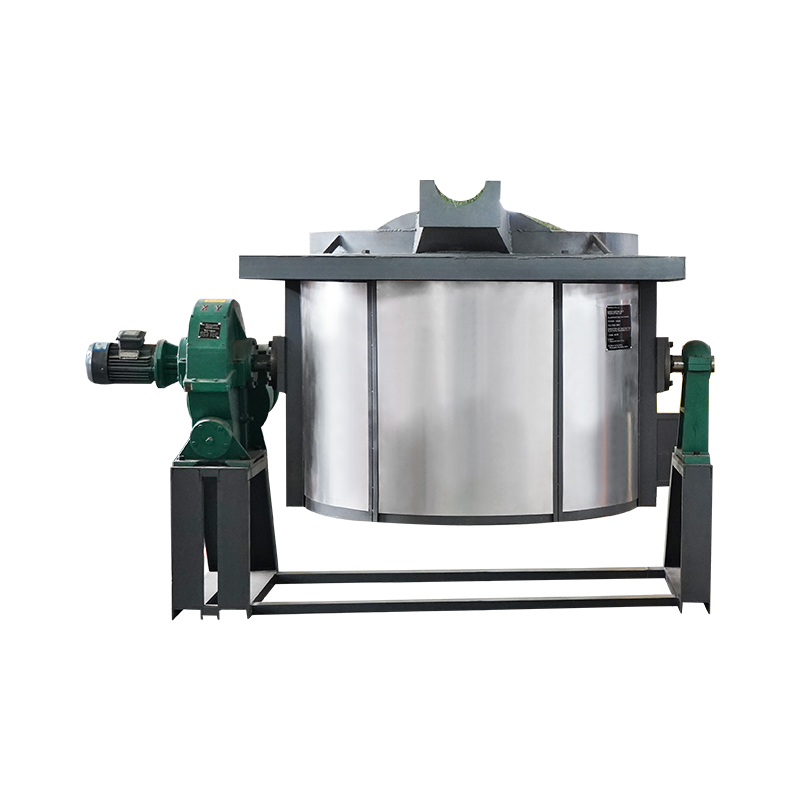
Aluminum Scrap Melting Process
A typical aluminum scrap recycling process includes:
Scrap Collection → Sorting → Cleaning → Size Reduction → Charging → Melting → Dross Removal → Melt Treatment → Temperature Adjustment → Casting
Every stage can influence the final metal recovery and melt quality.
Proper temperature control, charging practices, and dross management are especially important during the melting stage.
Conclusion
A wide range of aluminum scrap can be melted, including cans, extrusion scrap, sheet and plate, casting returns, foil, automotive components, machining chips, and coated aluminum.
The key is not simply whether the scrap can melt, but whether it has been properly sorted and prepared for efficient melting.
For recyclers and foundries, choosing the right aluminum melting furnace based on scrap characteristics, production capacity, alloy requirements, and desired recovery can help create a more stable and efficient recycling process.
If you are processing aluminum scrap and need help selecting a suitable melting system, contact us with your scrap type and production requirements.
Frequently Asked Questions
Can aluminum cans be melted?
Yes. Aluminum cans can be recycled through melting, although their lightweight structure makes proper charging and oxidation control important.
Can aluminum foil be melted?
Yes. Aluminum foil can be melted, but compacting the material before charging can improve handling and recovery.
Can aluminum machining chips be melted?
Yes. Cleaning, drying, and briquetting machining chips can improve melting efficiency and reduce material loss.
Can painted aluminum scrap be melted?
Yes, but coatings and contaminants may affect dross formation and melt quality. Pretreatment may be required depending on the material.
Can different aluminum alloys be melted together?
They can be melted together physically, but uncontrolled mixing may produce an alloy composition that does not meet the required specification. Sorting and chemical analysis are therefore recommended.