
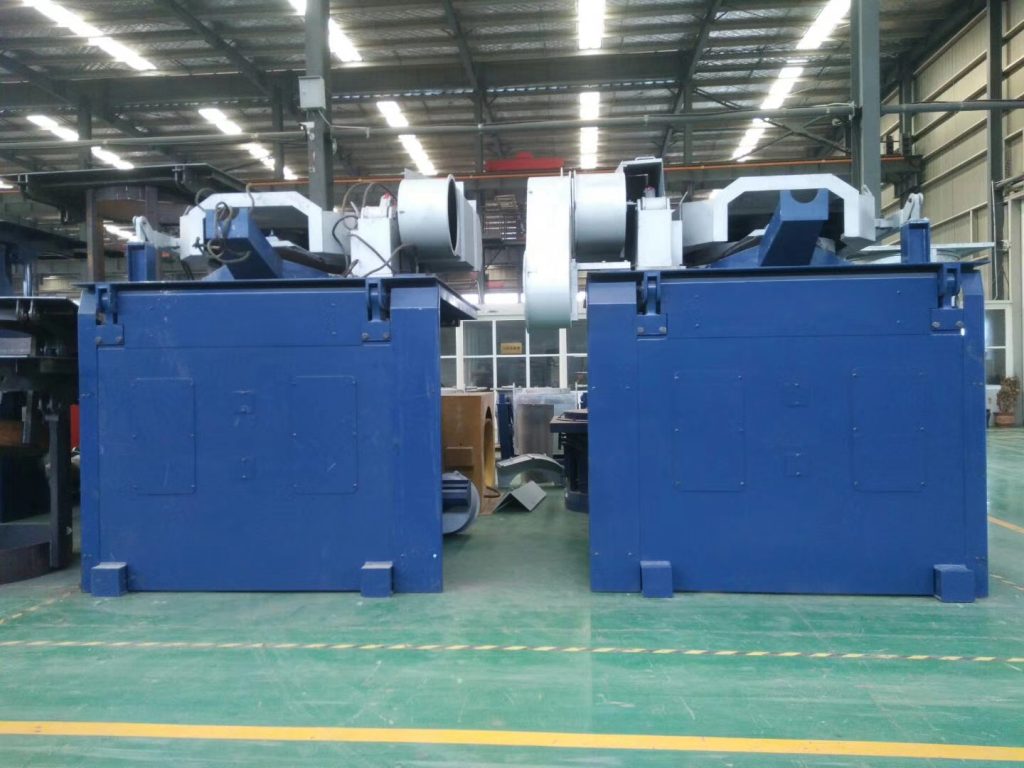
Choosing the right aluminum melting furnace depends on more than the required melting temperature. Different furnace designs transfer heat in different ways, which affects melting speed, energy consumption, metal loss, temperature control, capacity, and operating costs.
For aluminum foundries, recycling plants, and casting operations, common furnace options include induction furnaces, gas-fired furnaces, electric resistance furnaces, crucible furnaces, reverberatory furnaces, and rotary furnaces. Each type has a different operating principle and is suited to particular production conditions.
Understanding the differences between these aluminum melting furnace types makes it easier to select equipment based on actual production requirements rather than simply comparing furnace capacity or purchase price.
What Are the Main Types of Aluminum Melting Furnaces?
The main aluminum melting furnace types can be classified according to their heat source, furnace structure, and method of transferring heat to the aluminum charge.
The most common types include:
- Induction aluminum melting furnaces
- Gas-fired aluminum melting furnaces
- Electric resistance furnaces
- Crucible furnaces
- Reverberatory furnaces
- Rotary furnaces
Some furnace designs can overlap between these categories. For example, a crucible furnace may be heated by gas or electric resistance elements. Therefore, furnace type should be evaluated based on both the heating method and the actual furnace configuration.
1. Induction Aluminum Melting Furnace
An induction aluminum melting furnace uses electromagnetic induction to generate heat directly inside the aluminum charge.
An alternating current passes through an induction coil surrounding the furnace crucible or lining. This creates an alternating electromagnetic field, which induces electrical currents in the conductive aluminum. The electrical resistance of the metal converts these currents into heat, causing the charge to melt.
Because heat is generated within the metal rather than transferred primarily from a burner or heating element, induction melting can provide rapid and controllable heating.
Main advantages
Induction furnaces are particularly useful when production requires:
- Fast melting
- Accurate temperature control
- Flexible power adjustment
- Relatively clean melting conditions
- Repeatable melting cycles
- Compact equipment design
The furnace power and operating frequency can be selected according to the furnace capacity, aluminum charge, and required melting performance.
For foundries processing different aluminum alloys, the ability to control melting power and temperature can also help make production cycles more consistent.
Limitations
Induction furnaces require a suitable electrical power supply and water-cooling system for the induction coil and associated components. Initial equipment investment can also be higher than that of some simple fuel-fired furnaces.
For large-scale aluminum holding and melting operations, other furnace designs may provide advantages depending on the required capacity and production process.
2. Gas-Fired Aluminum Melting Furnace
A gas-fired aluminum melting furnace uses burners to generate heat through fuel combustion. The heat is transferred to the aluminum charge through radiation, convection, and contact with the heated furnace environment.
Natural gas is commonly used where gas infrastructure is available.
Gas-fired systems are widely used in aluminum foundries because they can be built in relatively large capacities and are suitable for continuous or batch melting operations.
Advantages
Gas-fired furnaces can offer:
- High heating capacity
- Suitability for large furnace volumes
- Relatively simple heating systems
- Compatibility with existing gas infrastructure
- Flexible furnace configurations
They are particularly attractive in locations where natural gas is inexpensive and readily available.
Considerations
Combustion-based heating introduces exhaust gases into the furnace system and can increase oxidation if the furnace atmosphere and burner operation are not properly controlled.
Aluminum is also susceptible to oxidation and dross formation during melting. Furnace temperature, flame characteristics, charge exposure time, and operating practices can therefore influence metal recovery.
Gas prices and environmental regulations should also be considered when evaluating long-term operating costs.
3. Electric Resistance Aluminum Melting Furnace
An electric resistance furnace generates heat using electrical resistance elements.
When electric current passes through the heating elements, they become hot and transfer heat to the furnace chamber. The aluminum charge is then heated primarily through radiation and convection from the surrounding hot environment.
Resistance heating is commonly used in smaller and medium-sized aluminum melting applications, as well as in furnaces designed for controlled heating and holding.
Advantages
Electric resistance furnaces can provide:
- Stable temperature control
- Relatively simple electrical heating
- No direct combustion gases
- Good suitability for controlled batch operations
- Convenient integration with automatic temperature controllers
They can be useful where clean electric heating and accurate temperature control are more important than extremely high melting rates.
Limitations
Because the heating elements heat the furnace environment before the aluminum charge reaches the required temperature, the melting process can be slower than direct induction heating in some applications.
Heating element life is another consideration. Repeated exposure to high temperatures can eventually require element inspection and replacement.
4. Crucible Furnace
A crucible furnace melts aluminum inside a removable or fixed crucible. The crucible contains the molten metal while an external heat source heats the crucible and its contents.
Crucible furnaces can use gas burners, electric resistance elements, or other heating methods.
Their relatively simple structure makes them common in small foundries, laboratories, workshops, and low-volume casting operations.
Advantages
The main advantages include:
- Simple construction
- Relatively low initial investment
- Small footprint
- Easy batch operation
- Suitable for small quantities of aluminum
A crucible furnace can be practical when production volumes are relatively low and the flexibility of small-batch melting is more important than maximum productivity.
Limitations
The capacity of a crucible furnace is generally limited compared with large reverberatory or rotary systems.
The crucible itself is also a consumable component. Its service life depends on temperature, alloy composition, charging practices, thermal cycling, and refractory quality.
For larger production facilities, the labor involved in loading and handling individual crucibles can also become a limiting factor.
5. Reverberatory Furnace
A reverberatory furnace is one of the traditional furnace designs used for large-scale aluminum melting.
Instead of heating the aluminum directly, burners heat the furnace chamber and roof. Thermal radiation from the hot furnace surfaces and combustion gases transfers heat to the aluminum charge.
The aluminum is typically held in a relatively large refractory-lined chamber, making this furnace type suitable for high-capacity melting and holding operations.
Advantages
Reverberatory furnaces are particularly suitable for:
- Large aluminum melting capacity
- Continuous production
- High-volume foundries
- Integrated melting and holding operations
- Large scrap charging requirements
Their large working volume allows substantial quantities of aluminum to be melted and maintained at temperature.
Limitations
The larger furnace structure means greater thermal mass and potentially higher heat losses. Furnace design, insulation, burner efficiency, and operating practices have a significant effect on fuel consumption.
Aluminum can also be exposed to the furnace atmosphere over a relatively large surface area, so oxidation and dross formation need to be controlled carefully.
6. Rotary Aluminum Melting Furnace
A rotary furnace uses a rotating cylindrical chamber to move and mix the charge while heating takes place.
Rotary furnaces are particularly useful for processing aluminum scrap and other secondary materials. Rotation improves contact between the charge and the heated furnace environment and can help process irregular or contaminated scrap.
This makes rotary furnaces an important option for aluminum recycling operations.
Advantages
A rotary furnace can provide:
- Good mixing of the charge
- Flexibility when processing scrap
- Suitable operation for recycling applications
- High material utilization potential
- Ability to process certain difficult or mixed charges
However, the actual recovery rate depends heavily on scrap composition, contamination, fluxing practice, temperature, furnace design, and operating conditions.
Limitations
Rotary furnaces have more mechanical components than simple stationary furnaces. The rotating mechanism therefore requires additional maintenance.
They are also not necessarily the best choice for every clean-aluminum melting application. The furnace should be selected according to the type and condition of the feedstock.
How Do Different Aluminum Melting Furnaces Compare?
The best way to compare aluminum melting furnace types is to look at the factors that affect the entire production process rather than focusing on one specification.
| Furnace Type | Heating Method | Typical Strength | Main Consideration |
|---|---|---|---|
| Induction Furnace | Electromagnetic induction | Fast, controllable melting | Electrical infrastructure and cooling |
| Gas-Fired Furnace | Fuel combustion | Large-capacity heating | Fuel consumption and oxidation |
| Resistance Furnace | Electric resistance | Temperature control | Heating rate and element life |
| Crucible Furnace | Gas or electric | Simple small-batch melting | Limited capacity |
| Reverberatory Furnace | Gas combustion | Large-volume melting and holding | Thermal efficiency and oxidation |
| Rotary Furnace | Gas or other heating | Scrap processing and recycling | Mechanical maintenance |
This comparison is only a starting point. Two furnaces of the same nominal capacity can have very different operating costs and production performance because of differences in insulation, power input, furnace geometry, loading method, and operating cycle.
Which Aluminum Melting Furnace Is Best for Different Applications?
There is no single best aluminum melting furnace for every application.
Small Foundry or Low-Volume Production
A crucible furnace may be suitable when production volume is limited and simple batch melting is required.
Electric resistance furnaces can also be considered when temperature control and clean electric heating are important.
Medium-Scale Aluminum Melting
Induction furnaces can be attractive for operations that prioritize fast melting, controllable power, and flexible production cycles.
The appropriate furnace capacity should be determined from the required batch size and production schedule rather than simply choosing the largest available model.
Large Aluminum Foundry
Large foundries with continuous or high-volume production may consider reverberatory or gas-fired furnace systems because their larger working chambers can accommodate substantial quantities of aluminum.
The furnace design should also account for holding requirements, charging frequency, and integration with casting equipment.
Aluminum Scrap Recycling
Rotary furnaces are often considered for difficult or mixed aluminum scrap because their rotating chamber can help with charge movement and processing.
Other furnace types can also process scrap aluminum, but the choice depends heavily on scrap composition, contamination, required recovery, and production scale.
Fast and Controllable Melting
When rapid melting and precise power control are major priorities, induction melting is a strong option.
Its suitability becomes particularly relevant when the production process involves relatively clean metallic charges and requires repeatable melting cycles.
What Factors Should You Consider When Choosing an Aluminum Melting Furnace?
Selecting among different aluminum melting furnace types requires looking at the complete production process.
1. Aluminum Charge Material
The first question is what type of aluminum will be melted.
Clean ingots, returns, castings, extrusion scrap, mixed scrap, and contaminated scrap can have very different melting characteristics.
Scrap containing paint, coatings, oils, plastics, or other contaminants may require additional preparation and a furnace designed to handle the specific feedstock.
2. Required Melting Capacity
Capacity should be based on the actual production schedule.
For batch melting, determine how much aluminum must be melted in each cycle. For continuous operations, calculate the required throughput, such as kilograms or tons per hour.
Oversizing a furnace does not automatically increase efficiency. If the equipment frequently operates at a low load, energy consumption per unit of aluminum can increase.
3. Melting Rate
Melting rate determines how quickly solid aluminum can be converted into molten metal.
A higher melting rate can increase production capacity, but it may require higher installed power or fuel input.
The actual melting rate is influenced by furnace capacity, charge size, aluminum composition, charge density, furnace temperature, heat losses, and operating procedures.
4. Energy Source
The available energy infrastructure is another major consideration.
Electric furnaces require sufficient electrical capacity and appropriate power systems, while gas-fired furnaces require a suitable fuel supply and combustion system.
The local cost and availability of electricity and natural gas should be evaluated over the expected service life of the equipment rather than only during the initial purchase.
5. Temperature Control
Aluminum melts at a much lower temperature than steel, so precise temperature management is important.
Excessive temperature and unnecessarily long holding times can increase oxidation and dross formation.
A suitable control system should therefore maintain the required process temperature without excessive overheating.
6. Metal Loss and Oxidation
Aluminum reacts readily with oxygen at elevated temperatures, producing oxide material commonly found in dross.
Furnace design, charge exposure, temperature, holding time, and operating practices all influence oxidation and metal recovery.
For recycling operations, this factor can have a particularly significant effect on the economics of the process.
7. Furnace Maintenance
Maintenance requirements differ considerably between furnace types.
Induction furnaces require attention to coils, refractory linings, cooling systems, and electrical components. Gas-fired systems require inspection of burners, combustion controls, refractory materials, and exhaust systems.
Rotary furnaces additionally include mechanical drive components that require regular inspection.
Maintenance should therefore be considered as part of the total operating cost.
Aluminum Melting Furnace Types: Which One Should You Choose?
The appropriate furnace depends primarily on the relationship between material, capacity, melting rate, energy source, and production process.
For small-batch production, a crucible or resistance furnace may provide the required simplicity and flexibility.
For applications that require rapid and controllable melting, an induction furnace can be a strong choice, particularly when the aluminum charge is relatively clean and production cycles need to be tightly controlled.
For large-volume aluminum melting, reverberatory or gas-fired furnace systems can provide the working volume required for high-throughput production.
For aluminum recycling involving mixed or difficult scrap, rotary furnaces may offer advantages because of their ability to move and process the charge during melting.
The right decision should therefore be based on actual production conditions rather than assuming that one furnace type is universally more efficient than another.
Conclusion
The main aluminum melting furnace types include induction, gas-fired, resistance, crucible, reverberatory, and rotary furnaces. Each uses a different approach to generate and transfer heat, resulting in different characteristics in terms of melting speed, capacity, temperature control, energy consumption, maintenance, and suitability for different aluminum charges.
Induction furnaces are well suited to fast and controllable melting, while gas-fired and reverberatory systems can be advantageous for larger production volumes. Crucible and resistance furnaces are often practical for smaller or more controlled batch operations, while rotary furnaces are particularly relevant to aluminum scrap recycling.
The best furnace is ultimately the one that matches the aluminum charge, required capacity, melting rate, energy source, operating conditions, and production process. Understanding these differences provides a more reliable basis for comparing aluminum melting furnace types and selecting the appropriate technology.