
Introduction
In modern aluminum and aluminum alloy production, furnace system configuration plays a critical role in determining product quality, energy efficiency, and process stability. With increasing requirements for precise temperature control and low oxidation loss, aluminum processing plants rely on integrated thermal equipment systems rather than standalone furnaces. Understanding the functions, structural characteristics, and technical parameters of different furnace types is essential for optimizing aluminum melting furnace and casting processes in industrial production.
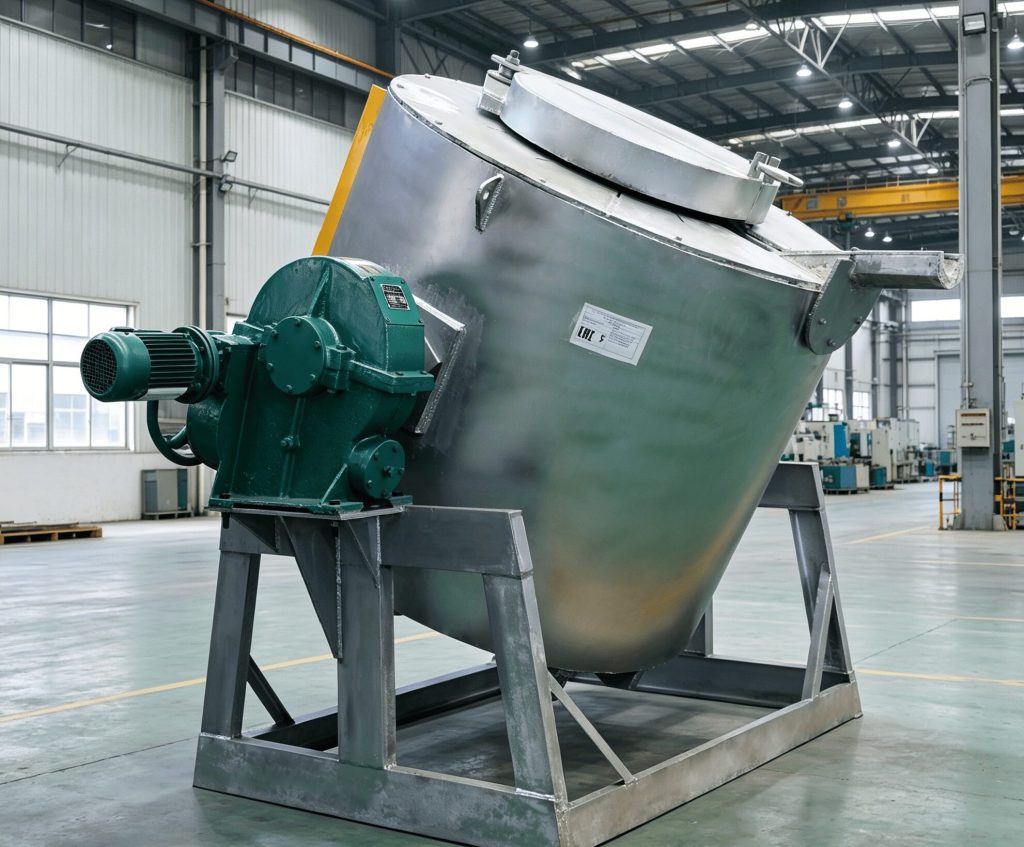
1. Furnace Types in Aluminum Smelting and Production
In the smelting and production of aluminum and aluminum alloys, the furnaces typically used include smelting furnaces, holding furnaces (also known as holding or mixing furnaces), flux drying furnaces, and tool heating furnaces. Aluminum processing plants use solid aluminum ingots as feedstock. The function of the smelting furnace is to melt the feedstock and produce finished alloys, while the holding furnace is used to complete refining, grain refinement, holding, and temperature maintenance during the casting process.
2. Aluminum Melting Furnace Characteristics
Melting furnaces require high temperatures and rapid melting rates; therefore, they consume significant amounts of energy. The surface area of the molten metal relative to its volume within the furnace chamber is relatively large—that is, the furnace chamber is relatively shallow—which increases the heating surface area of the charge and shortens the heat transfer path, thereby accelerating the melting rate of the aluminum melting furnace system.
2.1 Structural Design of Melting Furnace
Some large aluminum processing plants install dedicated gas furnaces to centrally melt aluminum ingots, then transport the molten aluminum to individual resistance melting furnaces to accelerate the melting process in those furnaces.
3. Aluminum Holding Furnace Characteristics
Holding furnaces require that contamination of the molten metal by the furnace atmosphere be minimized as much as possible, and that the furnace temperature remain stable and easily controllable. Consequently, holding furnaces for aluminum consume relatively less energy, and the ratio of the melt’s surface area to its volume is smaller, meaning the furnace chamber is relatively deeper.
4. Technical Parameter Comparison
4.1 Resistance Melting Furnace vs Resistance Holding Furnace
| Furnace Capacity /t | Phase | Voltage /V | Melting Furnace Power /kW | Holding Furnace Power /kW | Melting Furnace Temp /°C | Holding Furnace Temp /°C | Melting Furnace Dimensions /mm | Holding Furnace Dimensions /mm |
|---|---|---|---|---|---|---|---|---|
| 6 | 3 | 380 | 525 | 240 | 850 | 900 | 5060 × 2500 × 300 | 3370 × 2500 × 510 |
| 9 | 3 | 380 | 680 | 325 | 850 | 900 | 6500 × 2500 × 350 | 4500 × 2500 × 500 |
| 12 | 3 | 380 | — | 375 | — | 900 | — | 6000 × 3000 × 500 |
5. Industrial Furnace System Configuration
In primary aluminum smelters, molten primary aluminum is used as the main furnace charge. The aluminum melting furnace and holding furnace system can be used separately or combined into a single unit. Regardless of configuration, energy consumption is lower than traditional aluminum smelting furnace systems used for melting aluminum ingots.
The furnace chamber depth of a hybrid furnace is generally 800 mm. If the chamber is too deep, it becomes difficult to operate inside the furnace.
A flux drying furnace is typically designed as a box-type resistance furnace. A tool heating furnace can use a bogie-type resistance furnace to heat casting tools.
6. Extended Industrial Analysis
6.1 Energy Efficiency of Aluminum Furnace Systems
In modern aluminum production lines, separating melting furnace and holding furnace functions significantly improves energy efficiency. The melting stage requires high-intensity heating, while the holding stage focuses on thermal stabilization with lower power demand.
This configuration helps reduce overall energy fluctuation in industrial aluminum melting processes.
6.2 Metallurgical Quality Control
The holding furnace aluminum system plays a key role in reducing hydrogen content and non-metallic inclusions. It also stabilizes alloy composition before casting, which directly impacts mechanical properties of final aluminum products.
6.3 Furnace Design and Operation
Key design factors in resistance melting furnace systems include:
- Furnace lining material
- Thermal insulation performance
- Melt circulation stability
- Structural accessibility
These factors directly affect furnace lifespan and operational efficiency.
6.4 Hybrid Furnace Systems
Hybrid systems combining melting and holding functions are widely used in medium-scale aluminum plants. They reduce material transfer loss and improve production flexibility in aluminum melting process systems.
However, improper furnace depth design may lead to uneven heating and reduced efficiency.
7. Conclusion
The aluminum melting furnace system and holding furnace system form the core of modern aluminum thermal processing. Melting furnaces focus on rapid heating and phase transformation, while holding furnaces ensure stability, composition control, and casting readiness.
A properly designed furnace system significantly improves energy efficiency, production stability, and product quality in industrial aluminum processing.
Contact Us for Aluminum Furnace Solutions
If you are planning to build or upgrade an aluminum melting furnace system, selecting the right furnace configuration is critical for achieving stable production performance, energy efficiency, and high-quality aluminum casting results.
Our company specializes in the design and manufacturing of aluminum melting furnaces, holding furnaces, and complete aluminum thermal processing systems. We can provide customized furnace solutions based on your production capacity, alloy requirements, and plant layout.
Whether you are looking for a standalone resistance melting furnace or a complete integrated furnace system, our engineering team can support you with technical consultation, system design recommendations, and project planning.
Contact us today to get a tailored furnace solution for your aluminum production line.