
A medium frequency induction furnace is an advanced metal melting solution that uses electromagnetic induction technology to generate heat directly inside metal materials. Due to its high efficiency, fast melting speed and precise temperature control, it has become widely used in foundries, metal casting plants and recycling industries.
Compared with traditional fuel-fired furnaces and power frequency furnaces, a medium frequency induction melting furnace provides cleaner operation, lower heat loss and better production flexibility. It is commonly used for melting steel, cast iron, stainless steel, copper, aluminum and other metal alloys.
For industrial buyers, selecting the right MF induction furnace requires careful consideration of furnace capacity, power configuration, operating frequency and long-term operating costs. This guide explains the working principle, advantages and key buying factors of medium frequency induction furnaces.
1. What Is a Medium Frequency Induction Furnace?
A medium frequency induction furnace is an electric melting furnace that uses medium-frequency alternating current to create an electromagnetic field and generate heat inside conductive metals.
The working frequency of medium frequency induction furnaces is generally between 100Hz and 10,000Hz. Compared with traditional heating methods, induction melting does not rely on external heat transfer. Instead, heat is produced directly inside the metal through induced eddy currents.
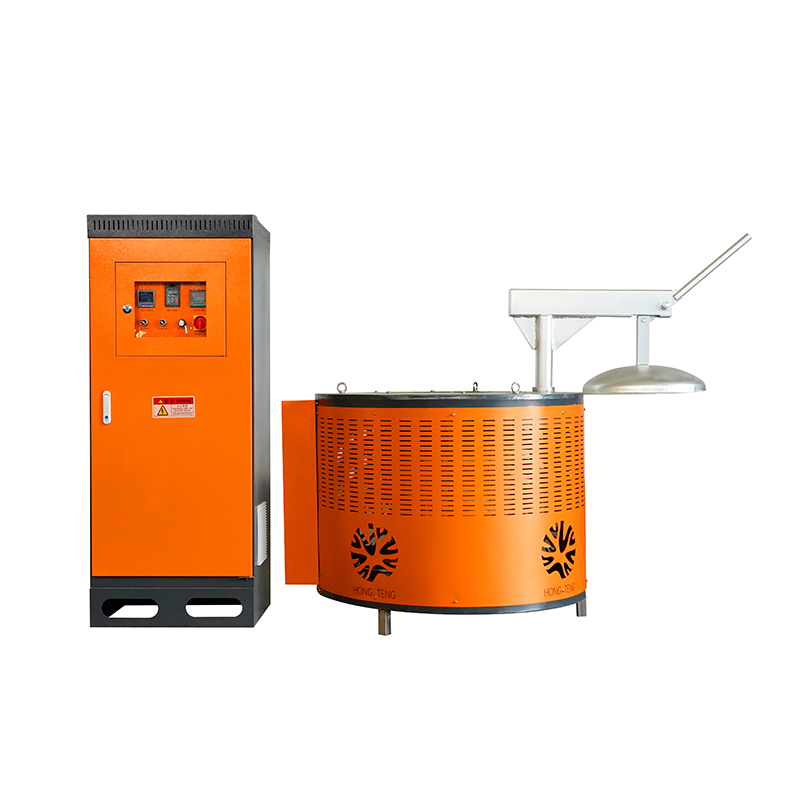
A complete MF induction furnace system mainly consists of:
- Medium frequency power supply: Converts industrial electricity into adjustable medium-frequency current.
- Induction coil: Creates an alternating magnetic field around the furnace crucible.
- Furnace body and crucible: Holds the metal charge during melting.
- Water cooling system: Protects the coil and electrical components during continuous operation.
- Control system: Provides power adjustment, temperature monitoring and safety protection.
Because of its flexible operation and excellent melting performance, the medium frequency induction furnace has become an important choice for small and medium-sized foundries and metal processing factories.
2. How Does a Medium Frequency Induction Furnace Work?
The working principle of a medium frequency induction furnace is based on electromagnetic induction and Joule heating.
The melting process mainly includes three steps:
2.1 Power Conversion
The power supply converts standard industrial electricity into medium-frequency alternating current. The output power and frequency can be adjusted according to different metal materials and production requirements.
2.2 Electromagnetic Induction
The medium-frequency current passes through the induction coil and generates a rapidly changing magnetic field.
When metal materials are placed inside the furnace, the magnetic field induces strong eddy currents inside the metal charge.
2.3 Internal Heating and Melting
The resistance of the metal converts the induced current into heat. Since heat is generated directly inside the material, the melting process is fast and uniform.
This direct heating method helps reduce heat loss and provides:
- Faster melting cycles
- Better temperature control
- More uniform molten metal quality
- Higher energy utilization
3. Key Benefits of Medium Frequency Induction Furnace
3.1 High Energy Efficiency
A medium frequency induction furnace produces heat directly inside the metal, reducing energy loss caused by traditional external heating methods.
This makes it an efficient solution for modern metal melting operations where energy consumption and production cost are important concerns.
3.2 Fast Melting Speed
The electromagnetic heating process allows rapid temperature increase and shorter melting cycles.
Compared with conventional furnaces, MF induction furnaces can improve production efficiency and reduce waiting time between batches.
3.3 Precise Temperature Control
Modern induction furnaces are equipped with intelligent control systems that allow operators to adjust power output accurately.
Precise temperature control helps:
- Improve casting quality
- Reduce overheating
- Maintain stable metal composition
- Minimize material loss
3.4 Clean and Environment-Friendly Operation
Unlike coal-fired or oil-fired furnaces, induction furnaces do not require direct combustion.
They provide:
- No open flame
- Low emissions
- Lower workplace pollution
- Quiet operation
This makes them suitable for factories with strict environmental requirements.
3.5 Wide Metal Application Range
A properly configured medium frequency induction melting furnace can process various metals, including:
- Cast iron
- Carbon steel
- Stainless steel
- Copper
- Aluminum
- Brass
- Bronze
Different metals require different furnace capacities and power configurations.
4. Applications of Medium Frequency Induction Furnace
The flexibility of medium frequency induction furnaces makes them suitable for various industrial applications.
Steel and Iron Casting
MF induction furnaces are widely used for melting scrap steel, pig iron and alloy materials in casting factories.
Typical applications include:
- Machinery parts
- Automotive components
- Industrial castings
Stainless Steel Melting
Due to accurate temperature control and clean melting conditions, medium frequency induction furnaces are commonly used for stainless steel production and alloy preparation.
Copper and Aluminum Melting
The fast heating characteristics of induction technology make it suitable for non-ferrous metal processing, including copper alloy and aluminum casting.
Metal Recycling
Medium frequency induction furnaces are also widely used in metal recycling plants because they support flexible batch production and efficient remelting of scrap materials.
5. How to Choose the Right Medium Frequency Induction Furnace?
Choosing a suitable medium frequency induction furnace requires more than comparing equipment prices. Buyers should evaluate production requirements, operating conditions and future expansion plans.
5.1 Furnace Capacity
Capacity should match the required production output.
Common configurations include:
- 50kg-500kg: Small foundries, laboratories and trial production
- 500kg-3 ton: Medium-sized casting plants
- 3 ton and above: Large-scale industrial production
Choosing the correct capacity helps avoid unnecessary investment and improves production efficiency.
5.2 Power Configuration
The power rating directly affects melting speed and daily output.
When selecting an MF induction furnace, buyers should consider:
- Metal type
- Melting temperature
- Required melting time
- Daily production volume
A professional supplier should recommend a suitable power configuration based on actual working conditions.
5.3 Cooling System
A reliable cooling system is essential for stable furnace operation.
Buyers should check:
- Cooling capacity
- Water circulation system
- Alarm protection functions
- Continuous operation capability
An efficient cooling system helps extend equipment service life and reduce downtime.
5.4 Automation Level
Modern medium frequency induction furnaces can be equipped with intelligent control systems, including:
- Digital power adjustment
- Temperature monitoring
- Overcurrent protection
- Fault alarm system
Automation improves operation safety and reduces dependence on manual control.
6Medium Frequency Induction Furnace Price & Operating Costs
The total investment for a medium frequency induction furnace consists of the initial equipment purchase cost and long-term operating expenses. Understanding these cost factors helps buyers accurately calculate their ROI (Return on Investment).
6.1 Initial Equipment Cost Factors
- Furnace Capacity & Power Rating: A 500kg/300kW unit for aluminum melting requires significantly less capital than a 3-ton/2000kW steel melting system.
- Power Supply Technology: Modern IGBT solid-state power supplies cost slightly more upfront than older KGPS thyristor systems, but offer 10% to 15% higher energy efficiency.
- Cooling & Tilting Mechanism: Hydraulic tilting mechanisms and closed-loop cooling towers increase the initial cost but offer superior safety and continuous operating reliability compared to manual or mechanical systems.
6.2 Energy Consumption & Running Costs
Energy accounts for the largest portion of long-term operating expenses. Average power consumption benchmarks include:
- Steel / Stainless Steel: ~550 - 650 kWh per ton
- Cast Iron: ~500 - 580 kWh per ton
- Copper / Brass: ~280 - 380 kWh per ton
- Aluminum: ~500 - 600 kWh per ton
- Melting Cycle Time: A modern high-power density MF furnace typically completes a full melt cycle in 40 to 60 minutes per batch.
6.3 Maintenance & Consumable Expenses
Regular operational costs also include crucible or refractory lining replacement (lifespan varies from 50 to 150 heats depending on the material melted), water filter maintenance, and induction coil insulation checks. Investing in a high-efficiency power supply and quality induction coil significantly reduces maintenance downtime and lowers lifetime operating costs.
7. Medium Frequency Induction Furnace vs Power Frequency Furnace
Medium frequency and power frequency furnaces are both used for metal melting, but they have different characteristics.
| Item | Medium Frequency Induction Furnace | Power Frequency Furnace |
|---|---|---|
| Heating speed | Faster melting response | Slower heating process |
| Production flexibility | Suitable for batch production | Better for continuous operation |
| Temperature control | More precise adjustment | Less flexible |
| Application | Steel, iron, copper, aluminum melting | Mainly large continuous production |
For most small and medium-sized foundries, a medium frequency induction furnace provides better flexibility and production control.
8. Frequently Asked Questions (FAQ)
Q1: What temperature can a medium frequency induction furnace reach?
A: A medium frequency induction furnace can easily reach temperatures up to 1,750°C (3,182°F) or higher, making it capable of melting high-melting-point metals like stainless steel, carbon steel, nickel alloys, and titanium, as well as non-ferrous metals like copper and aluminum.
Q2: What is the difference between high frequency, medium frequency, and power frequency furnaces?
A: The main differences lie in frequency range, heating depth, and application:
- High Frequency (>10kHz): Offers shallow penetration depth; best for small-capacity precision melting, precious metals (gold, silver), and surface heat treatment.
- Medium Frequency (100Hz - 10kHz): Offers optimal penetration depth and strong electromagnetic stirring; ideal for batch melting of iron, steel, copper, and aluminum (50kg to 20+ tons).
- Power Frequency (50Hz / 60Hz): Deep penetration but slow heating response; mostly used for large-volume holding furnaces or continuous heavy casting.
Q3: How long does a medium frequency induction furnace coil last?
A: With proper water cooling, correct water quality management, and routine maintenance, an induction coil can last 5 to 10 years or more. However, the refractory furnace lining inside the coil is a consumable and typically needs replacement every 50 to 150 heats depending on the operating temperature and metal processed.
Q4: Can a single MF induction furnace be used for different metals?
A: Yes, but with limitations. While the power supply and furnace shell can handle different metals, you must change the crucible/refractory lining material when switching between ferrous metals (like steel) and non-ferrous metals (like aluminum or copper) to prevent cross-contamination and chemical reactions with the lining.
Q5: How long does it take to melt one ton of steel with an MF induction furnace?
A: With a properly configured power supply (typically 500kW to 800kW per ton of furnace capacity), a medium frequency induction furnace can melt 1 ton of steel in approximately 45 to 60 minutes.
9. Choose a Reliable Medium Frequency Induction Furnace Manufacturer
Selecting an experienced medium frequency induction furnace manufacturer is essential for long-term production stability.
A reliable supplier should provide:
- Professional furnace design
- Customized capacity solutions
- Stable equipment performance
- Technical support
- After-sales service
We provide customized medium-frequency induction furnace solutions to global clients, offering equipment configurations tailored to specific metal melting requirements.
From furnace selection to installation support, we help customers improve melting efficiency and achieve reliable industrial production.