
Fusion-bonded epoxy (FBE) coating is a powder-coating technology used to protect steel pipes against corrosion. The process uses electrostatic spraying to apply epoxy powder to a prepared steel surface, followed by heating to form a protective coating.
For manufacturers planning a pipe coating project, understanding the FBE coating process helps identify the equipment required and the factors that influence coating quality. FBE is also used as the first layer in three-layer polyethylene (3LPE) coating systems, although the two systems have different equipment requirements.
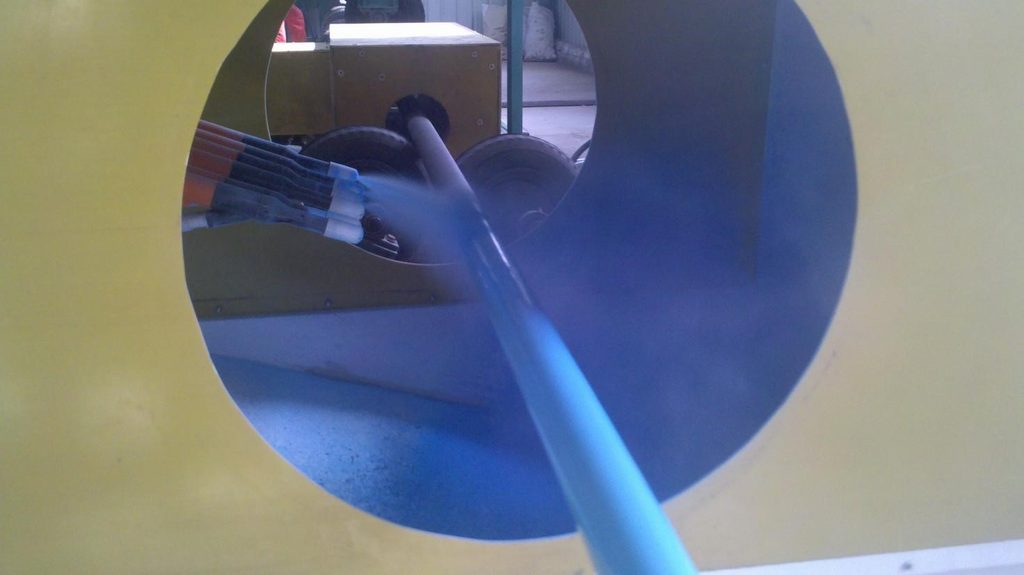
What Is FBE Coating?
FBE coating is a protective layer formed by applying thermosetting epoxy powder to a prepared metal surface. When heated, the powder melts and cures to form a continuous film.
FBE coatings are used in pipeline applications involving oil, natural gas, water, heating systems, and chemical transportation. The required coating specification depends on the application, service conditions, and applicable project standards.
See our FBE coating equipment for an example of an electrostatic epoxy powder spraying system. The product description highlights impact resistance, bending resistance, and high-temperature resistance as coating characteristics.
The intended coating surface—internal or external—should be confirmed when specifying the equipment, as the application method and system configuration can differ.
How Does the FBE Coating Process Work?
A typical plant-applied FBE coating process involves several coordinated stages.
1. Steel Pipe Surface Preparation
Rust, mill scale, oil, and other contaminants must be removed as required by the coating specification. Abrasive blasting is commonly used for external pipe coating to prepare the surface for coating application.
Poor surface preparation can compromise adhesion even when the powder and spraying equipment are suitable.
2. Pipe Heating
The prepared pipe is heated to the conditions specified for the selected epoxy powder. Suitable heating allows the powder to melt and flow after application.
The required temperature depends on the coating formulation, pipe dimensions, and approved process requirements. A universal temperature should not be assumed for every FBE coating line.
3. Electrostatic Powder Spraying
An electrostatic spraying system applies epoxy powder to the intended coating surface. Consistent powder application helps form a uniform protective layer.
The spraying arrangement must match the intended pipe surface and production requirements. See our FBE Single Epoxy Spraying system for details of the listed equipment.
4. Fusion, Curing, and Inspection
The applied powder melts and cures to form the protective coating. After cooling, the coated pipe is inspected according to the applicable specification.
Depending on the project, quality checks may include visual examination, coating thickness measurement, holiday detection, and other required tests. Acceptance criteria should be established before production rather than assumed from a generic process description.
FBE Coating vs. the 3LPE Coating Process
FBE and 3LPE are related coating systems, but they are not interchangeable terms.
A single-layer FBE system uses an epoxy powder coating. A 3LPE system combines an FBE base layer, an adhesive intermediate layer, and a polyethylene outer layer.
See our 3LPE steel pipe anti-corrosion coating production line for the listed three-layer structure and specifications.
| Layer | Material | Thickness listed on the product page |
|---|---|---|
| First layer | Epoxy powder (FBE) | Greater than 100 μm |
| Second layer | Adhesive (AD) | 170–250 μm |
| Third layer | Polyethylene (PE) | 2.5–3.7 mm |
These values are taken from the product page and are not universal requirements for every 3LPE project. The final coating specification must follow the applicable project requirements and approved technical proposal.
Because 3LPE includes adhesive and polyethylene application in addition to the FBE layer, its production line requires a different equipment scope from a standalone FBE spraying system.
To review the available equipment options, see our pipeline anti-corrosion equipment and pipeline anti-corrosion equipment solution.
How to Select FBE Coating Equipment
Before purchasing equipment, confirm the following requirements:
- Pipe dimensions: Specify the required diameter range, length, and other relevant dimensions.
- Coating application: Confirm whether the coating is required on the internal or external pipe surface.
- Coating specification: Define the coating type, required thickness, inspection methods, and applicable standards.
- Production requirements: Establish the target output and operating schedule.
- Equipment scope: Confirm whether surface preparation, heating, spraying, curing, handling, cooling, and inspection systems are included.
A standalone FBE spraying system and a complete 3LPE coating line should be compared against their respective technical specifications. The lowest equipment price does not necessarily represent the best value if important process stages or auxiliary systems are excluded.
Conclusion
The FBE coating process combines surface preparation, heating, electrostatic powder application, curing, cooling, and quality inspection. Selecting suitable equipment requires matching these operations to the pipe dimensions, coating requirements, and production targets.
For projects requiring a complete plant arrangement, see our complete plant design solutions covering metal processing and pipeline corrosion protection.
To discuss your project, contact our team with your pipe dimensions, intended coating surface, production requirements, and applicable specifications.