
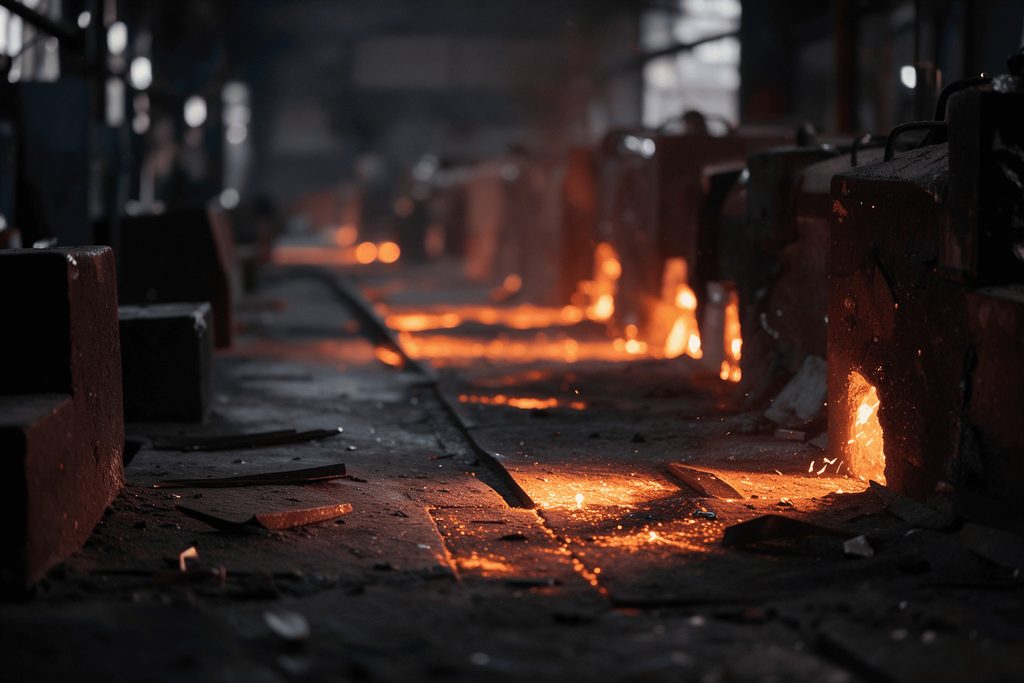
An induction melting furnace melts metal by passing alternating current through a water-cooled copper coil. The resulting magnetic field induces eddy currents in the metal charge inside a refractory crucible, generating heat directly within the material. There is no flame or direct electrode contact with the metal.
Today, induction melting furnaces are widely used for melting steel, cast iron, stainless steel, aluminum, copper and other non-ferrous alloys. They are particularly useful in foundries that need flexible batch production, controlled melting conditions and frequent alloy changes.
How an Induction Melting Furnace Works
An induction melting furnace uses a power supply to provide alternating current to the induction coil. The coil creates a changing magnetic field around the charge, inducing electrical currents inside the conductive metal. The resistance of the metal converts these currents into heat, causing the charge to melt.
As the metal becomes molten, electromagnetic forces also create movement within the bath. This magnetic stirring helps distribute heat and alloying elements throughout the molten metal, supporting more uniform temperature and composition.
A typical coreless induction furnace includes a refractory crucible, water-cooled copper coil, power supply, cooling system and furnace tilting mechanism. The exact configuration depends on the metal being melted, furnace capacity, production cycle and required melting temperature.
Coreless or Channel Induction Furnace?
Coreless and channel induction furnaces serve different production requirements.
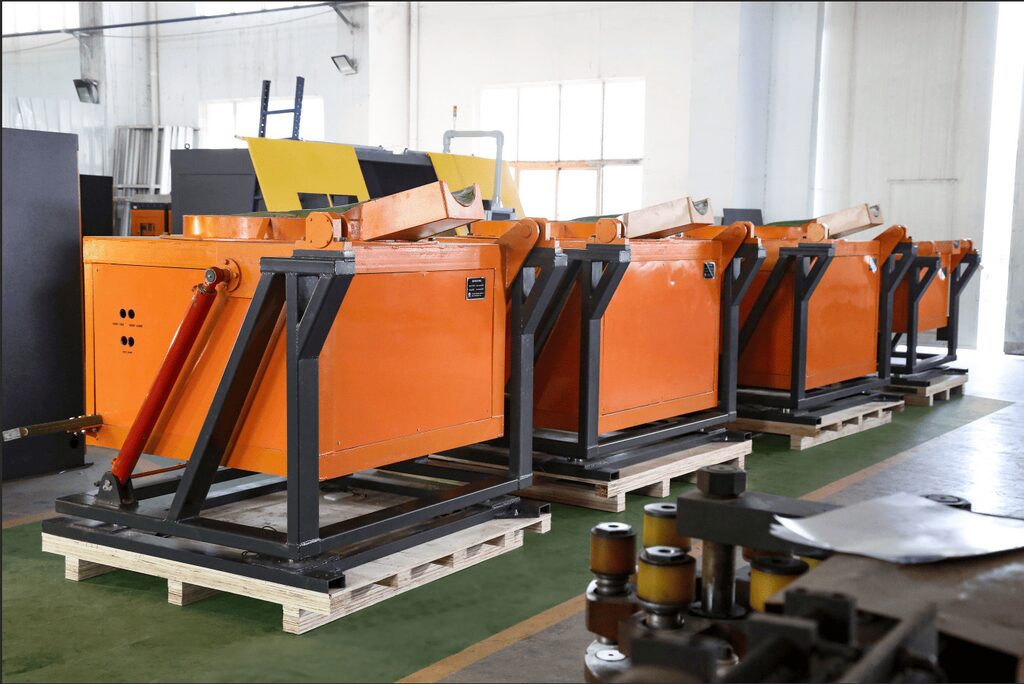
A coreless induction furnace is designed for batch melting. It can be charged with solid metal, melted completely and then tapped before the next batch. This makes it suitable for foundries processing different metals or alloys, as well as operations where production schedules and batch sizes vary.
A channel induction furnace contains an induction channel that forms part of the molten-metal circuit. It normally operates with a molten heel and is well suited to holding and continuous melting applications, particularly where large quantities of the same or similar alloy are processed for extended periods.
| Coreless Induction Furnace | Channel Induction Furnace | |
|---|---|---|
| Typical application | Batch melting | Holding and continuous melting |
| Starting condition | Can start with solid charge | Requires a molten heel |
| Production flexibility | High | Better for stable, continuous production |
| Alloy changeover | Relatively convenient | More demanding |
| Common applications | Steel, iron, stainless steel, copper, aluminum | Aluminum and other non-ferrous holding or continuous applications |
For foundries that melt different alloys or operate intermittent batches, a coreless furnace is usually the more flexible choice. For high-volume operations that continuously process a consistent alloy, a channel furnace can be useful for holding and maintaining molten metal.
In some production lines, the two technologies can also work together: a coreless furnace performs the primary melting, while a channel furnace provides holding capacity for continuous casting or pouring.
Induction Melting Furnace vs. Gas-Fired Furnace
The choice between induction melting and gas-fired melting depends on more than the initial equipment cost. Energy prices, production volume, metal type, required temperature control, metal yield, emissions requirements and operating practices all affect the overall economics.
Induction melting uses electrical energy and does not produce combustion flue gas. A gas-fired furnace, by comparison, relies on fuel combustion and therefore requires management of combustion gases and heat losses.
| Induction Melting Furnace | Gas-Fired Furnace | |
|---|---|---|
| Heat generation | Electromagnetic induction | Fuel combustion |
| Direct flame | No | Yes |
| Temperature control | Precise and responsive | Depends on furnace design and burner system |
| Metal contact with electrodes | No | No |
| Combustion flue gas | None from combustion | Yes |
| Production flexibility | Well suited to batch melting | Often suited to larger or continuous thermal processes |
| Metal oxidation | Can be reduced with proper melting practice | Depends on furnace atmosphere and operating conditions |
Induction furnaces can provide good control over the melting process and are particularly attractive where clean operation, flexible batch production and frequent alloy changes are important. They can also reduce exposure to combustion-related emissions because there is no fuel-fired heating process inside the melting zone.
However, induction is not automatically the lowest-cost option in every plant. Electricity prices, available power capacity, furnace utilization and the type of material being melted should all be considered before making an equipment decision.
Applications in Modern Foundries
Induction melting furnaces are used across a wide range of foundry operations.
Steel and Iron Foundries
Coreless induction furnaces are widely used for melting steel, cast iron and stainless steel. They can process scrap, returns and other metallic charges in batches and provide electromagnetic stirring during melting.
For foundries producing different grades or changing production schedules frequently, the ability to empty the furnace between heats is an important operational advantage.
Aluminum Foundries
Induction melting can be used for aluminum alloys, particularly where flexible batch production and controlled melting are required. Furnace configuration and operating practice should be selected according to the alloy, charge material, required capacity and temperature requirements.
Copper and Copper Alloys
Copper, brass and bronze can also be melted using induction technology. The controllable heating process and electromagnetic stirring can be useful for maintaining a uniform molten bath during alloy production.
Scrap Metal Recycling
Induction furnaces can process suitable metallic scrap and foundry returns after appropriate sorting and preparation. The furnace type and charging system should be selected according to the scrap composition, bulk density and required production rate.
Casting and Continuous Production
Induction melting furnaces can be integrated with continuous casting systems, automatic pouring equipment and other downstream foundry processes. In these applications, furnace selection is closely linked to the required melting rate, holding capacity and casting schedule.
What to Consider When Selecting an Induction Melting Furnace
The right furnace depends on the complete production process rather than furnace capacity alone. Key factors include:
- Metal and alloy: Steel, cast iron, aluminum and copper alloys have different melting and operating requirements.
- Batch size: Determine how much metal must be melted in each heat.
- Melting rate: Production targets should be matched with the furnace's practical melting capacity.
- Operating schedule: Batch production and continuous operation may require different furnace configurations.
- Alloy changeover: Frequent changes generally favor the flexibility of a coreless furnace.
- Temperature requirements: The furnace and refractory lining should be suitable for the required operating temperature.
- Power supply: Available electrical capacity and local power conditions must be considered during equipment selection.
- Cooling system: The coil, power supply and other water-cooled components require a suitable cooling system for reliable operation.
- Pouring and casting system: Furnace selection should be coordinated with downstream pouring, holding and casting equipment.
A furnace that matches the actual production cycle is generally more valuable than simply choosing the largest available capacity.
The Role of Induction Melting in Modern Foundry Operations
Induction melting furnaces have become an important option for foundries that require flexible metal melting, controlled process conditions and efficient integration with casting operations.
Coreless furnaces are generally the more versatile choice for batch melting and applications involving multiple alloys, while channel furnaces are better suited to holding and continuous production where the molten metal remains in the system for extended periods.
The best solution ultimately depends on the metal, production volume, operating schedule, energy conditions and downstream casting process. Evaluating these factors together helps foundries select an induction melting furnace that fits their actual production requirements rather than relying on capacity or equipment type alone.
Discuss Your Induction Melting Requirements
Choosing an induction melting furnace requires more than selecting a capacity from a standard specification. The metal or alloy, charge material, batch size, melting rate, operating schedule and downstream casting process all affect the appropriate furnace configuration.
With 20+ years of professional experience in industrial melting equipment, our team can help evaluate your application and recommend a suitable melting solution. We also provide technical support covering equipment installation, commissioning and long-term operation.
Contact us with your metal type, required capacity and production requirements to discuss the right induction melting solution for your foundry.