
Lost foam casting is a metal casting process that uses a disposable foam pattern to form the required casting shape. The pattern is coated with a refractory material, embedded in dry sand, and replaced by molten metal during pouring. As the metal advances, the foam thermally decomposes, and the resulting gases must escape through the coating and surrounding sand.
For foundries considering a new production line, understanding the lost foam casting process is important because casting quality depends on more than the melting and pouring stages. Pattern accuracy, coating properties, sand compaction, and gas management all influence the final result.
A lost foam casting production line uses these coordinated process stages to produce castings for applications such as automotive engine components, pumps and valves, machine tools, mining machinery, and energy equipment.
What Is Lost Foam Casting?
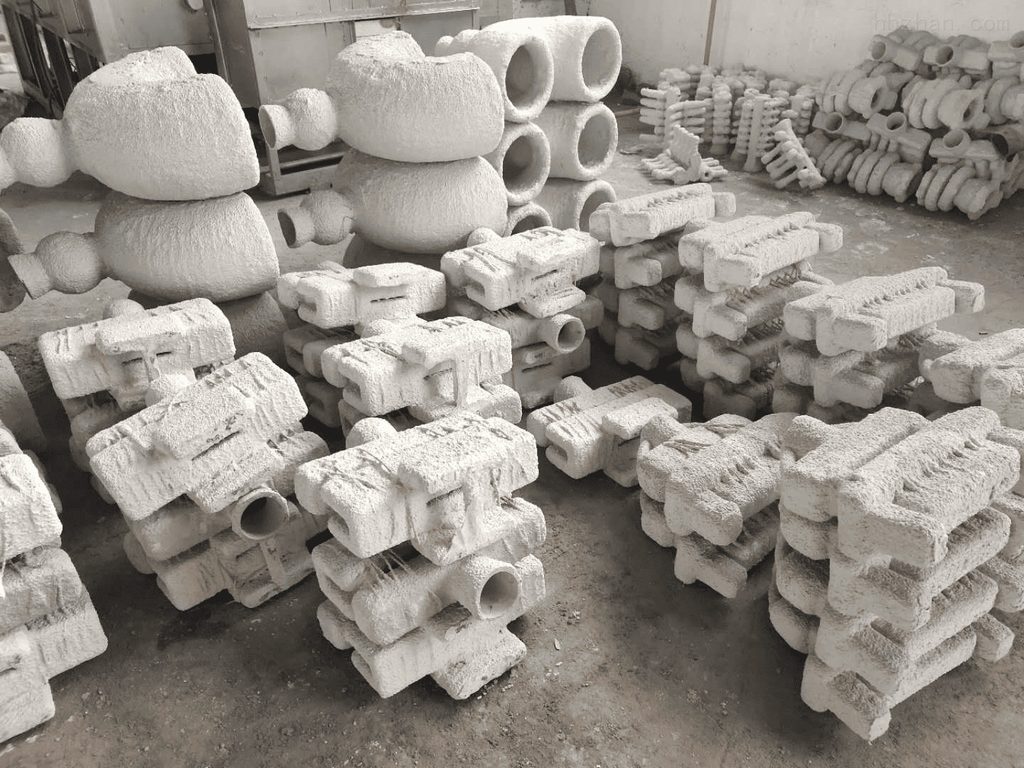
Lost foam casting (LFC) is a form of sand casting that uses an expendable foam pattern rather than a conventional reusable pattern to create the mold cavity.
The pattern is commonly made from expanded polystyrene (EPS). Your selected process may also use expanded polypropylene (EPP), as described on our product page. After the pattern is prepared, it is coated and dried before being placed in dry sand.
During pouring, the molten metal replaces the decomposing foam pattern and forms the casting. Because the pattern defines the component's geometry, lost foam casting can be suitable for parts with complex shapes and features that may be difficult to produce using conventional molding methods.
The process can reduce the need for separate cores and conventional parting lines for suitable designs. However, the degree of simplification depends on the component geometry and casting requirements.
How Does the Lost Foam Casting Process Work?
Although individual production lines differ, the main stages of the lost foam casting process generally follow the sequence below.
1. Foam Pattern Preparation
A foam pattern is produced to represent the shape of the intended casting. Its dimensions and surface condition are important because defects in the pattern can be transferred to the finished component.
The method used to produce or source the pattern depends on the required geometry, production volume, and pattern-making arrangements.
2. Pattern Assembly and Gating
Where the casting design requires it, individual foam sections are assembled and connected to a gating system. The arrangement directs molten metal into the pattern and must be suitable for the component's geometry and filling requirements.
Poor assembly, inaccurate joints, or an unsuitable gating arrangement can affect metal filling and casting quality.
3. Refractory Coating and Drying
The foam pattern is covered with a refractory coating and dried before molding. The coating helps separate the molten metal from the surrounding sand while allowing gaseous products from foam decomposition to pass through it.
Coating condition matters. Inadequate drying, inconsistent coverage, or unsuitable permeability can interfere with filling and contribute to casting defects.
4. Dry Sand Filling and Compaction
The coated pattern is placed in a molding flask or another suitable mold-holding arrangement and surrounded by dry sand. The sand is compacted, commonly with vibration, to support the pattern and maintain the mold shape during pouring.
Uneven filling or insufficient compaction can create areas that do not support the pattern consistently. The required sand-handling and compaction arrangement should therefore be considered when planning the production line.
5. Molten Metal Pouring
Molten metal is poured into the mold under the operating conditions specified for the process. The foam decomposes as the advancing metal occupies the space previously taken up by the pattern.
The production line described on our product page uses vacuum and negative-pressure casting. The exact arrangement and operating parameters should be established according to the proposed system, alloy, and casting design.
Gas generated during filling must pass through the coating and be managed by the surrounding mold and process system. Pouring conditions, coating permeability, and pattern characteristics need to work together.
6. Cooling, Shakeout, and Finishing
After pouring, the casting must cool and solidify before it can be removed from the sand. The casting is then separated from the surrounding sand and sent for any required cleaning, inspection, and finishing operations.
The necessary downstream equipment depends on the casting dimensions, required surface condition, inspection criteria, and the foundry's existing facilities.
What Equipment Is Used in Lost Foam Casting?
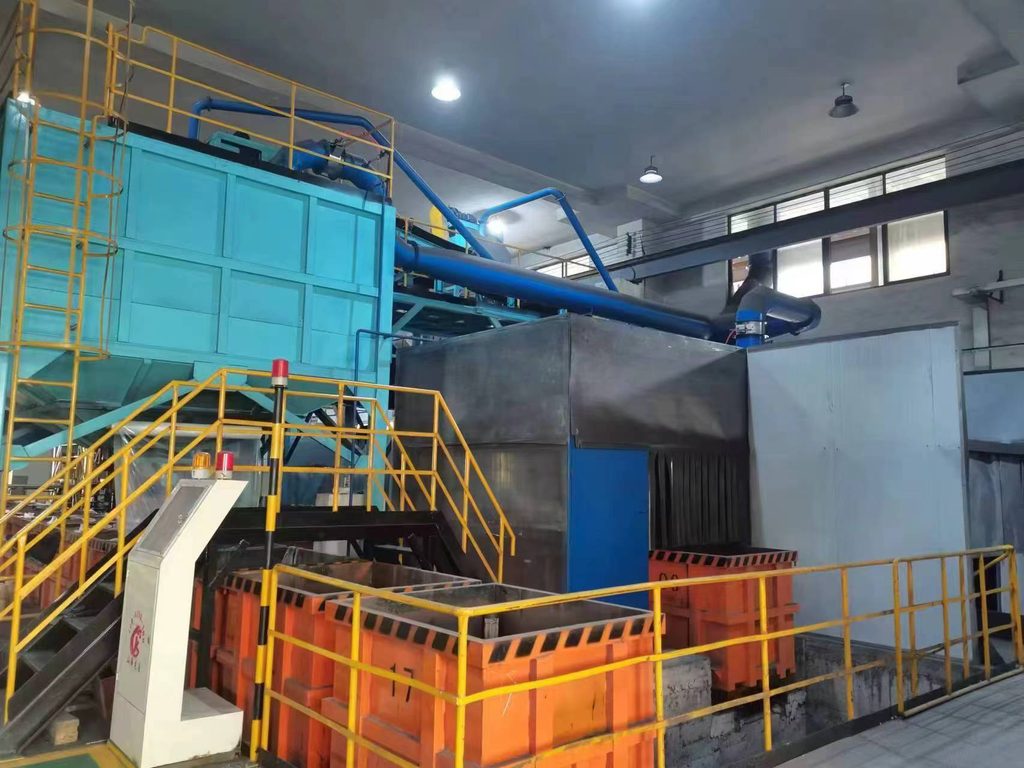
A lost foam casting line brings together equipment and process arrangements for pattern preparation, molding, pouring, and downstream handling. The exact configuration depends on the project: not every foundry needs the same equipment scope, and some facilities may already have certain systems in place.
| Equipment group or process area | Main role | What to confirm when planning a line |
|---|---|---|
| Foam pattern production or sourcing | Provides the expendable patterns used to form the castings | Pattern material, dimensions, geometry, accuracy, and production volume |
| Pattern assembly and gating | Connects pattern sections and establishes the metal-filling route where required | Component design, gating arrangement, and pattern assembly method |
| Coating and drying | Applies and dries the refractory coating | Coating application method, drying requirements, and coverage consistency |
| Dry sand handling and compaction | Fills the mold area and supports the coated pattern | Sand supply, filling method, compaction method, and consistency |
| Flask and vacuum or negative-pressure system | Holds the mold and supports the specified casting conditions | Flask dimensions, system layout, and process requirements |
| Melting and pouring equipment | Supplies and transfers molten metal | Alloy, melting capacity, pouring method, and production target |
| Cooling, shakeout, and sand handling | Supports casting removal and post-pouring operations | Casting size, cooling arrangement, sand handling, and workflow |
| Cleaning and inspection | Prepares castings for subsequent operations and quality checks | Surface requirements, inspection procedures, and finishing needs |
This table is a planning checklist, not a statement that every listed item is included as standard in every lost foam casting line. Before ordering equipment, confirm which units are supplied, which are optional, and which will be provided by the customer or another supplier.
For foundries planning a broader installation, our foundry plant design solutions cover wider project considerations, including melting equipment, molding, cleaning, and related production arrangements.
Lost Foam Casting vs. Conventional Sand Casting
Lost foam casting and conventional sand casting both use sand-based molds, but their pattern systems and mold preparation methods differ. The better option depends on the component, production requirements, and available process capabilities.
| Comparison point | Lost foam casting | Conventional sand casting |
|---|---|---|
| Pattern | Uses a disposable foam pattern that decomposes during pouring | Commonly uses a reusable pattern to form the mold cavity |
| Mold preparation | Coated foam is surrounded by dry sand | Sand is formed around a pattern, with cores used where required |
| Cores and parting lines | Can reduce or eliminate separate cores and conventional parting lines for suitable designs | Cores and parting lines may be required, depending on component geometry |
| Design considerations | Can be useful for complex geometries, but pattern, coating, and gas-flow control are important | Offers a broad range of established molding approaches and tooling arrangements |
| Key process controls | Pattern consistency, coating condition, sand compaction, and filling conditions | Pattern and core accuracy, mold properties, gating, and pouring conditions |
Lost foam casting is not automatically the better choice for every part. A suitable comparison should consider tooling requirements, component geometry, output volume, expected casting quality, and the equipment already available in the foundry.
For projects where conventional sand molding is more appropriate, you can also review our sand mold casting production line.
Key Factors That Affect Lost Foam Casting Quality
Pattern Accuracy and Assembly
The foam pattern establishes the basic shape of the casting. Dimensional inconsistencies, surface damage, or poorly joined sections can affect the resulting component. Pattern quality should therefore be checked before coating and molding.
Coating Quality and Permeability
The refractory coating must provide an appropriate barrier between the molten metal and the surrounding sand while allowing decomposition gases to escape. Its properties influence gas flow and pressure during mold filling.
Research published by National Central University examines how coating permeability affects pressures during lost foam casting. The study highlights why coating composition and particle characteristics need to be considered as part of process control.
Sand Filling and Compaction
The dry sand must support the coated pattern and remain sufficiently consistent around the mold. Filling and compaction should be appropriate for the pattern geometry and the production method. Variations can affect mold support and contribute to casting problems.
Pouring Conditions and Gas Management
Molten metal must replace the foam pattern under controlled conditions. Alloy characteristics, pattern properties, coating permeability, and the process's vacuum or negative-pressure arrangement should be considered together rather than treated as independent settings.
Cooling and Inspection
Once pouring is complete, cooling and solidification must be appropriate for the casting. The inspection plan should match the part's application and acceptance criteria. Depending on requirements, this may include dimensional checks, visual inspection, and other specified quality-control methods.
How to Select a Lost Foam Casting Production Line
Choosing a production line starts with the casting requirements, not simply the number of machines.
Before requesting a proposal, prepare the following information:
- Casting material: Identify the alloy to be cast and any relevant metallurgical or process requirements.
- Part dimensions and weight: Provide drawings or representative samples where available.
- Product geometry: Identify complex sections, internal passages, dimensional requirements, and surface-finish expectations.
- Production target: Specify the required output, operating schedule, and expected product mix.
- Pattern arrangements: Clarify whether pattern production, assembly, or sourcing is part of the project.
- Existing facilities: Identify available melting, sand-handling, cleaning, and inspection equipment that could be integrated.
- Automation and supply scope: Define the desired automation level and confirm which equipment, utilities, and supporting systems are included in the proposal.
These details help establish whether a proposed line fits the product and the foundry's operating conditions. They also make it easier to compare quotations on a consistent basis instead of comparing equipment lists that cover different project scopes.
Frequently Asked Questions
What is lost foam casting used for?
Lost foam casting is used to manufacture metal components where the process is suitable for the part's geometry and production requirements. Applications listed for our line include automotive engine parts, pumps and valves, machine tools, mining machinery, and energy equipment.
Does lost foam casting require vacuum equipment?
The lost foam casting line described on our product page uses vacuum and negative-pressure casting. The required configuration should be confirmed for the proposed line rather than assuming that every system uses an identical arrangement.
What equipment is needed for a lost foam casting line?
The main process areas to plan for include foam pattern preparation, pattern assembly where required, coating and drying, dry sand filling and compaction, the mold-holding and specified pressure system, melting and pouring, cooling, shakeout, and downstream cleaning or inspection. The actual equipment list depends on the project scope and the facilities already available.
Is lost foam casting better than conventional sand casting?
Neither process is universally better. Lost foam casting can offer advantages for suitable complex shapes and may reduce the need for separate cores or conventional parting lines. The decision should also account for pattern production, process control, quality targets, output, and total project requirements.
Discuss Your Lost Foam Casting Project
Selecting suitable equipment requires a clear understanding of the casting material, component geometry, expected output, and existing foundry facilities. A process and equipment review can help determine the appropriate production-line scope before a purchase decision is made.
To discuss your requirements, contact our team with your casting drawings or product details, target output, and preferred automation level.