
1. How Steel Is Melted in an Induction Furnace
Induction melting is fundamentally different from traditional fuel-fired furnaces. Instead of heating metal from the outside, it generates heat directly inside the material through electromagnetic induction.
In practical terms, the process looks like this:
- Scrap steel, returns, and alloying materials are loaded into the furnace
- The induction coil generates a magnetic field when powered
- Eddy currents are induced inside the metal charge
- The metal heats up rapidly and begins to melt from within
- After full melting, composition adjustment and temperature control are carried out
- The molten steel is tapped for casting or further processing
Because the heat is generated internally, this method provides faster melting and more uniform temperature distribution. It is widely used in steel induction melting technology and modern melting furnace systems.
2. Aluminum Shell vs Steel Shell Induction Furnace
From a purchasing perspective, most buyers are deciding between two main furnace structures: aluminum shell and steel shell. The difference is not just material—it directly affects energy efficiency, stability, and long-term operating cost.
Key Comparison
| Item | Aluminum Shell Furnace | Steel Shell Furnace |
|---|---|---|
| Furnace Body | Aluminum structure | Heavy-duty steel frame |
| Cooling Method | Basic air or water cooling | Closed-loop water cooling system |
| Magnetic Shielding | Relatively weak | Strong shielding reduces energy loss |
| Energy Efficiency | Moderate | High |
| Structural Strength | Lower | High |
| Capacity Range | Small to medium | Medium to large |
| Initial Investment | Lower | Higher |
| Service Life | Shorter | Longer |
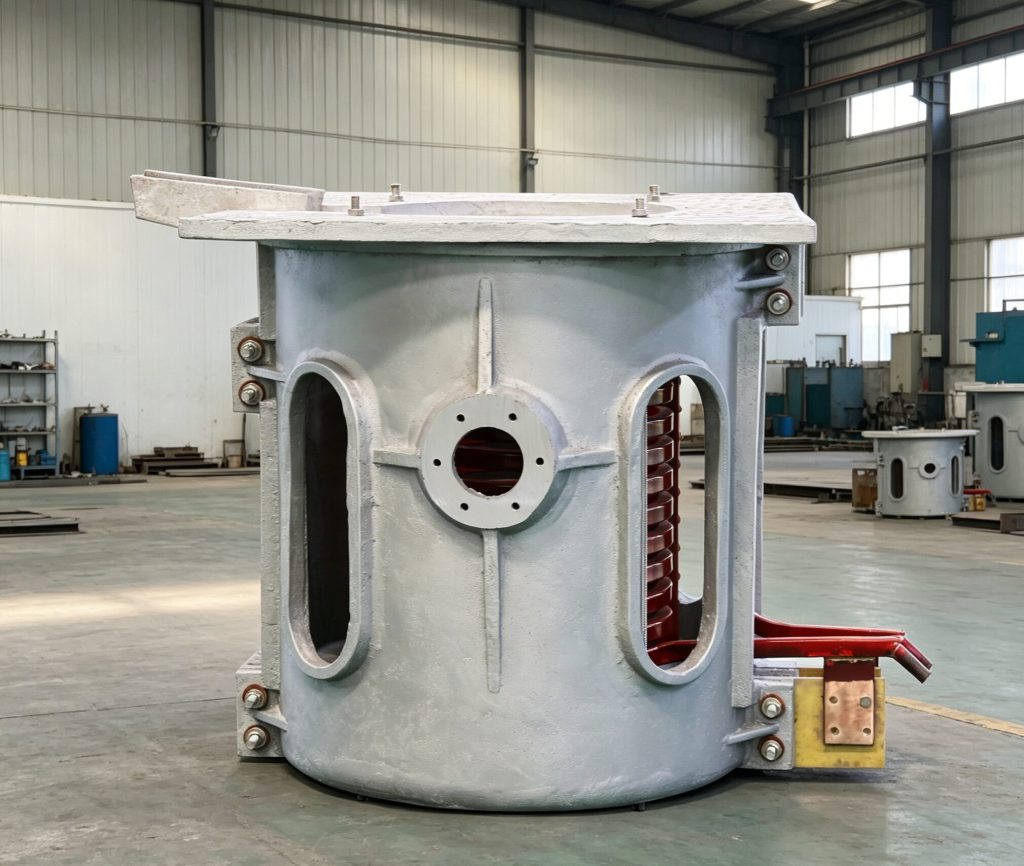
2.1 Aluminum Shell Induction Furnace
An aluminum shell induction furnace is typically used in smaller-scale operations.
It is suitable for:
- Small foundries
- Pilot production lines
- Intermittent melting operations
- Projects with limited initial budget
Its main advantages are lower upfront cost and simpler installation. For companies entering the steel melting field, this type of furnace offers a relatively low barrier to entry.
However, in real production environments, some limitations become clear over time. The weaker magnetic shielding leads to higher energy loss, and the overall structure is less stable under continuous high-load operation.
For this reason, aluminum shell furnaces are often used as a starting solution rather than a long-term production backbone.
2.2 Steel Shell Induction Furnace
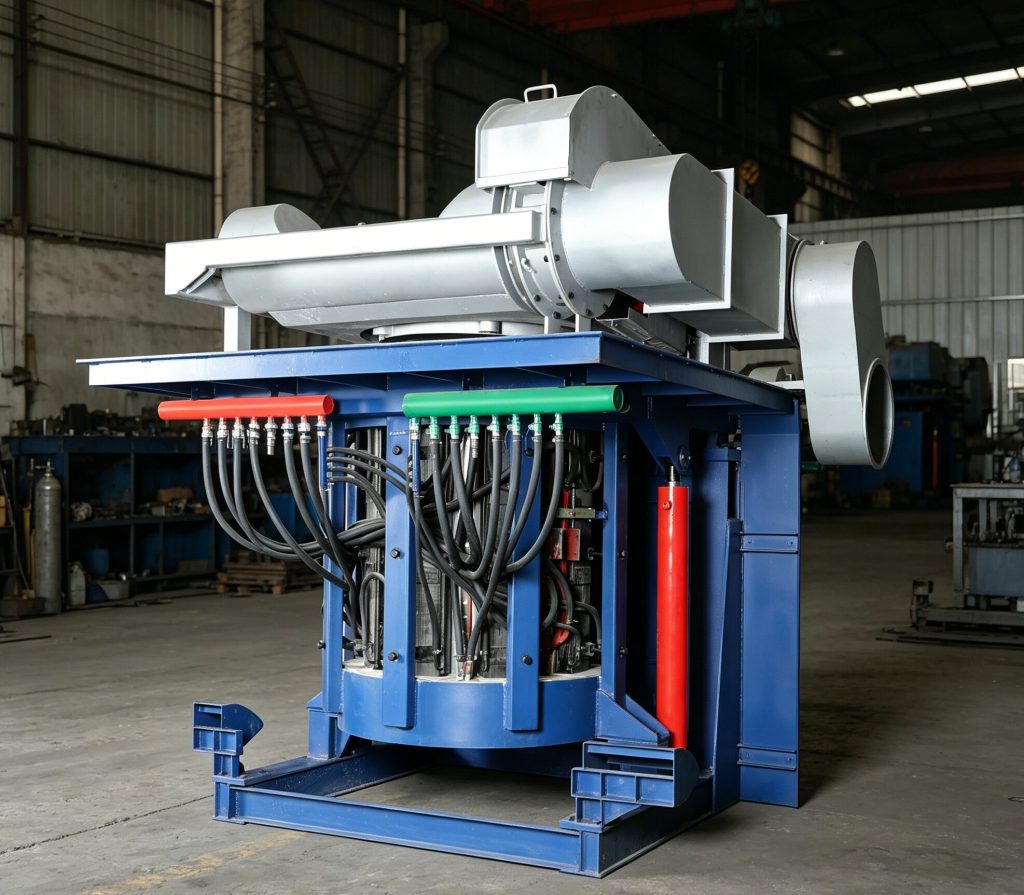
A steel shell induction furnace is designed for continuous and large-scale industrial use.
It is more suitable for:
- Medium to large foundries
- Continuous casting operations
- High-output production lines
- Companies focused on long-term cost control
The key advantage lies in its structural strength and magnetic shielding system. The steel frame, combined with advanced cooling and shielding design, significantly reduces heat loss and improves energy efficiency.
In daily operation, this translates into:
- Lower energy consumption per ton
- More stable melting cycles
- Longer equipment lifespan
Steel shell furnaces are commonly integrated into medium frequency induction furnace systems and automated steel melting lines, especially where consistent production is required.
3. Which Industries Benefit Most from Induction Steel Melting
Induction furnaces are not limited to one specific type of business. However, they are particularly effective in the following scenarios:
Steel Casting Foundries
These operations require precise control over chemical composition and temperature. Induction furnaces allow for accurate alloying and repeatable results.
Scrap Steel Recycling Companies
Induction furnaces are ideal for remelting scrap into high-quality molten steel. The process is cleaner and produces less oxidation compared to traditional methods.
Machinery and Automotive Manufacturing
Manufacturers producing components such as gears, shafts, and structural parts benefit from stable melting conditions and consistent material quality.
Plants Upgrading from Traditional Furnaces
Companies replacing cupola furnaces or resistance furnaces often switch to induction systems to improve efficiency and reduce emissions.
4. Practical Benefits in Real Production
Instead of general claims, it is more useful to look at what actually changes in day-to-day operation after adopting an induction furnace.
4.1 Increased Production Efficiency
Typical melting time ranges from 30 to 90 minutes per heat, depending on furnace capacity and power configuration. Faster melting directly increases daily throughput.
4.2 Lower Energy Cost per Ton
Energy consumption is one of the biggest cost factors in steel melting. Steel shell furnaces, in particular, reduce energy loss through better magnetic shielding and optimized design.
Over time, this has a direct impact on production cost per ton.
4.3 Precise Temperature Control
Induction furnaces allow operators to control temperature more accurately compared to flame-based systems. This improves casting quality and reduces defects such as porosity or incomplete filling.
4.4 Cleaner Metallurgical Environment
Because there is no combustion involved:
- Oxidation is reduced
- Impurity pickup is minimized
- Metal cleanliness is improved
This is especially important for high-quality steel products.
4.5 Compatibility with Automation
Modern induction systems can be integrated with digital control platforms, temperature monitoring systems, and automated feeding systems.
This makes them suitable for intelligent melting furnace systems and industrial induction heating solutions, supporting long-term production upgrades.
5. How to Choose the Right Induction Furnace
Selecting the right furnace requires looking beyond price. Several technical and operational factors should be considered together.
Capacity
Choose based on your required output per heat and daily production target. Oversizing or undersizing both lead to inefficiencies.
Power Configuration
Higher power generally means faster melting, but also requires proper electrical infrastructure.
Cooling System
A stable and efficient cooling system is essential for equipment safety and longevity.
Power Supply Type
Medium frequency systems are the most commonly used for steel melting due to their balance between efficiency and control.
Future Expansion
Consider whether the system can be upgraded or expanded as production grows.
6. Conclusion
Choosing an induction furnace for melting steel is not just about selecting a piece of equipment. It is about aligning the furnace type with your production scale, operational goals, and long-term cost structure.
Aluminum shell furnaces are suitable for smaller or early-stage operations where investment needs to be controlled. Steel shell furnaces, on the other hand, are better suited for continuous production environments where efficiency and stability are critical.
A well-matched system will not only improve melting performance but also reduce overall production costs over time.
FAQ
Q1: What temperature is required to melt steel in an induction furnace?
Steel is typically melted at temperatures between 1450°C and 1600°C, depending on the grade and composition.
Q2: How long does it take to melt steel?
Melting time generally ranges from 30 to 90 minutes per batch, depending on furnace capacity and power.
Q3: Which furnace type is more energy-efficient?
Steel shell induction furnaces are more energy-efficient due to better magnetic shielding and structural design.
Q4: Can induction furnaces be used for scrap steel?
Yes, they are widely used for scrap steel remelting and recycling applications.
Q5: Is induction melting suitable for continuous production?
Yes, especially when using steel shell furnaces designed for high-load and long-cycle operation.
Contact Us
If you are evaluating an induction furnace for melting steel and need help choosing between different configurations such as aluminum shell induction furnace or steel shell induction furnace, we can provide practical guidance based on your production conditions.
Share your requirements, including capacity, raw materials, and production goals, and we will recommend a solution that fits your operation.