
introduction
In modern industrial manufacturing, efficiency, precision, and energy control are no longer optional—they are essential. This is why induction heating products are increasingly becoming the preferred solution for metal processing industries such as forging, melting, and heat treatment.
Unlike traditional heating methods, induction heating provides a cleaner, faster, and more controllable process. For companies aiming to improve production consistency while reducing operational costs, investing in industrial induction heating equipment is a strategic decision rather than just a technical upgrade.
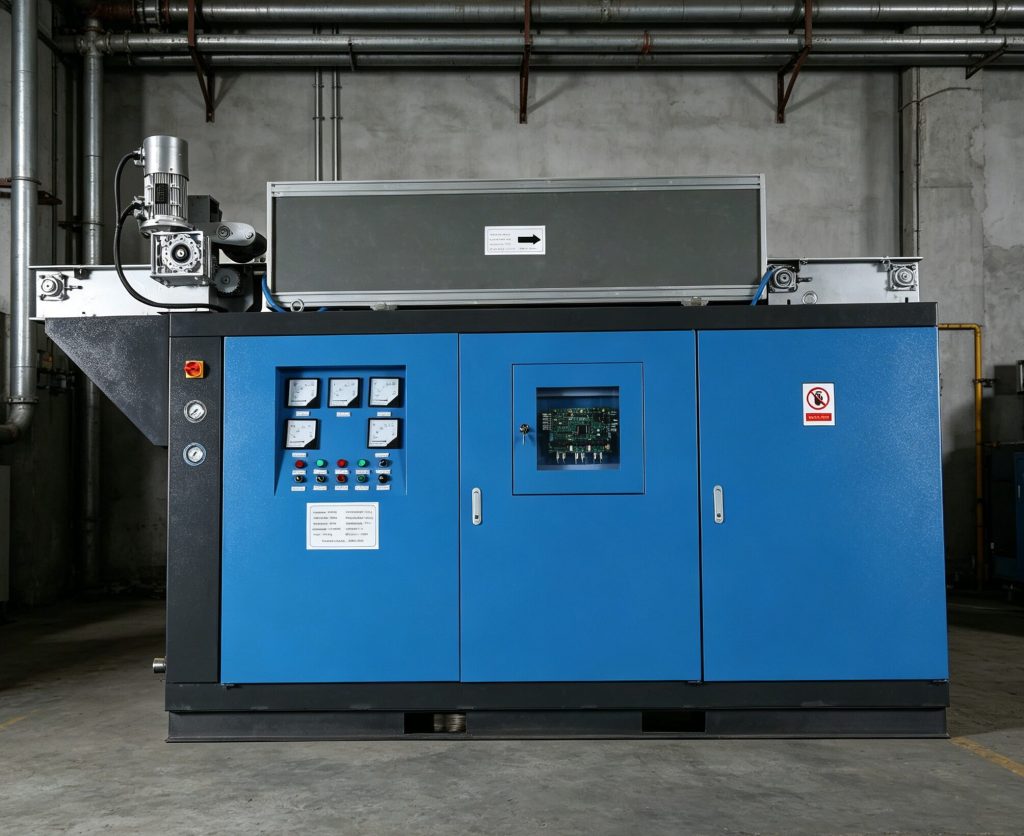
What Is Induction Heating and Why It Matters
Induction heating technology enables rapid and localized heating of metal materials without direct contact. This makes it particularly suitable for automated and continuous production environments where stability and repeatability are critical.
Induction heating offers the following advantages: extremely precise control over heating depth and surface area; no external heat source is required, resulting in low heat loss and a clean working environment; the object being heated does not need to come into contact with the inductor, and high power density is easily achieved, leading to very short heating times. The combination of these factors makes induction heating ideally suited for automated production processes.
Induction heating is based on three fundamental principles: electromagnetic induction, the “skin effect,” and heat conduction.
Types of Induction Heating Products
Understanding different types of induction heating systems helps businesses choose the right equipment for their production needs.
Four Major Categories of Induction Heating
| Heating Type | frequency |
| Power-frequency induction heating | (50/60 Hz) |
| Medium-frequency induction heating | (150 Hz–10 kHz) |
| Ultra-high-frequency induction heating | (10 kHz–100 kHz) |
| High-frequency induction heating | (>100 kHz) |
By application, they can also be broadly categorized as: melting, forging, hardening, and welding
In practical industrial use, these categories correspond to different equipment types such as induction melting furnace, induction heating furnace, and induction hardening equipment, each designed for specific processes and materials.
Typical Applications of Induction Heating Products
The versatility of induction heating products allows them to be widely used across multiple industries:
- Metal melting (aluminum, copper, steel)
- Billet heating before forging or rolling
- Surface hardening and heat treatment
- Brazing and welding processes
For example, a induction heating furnace can be integrated into a continuous production line to ensure uniform heating of metal billets, significantly improving downstream processing quality.
What Kind of Companies Should Use Induction Heating Equipment
Not every factory needs induction heating—but for the right businesses, it can be a game changer.
This type of equipment is particularly suitable for:
- Metal processing plants with continuous production needs
- Foundries handling aluminum, copper, or steel melting
- Forging companies requiring precise billet heating
- Recycling companies processing scrap metal efficiently
If your production depends on temperature control, cycle time, and consistency, then induction heating equipment is not just suitable—it is often essential.
What Benefits Can Induction Heating Products Bring
From a business perspective, the value of induction heating systems goes far beyond heating itself.
1. Improved Production Efficiency
High power density allows rapid heating, significantly reducing cycle time and increasing output.
2. Better Product Quality
Precise temperature control ensures uniform heating, which directly improves product consistency and reduces defects.
3. Lower Energy Consumption
Compared with traditional fuel-based heating, induction heating machines minimize heat loss and improve energy utilization.
4. Cleaner and Safer Working Environment
No open flame and reduced emissions make the workplace safer and more environmentally friendly.
How to Choose the Right Induction Heating Products
Selecting the right induction heating system depends on several key factors:
- Material type (steel, aluminum, copper, etc.)
- Production capacity (kg/h or tons/day)
- Heating purpose (melting, forging, hardening)
- Automation level required
- Available power supply and plant conditions
In most cases, working with an experienced induction heating equipment supplier can help ensure that the system is properly matched to your production line.
FAQ
What are induction heating products used for?
They are widely used in metal processing applications such as melting, forging, heat treatment, and welding, where precise and efficient heating is required.
Is induction heating energy efficient?
Yes. Compared to traditional heating methods, induction heating equipment offers higher energy efficiency due to reduced heat loss and direct heating of the material.
Which industries benefit the most from induction heating?
Industries such as metallurgy, automotive manufacturing, metal recycling, and machinery production benefit significantly from industrial induction heating systems.
How do I choose the right induction heating equipment?
You should consider your material type, production capacity, and application requirements. Consulting a professional supplier is usually the most effective way to make the right choice.
Contact Us for Professional Induction Heating Solutions
Choosing the right induction heating products is a critical step toward improving your production efficiency and product quality.
If you are looking for reliable and high-performance induction heating equipment, our team can provide customized solutions based on your specific needs.
Contact us today to get expert advice and a tailored quotation for your project.