
Introduction
In modern metal processing, efficiency, precision, and energy control are no longer optional—they are decisive factors for competitiveness. Among various heating technologies, induction heating has emerged as the core driving force behind high-performance metal hot working equipment. It directly determines not only heating speed, but also product quality, energy consumption, and overall production efficiency.
With the rapid development of global manufacturing, the demand for advanced heating solutions continues to grow. According to industry analyses such as those from Global Market Insights, the global induction heating equipment market is projected to reach over USD 2.0–2.5 billion by 2025, with more than 60% of applications concentrated in metal processing industries, including forging, heat treatment, and brazing. This trend clearly reflects a shift away from traditional heating methods such as flame and resistance heating, which struggle with low efficiency, high emissions, and poor temperature control.
This article explores the working principle of induction heating, its key advantages, and its practical applications in metal hot working, while also providing practical guidance for selecting suitable induction heating equipment. Whether you are a manufacturer or an overseas buyer, this guide will help you better understand how to leverage this technology to improve productivity and reduce operational costs.
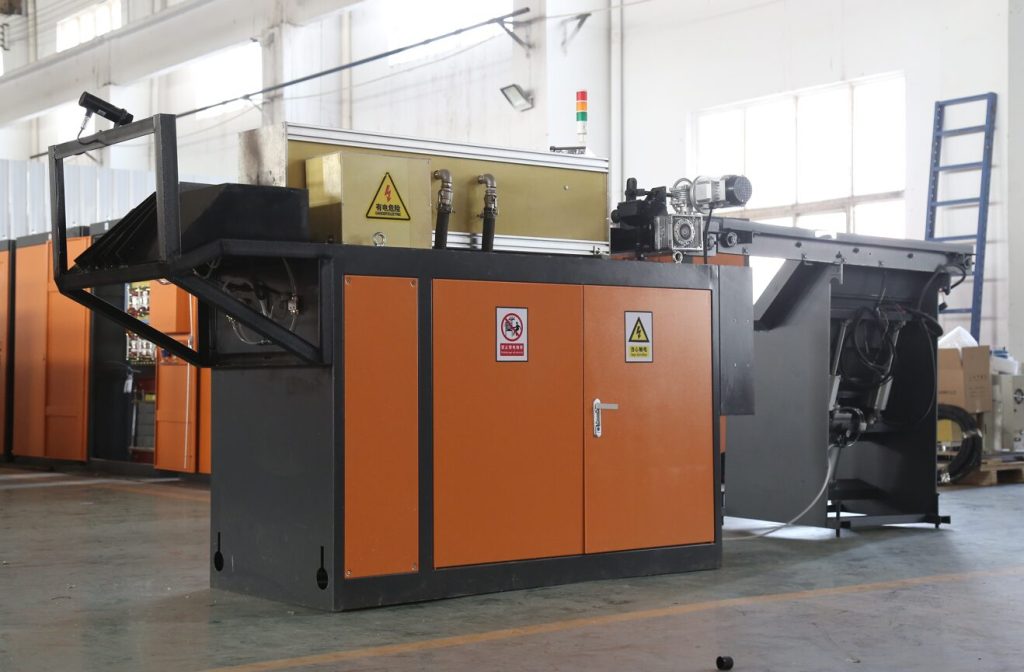
What Is Induction Heating?
Induction heating is a non-contact heating technology that uses electromagnetic induction to heat electrically conductive materials. Unlike conventional methods, it does not rely on external heat sources such as flames or heating elements.
The working principle can be summarized as follows:
- An alternating current flows through a coil, generating an alternating magnetic field
- When a metal workpiece is placed within this field, eddy currents are induced inside the material
- These currents generate heat through Joule heating, causing the workpiece to heat up internally
This process enables direct internal heating, making it both fast and highly efficient.
One of the key advantages of induction heating is its contactless nature. There is no flame, no combustion, and no physical contact between the heat source and the workpiece. This not only improves safety but also ensures cleaner and more controllable heating.
Induction heating is widely applicable across various metals, including steel, aluminum, and copper, and is particularly suitable for critical metal hot working processes such as forging, heat treatment, and brazing.
Why Induction Heating Is the Core of High-Efficiency Metal Hot Working
1. High Efficiency and Energy Savings
Induction heating systems typically achieve thermal efficiencies of 85%–95%, significantly outperforming traditional methods:
- Flame heating: 40%–60%
- Resistance heating: 70%–80%
This high efficiency translates directly into shorter heating cycles and reduced energy consumption. For example, heating a φ50 mm steel bar to 1200°C (typical forging temperature):
- Induction heating: 2–3 minutes
- Flame heating: 5–8 minutes
This represents a 30%–60% reduction in heating time, enabling faster production cycles and higher throughput.
2. Precise and Uniform Heating
Induction heating offers exceptional temperature control, with accuracy up to ±5°C. The temperature difference between the surface and core of the workpiece can be maintained within ≤10°C.
This precision brings several critical benefits:
- Reduced oxidation loss (by over 50%)
- Minimized deformation and thermal stress
- Improved product consistency and quality
In many applications, product qualification rates can increase by 15%–25% compared to traditional heating methods.
3. Safety and Environmental Compliance
Unlike conventional heating systems, induction heating operates without:
- Open flames
- Smoke or dust emissions
- Harmful gases
This makes it fully compliant with international environmental and safety standards, such as CE and UL requirements. Additionally, the non-contact heating process significantly reduces operator exposure to high temperatures, lowering the risk of workplace accidents by up to 70%.
4. High Equipment Integration and Flexibility
Induction heating systems are compact and highly adaptable. They can be easily integrated into various types of metal hot working equipment, including:
- Forging heating furnaces
- Heat treatment systems
- Brazing machines
Their small footprint, modular design, and low maintenance requirements make them ideal for modern automated production lines. Compared to traditional systems, annual maintenance costs can be reduced by 20%–30%.
Practical Applications of Induction Heating in Metal Hot Working
1. Metal Forging
Induction heating is widely used in forging processes for preheating and temperature maintenance.
For example, in the production of large gear forgings (≈500 kg), induction heating enables rapid and uniform temperature rise, reducing the risk of cracking and improving forging efficiency by more than 25%. It is especially suitable for high-throughput forging lines requiring consistent heating quality.
2. Heat Treatment
In heat treatment processes such as quenching, tempering, and annealing, induction heating allows for localized and controlled heating.
Typical applications include automotive components like crankshafts and camshafts, where precise heating zones are critical. Compared to conventional methods:
- Hardness uniformity improves by up to 30%
- Distortion is significantly reduced
This ensures higher performance and longer service life of treated components.
3. Metal Brazing
Induction heating is highly effective in precision brazing applications, such as joining copper and aluminum tubes.
Its advantages include:
- Rapid heating cycles
- Accurate temperature control
- Clean and oxidation-free joints
Brazing success rates can reach over 99%, solving common issues such as weak joints, leaks, or incomplete bonding found in traditional methods. This is particularly valuable in industries like HVAC, automotive, and home appliances.
4. International Application Case
In a typical project, a European forging manufacturer implemented an induction heating system for billet heating. The results were significant:
- Production efficiency increased by 40%
- Energy consumption reduced by 35%
This demonstrates the tangible value of adopting induction heating technology in real industrial environments.
Key Considerations for Choosing Induction Heating Equipment
1. Power Selection
Choose equipment power based on workpiece size, material, and required temperature:
- Small parts (<100 kg): 50–100 kW
- Medium to large parts (>500 kg): 200–500 kW or higher
Proper power selection ensures optimal heating efficiency and avoids energy waste.
2. Material Compatibility
Different materials respond differently to induction frequencies:
- Steel: typically medium frequency
- Aluminum and copper: often require higher frequency
Ensuring compatibility between equipment and material is essential for achieving desired heating results.
3. Energy Efficiency and Environmental Standards
Select equipment with ≥85% thermal efficiency and compliance with international environmental standards. Although initial investment may be higher, long-term savings in energy and operational costs are substantial.
4. After-Sales Service and Technical Support
Reliable technical support is critical, especially for overseas buyers. Key considerations include:
- 24/7 technical consultation
- On-site installation and commissioning
- Spare parts availability
Strong after-sales service ensures stable operation and minimizes downtime.
Conclusion
Induction heating has become the core technology of modern metal hot working, offering unmatched advantages in efficiency, precision, energy savings, and environmental performance. As global manufacturing continues to evolve toward higher standards, adopting induction heating is no longer a trend—it is a necessity.
Our metal hot working equipment integrates advanced induction heating technology, designed to meet diverse industrial requirements across forging, heat treatment, and brazing applications. We provide customized solutions tailored to your production needs, helping you achieve higher productivity and lower operational costs.
Contact us today to learn more about our induction heating equipment and receive a customized quotation for your project.