Choosing an induction heater for forging requires more than checking the rated power or maximum heating temperature. The equipment must match the workpiece geometry, material, required forging temperature, production rate, and handling method.
A system designed for continuous bar heating may not be the right choice for irregular components or localized heating. Before comparing equipment specifications, manufacturers should define what needs to be heated, how much of the workpiece requires heating, and how the heating process will connect to the forging operation.
For manufacturers evaluating industrial induction heating equipment, these requirements provide a practical starting point for selecting a suitable system.
Which Forging Workpieces Need to Be Heated?
The workpiece is the first factor to consider because its shape and heating requirements influence the coil arrangement, material handling, and process configuration.
| Workpiece or application | Key considerations when selecting equipment |
|---|---|
| Steel bars and billets | Cross-sectional dimensions, required heating length, temperature distribution, and production rate |
| Gears and ring gears | Component geometry, required heating area, positioning, and repeatability between cycles |
| Connecting rods and similar components | Material grade, target temperature, heating zone, and loading method |
| Shackles and rigging components | Workpiece shape, heating location, batch size, and handling requirements |
| Localized heating applications | Exact heating zone, required temperature, positioning accuracy, and the transition between heated and unheated areas |
These applications require different approaches. Heating a long steel bar continuously is not the same task as heating a component with an irregular shape or heating only a specific section before forming.
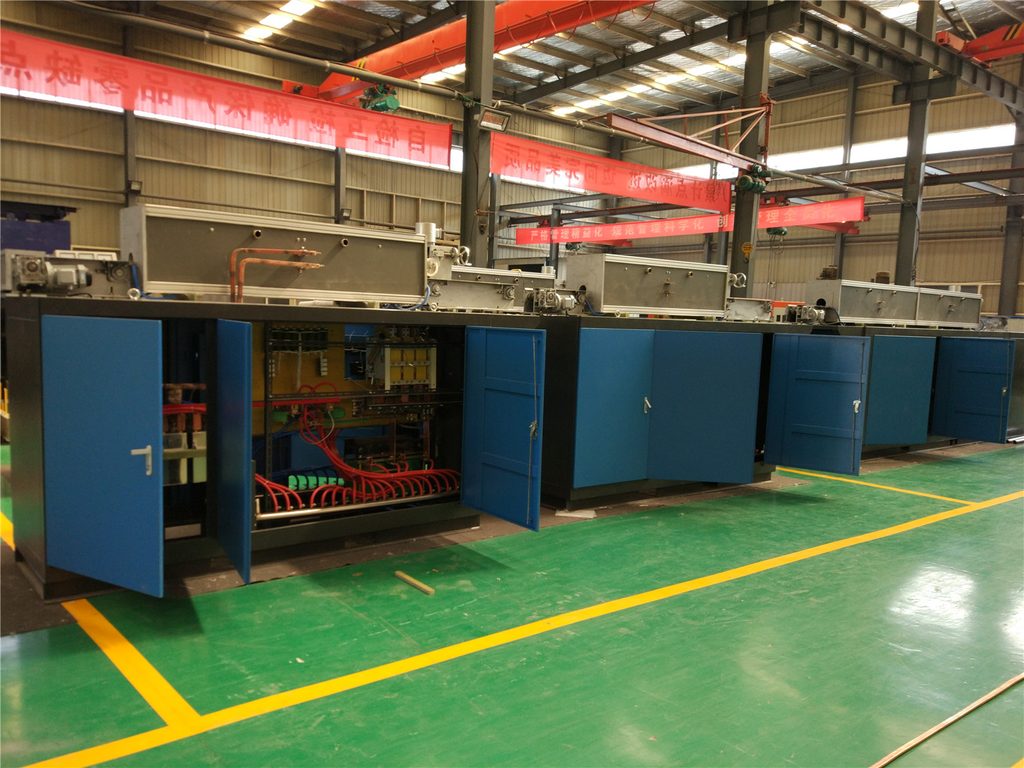
MeltingTech's metal induction heating furnace product page identifies pre-forging heating applications involving gears, ring gears, connecting rods, bearings, shackles, and rigging components. It also lists applications such as long steel bar heating, U-bolt bending, roller hot assembly, and pipe bending.
The equipment configuration should therefore be selected according to the actual process rather than assuming one standard arrangement will suit every workpiece.
Define the Heating Requirements Before Selecting Power
An induction heater must deliver the required thermal energy within the available production time. Selecting a power rating before establishing the heating duty can lead to an unsuitable configuration.
Before requesting a quotation, determine the following:
Material and grade: Steel grades and other conductive metals respond differently to induction heating. The material specification should be provided rather than relying on a general description such as carbon steel.
Initial and target temperatures: The starting temperature affects the energy required. The target must come from the material specification and intended forging process, not from a universal temperature recommendation.
Workpiece dimensions: Diameter, cross-sectional shape, length, and mass influence heat distribution and the heating time needed.
Required throughput: The number of parts processed per hour, or the required mass throughput, determines how quickly the equipment must deliver energy.
Temperature uniformity: For some applications, reaching a target surface temperature is not sufficient. The temperature within the workpiece and across the required heating zone must also meet the process requirements.
These factors are interrelated. A system that heats one component successfully at a particular cycle time may not achieve the same result when the workpiece size, material, or production rate changes.
Choose Between Batch Heating and Continuous Heating
The production arrangement should match the way parts enter the forging operation.
Batch or individual-part heating
When components are loaded and heated individually or in batches, selection focuses on the shape of each workpiece, its positioning, the required heating zone, and the time available for each cycle.
This approach may suit production involving several component types or frequent changes in workpiece geometry. However, the actual suitability depends on the equipment design, coil arrangement, and handling requirements.
If different parts are processed on the same system, ask how coil changes, positioning adjustments, and process setting changes will be handled.
Continuous bar or billet heating
Continuous induction heating moves bars or billets through a heating arrangement before they reach the forging equipment. In this case, the heating line and the downstream process must operate at compatible rates.
The main considerations include billet dimensions, feed speed, heating length, temperature distribution, and how the line responds when production slows or stops.
A heating system should not be evaluated only at its nominal production rate. Buyers should also ask what happens during changeovers, temporary stoppages, or operation with different workpiece sizes.
The distinction matters because heating performance and production performance are not the same thing. A heater may reach the required temperature, but the overall arrangement must also deliver parts when the forging process is ready to receive them.
How Power, Frequency, and Coil Design Affect the Result
Power, operating frequency, and coil design need to be evaluated together.
Induction heating initially generates heat through electrical currents induced in the conductive workpiece. The distribution of those currents depends on the operating conditions, material properties, and electromagnetic coupling between the coil and the workpiece.
Frequency influences heating penetration. Higher frequencies generally concentrate induced currents closer to the surface, while lower frequencies can support deeper penetration. However, no single frequency is suitable for every forging application.
For example, a large-diameter billet may require a different heating strategy from a smaller workpiece. The time available for heat to conduct toward the core also affects the final temperature distribution.
Coil geometry and positioning matter as well. A poorly matched coil can produce an unsuitable heating pattern even when the power supply has sufficient rated output.
When comparing proposals, ask the supplier to explain how the recommended power, frequency, and coil arrangement relate to your specific workpiece dimensions, material grade, target temperature, and production rate. Generic power or frequency recommendations should not replace an application-specific assessment.
What Determines the Operating Cost of an Induction Forging Heater?
The equipment purchase price is only one part of the cost. Operating expenses depend on how the system performs under actual production conditions.
| Cost factor | What to check |
|---|---|
| Electricity consumption | Request consumption figures for a clearly defined material, starting temperature, target temperature, and production rate |
| Production utilization | Consider setup time, idle periods, changeovers, and interruptions |
| Material losses | Evaluate scrap, oxidation scale, and rejected parts under comparable operating conditions |
| Workpiece handling | Check loading, positioning, transfer, and integration with the forging press |
| Maintenance | Review coil servicing, cooling requirements, consumable parts, and access for inspection |
| Installation | Confirm electrical supply, cooling arrangements, available floor space, and auxiliary equipment |
Do not compare energy-consumption figures without checking their measurement conditions. A value reported for one material and heating cycle may not represent your own process.
For a meaningful comparison, request a defined production scenario and evaluate the energy consumed per unit of acceptable output. This makes it easier to compare equipment proposals without relying on unsupported energy-saving percentages or generalized cost claims.
What to Confirm Before Ordering an Induction Heater for Forging
Before finalizing a purchase, prepare a technical brief containing the actual requirements of your production process.
- Workpiece drawings, dimensions, material grades, and mass
- Initial temperature and required target temperature
- The exact area or length that needs to be heated
- Required parts per hour or mass throughput
- Batch or continuous production method
- Required temperature uniformity and measurement method
- Available electrical supply and installation conditions
- Cooling and maintenance requirements
- Workpiece handling arrangements and the connection to downstream forging equipment
Ask the supplier to identify the assumptions used in its proposal and explain how the heating result will be verified.
For critical applications, discuss whether sample-workpiece testing is needed before finalizing the design. Agree on the relevant acceptance criteria, measurement points, production conditions, and temperature requirements in advance.
This helps distinguish a proposal based on general equipment specifications from one that has been evaluated against the actual production task.
An Induction Heating Solution for Your Forging Application
Our metal induction heating furnace is listed for workpiece heating at temperatures between 200°C and 1300°C, with applications including pre-forging heating and other industrial metal heating processes.
This is the product page's stated operating range, not a universal forging-temperature recommendation. Whether the equipment is suitable for a particular project depends on the material, workpiece dimensions, target temperature, production requirements, and required configuration.
If you are evaluating an induction heater for forging, contact our team with your workpiece specifications, heating requirements, and expected production rate. These details provide a basis for discussing a suitable equipment configuration for your application.