
I. Why Small Rolling Mills Are Widely Used in Modern Steel Production
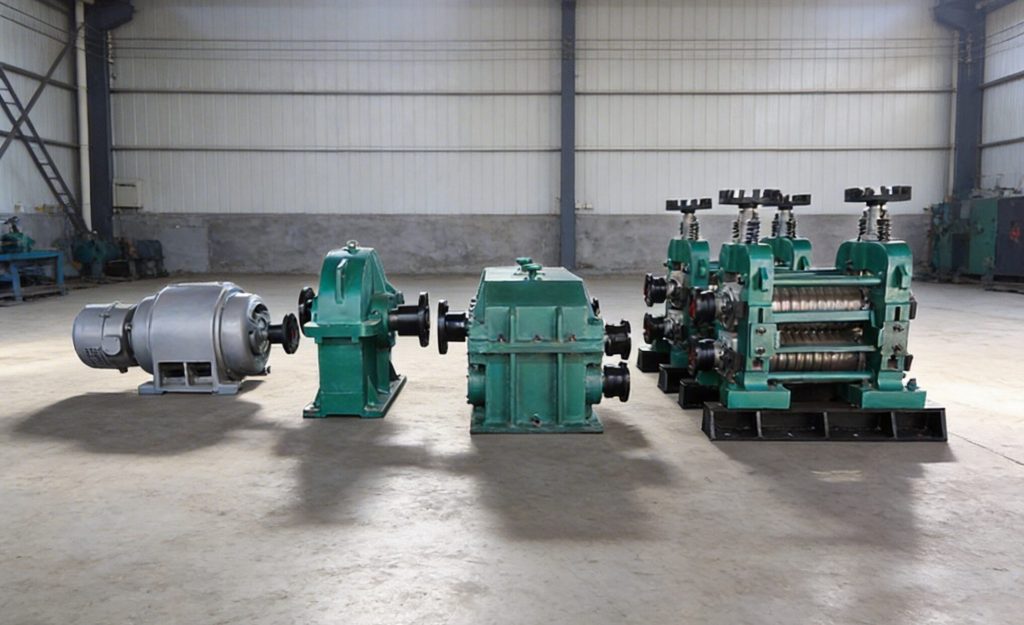
In modern steel processing, small rolling mills play a crucial role in producing bars, rods, and various steel profiles. Compared with large integrated steel plants, compact rolling mills require lower investment, occupy less space, and offer flexible production capacity.
With the rapid growth of construction steel demand and scrap steel recycling, more manufacturers are investing in mini steel rolling production lines that can process billets into finished steel bars efficiently.
Typical small rolling mills can produce 30,000–300,000 tons of steel products annually, making them ideal for regional steel markets, recycling plants, and specialized steel product manufacturers.
At the same time, technological innovations in rolling mill equipment have significantly improved production efficiency, energy consumption, and product mechanical properties.
II. Main Types of Small Rolling Mills
Understanding the different types of rolling mills helps buyers select the most suitable equipment for their production needs.
1. Two-High Rolling Mill
The two-high rolling mill is one of the simplest and most widely used rolling mill structures.
Key features
- Two horizontal rolls rotating in opposite directions
- Simple mechanical structure
- Easy operation and maintenance
Typical technical parameters
| Parameter | Typical Value |
|---|---|
| Roll diameter | 200–500 mm |
| Rolling force | 100–1000 kN |
| Motor power | 50–300 kW |
| Rolling speed | 0.5–5 m/s |
Applications
- Rough rolling of steel billets
- Production of small bars and strips
- Metal recycling plants
Because of its low investment cost, the two-high rolling mill is often used in entry-level steel rolling production lines.
2. Three-High Rolling Mill
The three-high rolling mill improves production efficiency by allowing the material to pass alternately through different roll gaps without reversing the motor direction.
Typical parameters
| Parameter | Typical Value |
|---|---|
| Roll diameter | 300–600 mm |
| Rolling speed | 3–8 m/s |
| Motor power | 200–600 kW |
Applications
- Medium-size steel bar production
- Structural steel rolling
- Alloy steel processing
Compared with traditional systems, the three-high rolling mill can increase production efficiency and reduce rolling cycle time.
3. Continuous Small Rolling Mill
A continuous rolling mill uses multiple rolling stands arranged in sequence, allowing billets to be processed continuously from rough rolling to finishing.
Typical technical parameters
| Parameter | Typical Value |
|---|---|
| Rolling speed | 6–20 m/s |
| Motor power | 500–2500 kW |
| Annual capacity | 30,000–300,000 tons |
| Rolling temperature | 850–1250°C |
Applications
- rebar production line
- wire rod rolling mill
- angle steel and channel steel manufacturing
Continuous mills are commonly used in modern mini steel plants because they provide stable product quality and high production efficiency.
III. Key Technical Parameters of Small Rolling Mills
When selecting a small rolling mill, buyers typically focus on several critical technical indicators.
1. Rolling temperature
Steel billets must be heated before rolling to ensure plastic deformation.
Typical rolling temperature:
850°C – 1250°C
Heating is usually performed by a billet reheating furnace, which accounts for the majority of energy consumption in the rolling process.
2. Motor power
The motor power of a small rolling mill depends on capacity and product size.
Typical range:
50 kW – 2500 kW
Higher power systems are usually used for continuous bar rolling mills or high-speed production lines.
3. Energy consumption
Energy efficiency is a major concern for steel manufacturers.
Typical energy consumption in small rolling mills:
| Rolling mill type | Energy consumption |
|---|---|
| Traditional rolling mill | 80–120 kWh/t |
| Modern energy-saving rolling mill | 40–80 kWh/t |
Advanced automation systems and optimized transmission structures can reduce energy consumption by 15–25%.
IV. Innovative Rolling Technology in Modern Small Rolling Mills
Modern steel rolling equipment continues to evolve to improve product performance and production efficiency.
The small rolling mill designed by Hongteng Machinery introduces several key innovations.
High Strength and Superior Ductility
Traditional cold-rolled steel bars often suffer from low ductility, which can reduce structural reliability.
The new small steel rolling mill can not only maintain excellent tensile strength but also significantly improve the total elongation at break, enhancing the mechanical performance of finished steel bars.
This improvement helps overcome the common limitation of low ductility in cold-rolled steel bars.
Innovative Passive One-Roll-and-Drag Rolling Technology
One of the core innovations of this equipment is the passive one-roll-and-drag mill design.
Key advantages include:
- Enables secondary rolling
- Solves the speed matching problem in traditional rolling processes
- Replaces the conventional four-roll rolling method
- Improves production efficiency significantly
Compared with traditional rolling structures, this technology simplifies the transmission system while maintaining stable rolling performance.
Automatic Control System
The rolling mill uses advanced automatic control calculation systems to ensure:
- Accurate product dimensions
- Stable rolling speed
- Excellent surface quality of steel bars
The automation system also enables precise roll gap control and real-time monitoring, ensuring consistent production quality.
V. Common Customer Pain Points in Rolling Mill Projects
When investing in steel rolling mill equipment, buyers usually face several challenges.
1. High energy consumption
Energy costs account for a large portion of operating expenses in rolling mills.
Solutions include:
- High-efficiency motors
- Optimized transmission systems
- Heat recovery technologies
2. Product quality instability
Variations in rolling force or temperature can affect product quality.
Modern automatic rolling mill systems solve this problem by using:
- PLC automation control
- Real-time monitoring systems
- Precision roll gap adjustment
3. Difficult maintenance
Traditional rolling mills often require complex maintenance.
Modern designs improve reliability through:
- Modular rolling stands
- Durable forged steel rolls
- Simplified mechanical structure
4. Environmental pressure
Environmental regulations are becoming stricter in many countries.
Modern rolling mills can be equipped with:
- Dust removal systems
- Waste heat recovery equipment
- Energy-saving drive systems
VI. Real Application Case of a Small Rolling Mill
A steel manufacturer in Southeast Asia installed a mini steel rolling mill production line to produce construction steel bars.
Project details
| Item | Value |
|---|---|
| Annual capacity | 60,000 tons |
| Product type | Φ10–25 mm rebar |
| Motor power | 800 kW |
| Energy consumption | about 65 kWh/t |
Results
After adopting the new rolling technology:
- Production efficiency increased by 20%
- Energy consumption reduced by 15%
- Product dimensional accuracy improved significantly
The project demonstrated the advantages of advanced steel rolling technology in improving plant profitability.
VII. Advantages of Choosing Our Small Rolling Mill
As a professional manufacturer of rolling mill equipment, Hongteng Machinery provides advanced solutions for steel producers worldwide.
1. Advanced rolling technology
Our equipment uses innovative rolling structures that improve production efficiency and steel bar mechanical properties.
2. High production efficiency
The passive one-roll-and-drag rolling mill design enables secondary rolling and reduces speed matching problems, significantly increasing output.
3. Stable product quality
Advanced automation systems ensure accurate product size and excellent surface quality.
4. Durable equipment structure
The rolling mill uses high-strength materials and optimized structural design, ensuring long service life and stable operation.
VIII. Services We Provide
To help customers successfully launch their steel rolling mill projects, we offer complete technical services.
Plant design
- steel rolling mill plant design
- Production line layout planning
- Equipment configuration optimization
Custom manufacturing
We provide customized rolling mill solutions based on:
- Production capacity
- Product specifications
- Plant layout requirements
Installation and commissioning
Our engineers provide:
- On-site equipment installation
- Production line commissioning
- Operator training
After-sales service
We offer long-term support including:
- Spare parts supply
- Technical consultation
- Equipment upgrades and maintenance
IX. Industry Experience and Selection Tips
Before purchasing a small rolling mill, buyers should carefully evaluate several factors.
1. Production capacity requirements
Choose equipment that matches the planned production volume.
2. Product type
Different rolling mills are designed for different products, such as:
- rebar production
- wire rod manufacturing
- profile steel rolling
3. Energy efficiency
Energy-efficient equipment can significantly reduce operating costs over time.
4. Automation level
Automated systems improve production stability and reduce labor costs.
X. Conclusion
With the continuous development of steel processing technology, small rolling mills have become essential equipment for many steel manufacturers.
Modern rolling mill machines not only improve production efficiency but also enhance the mechanical properties of steel products.
By choosing advanced steel rolling mill equipment and working with an experienced manufacturer, steel producers can achieve higher productivity, lower energy consumption, and better product quality.
If you are planning to invest in a small rolling mill production line, selecting the right equipment and professional supplier will be the key to long-term success.
Request a Quote for Your Small Rolling Mill Project
If you are planning to build or upgrade a steel rolling mill production line, choosing the right equipment and technical partner is critical.
Hongteng Machinery provides professional solutions for small rolling mills, including plant design, equipment manufacturing, installation, and long-term technical support.
Our engineers can help you design the most suitable rolling mill production solution based on your:
- Production capacity
- Product specifications
- Plant layout
- Energy efficiency requirements
Contact us today to get a customized solution and quotation for your small rolling mill project.
Our team will respond quickly and provide professional technical guidance to help you start your steel production project successfully.