
1. Why Aluminum Melting Furnaces Are Essential in Modern Industry
With the rapid expansion of the automotive, construction, and recycling industries, global demand for aluminum continues to rise. Aluminum’s lightweight properties, corrosion resistance, and recyclability make it a critical material in modern manufacturing.
However, traditional melting methods—such as fuel-fired furnaces and resistance heating—are increasingly unable to meet modern production requirements. Manufacturers often face several key challenges:
- High energy consumption
- Low melting efficiency
- Poor temperature stability
- Increasing environmental compliance pressure
In this context, selecting the right aluminum melting furnace is no longer just a technical decision—it directly impacts operational costs, production efficiency, and environmental performance.
Different production requirements demand different furnace configurations, making proper selection essential.
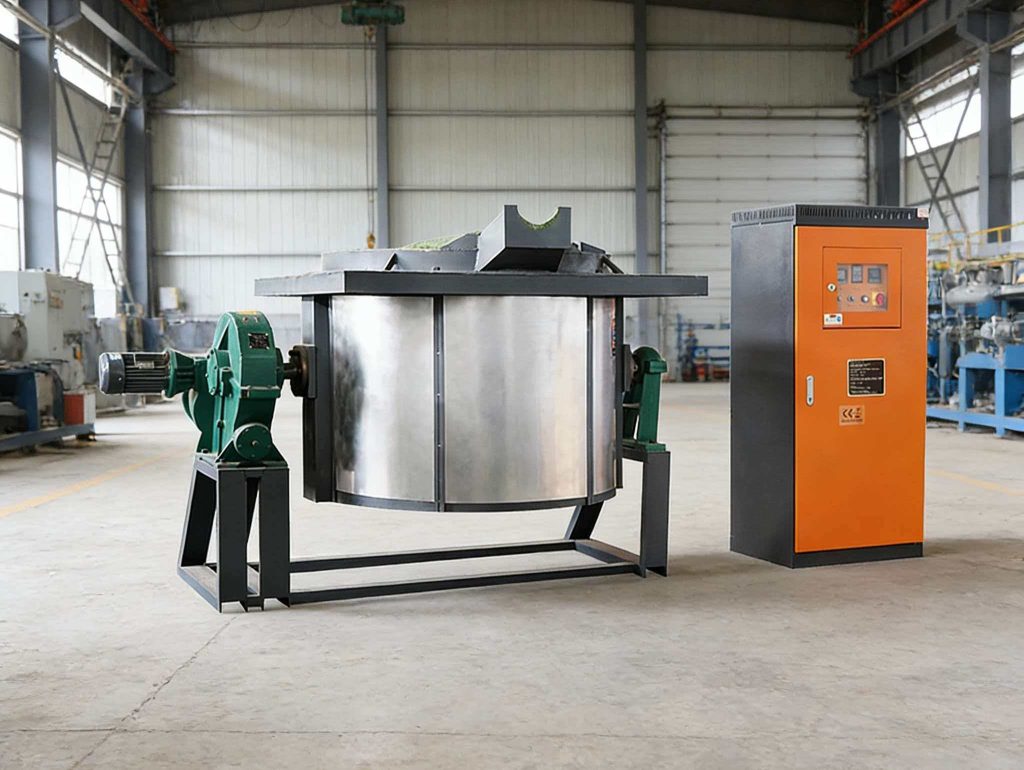
2. What Is an Aluminum Melting Furnace?
2.1 Definition and Core Function
An aluminum melting furnace is industrial equipment specifically designed to heat and melt aluminum materials at temperatures typically ranging from 660°C to 750°C.
It is suitable for processing:
- Primary aluminum ingots
- Scrap aluminum
- Aluminum alloys
These furnaces play a central role in industries such as casting, recycling, and metal processing.
2.2 Main Types of Aluminum Melting Furnaces
(1) Induction Melting Furnace
- Power range: 100 kW – 3000 kW
- Capacity: 100 kg – 5 tons per batch
Key Features:
- Fast melting speed
- High energy efficiency
- Precise temperature control
This type is widely used in modern foundries due to its efficiency and automation capabilities.
(2) Crucible Furnace
- Fuel types: gas, diesel, or electricity
- Capacity: 50 kg – 1000 kg
Key Features:
- Low initial investment
- Flexible and easy operation
Limitations:
- Lower thermal efficiency
- Higher emissions
Ideal for small-scale operations or workshops.
(3) Reverberatory Furnace
- Capacity: 1 ton – 100 tons
Key Features:
- Suitable for large-scale, continuous production
Limitations:
- High energy consumption
- Larger installation footprint
Common in large aluminum plants and recycling facilities.
(4) Tilting Furnace
- Designed for controlled pouring and casting
Advantages:
- Improved safety
- Higher operational efficiency
- Reduced metal loss
Often integrated into automated casting lines.
3. How Does an Aluminum Melting Furnace Work?
3.1 Basic Working Process
The standard aluminum melting process includes:
- Raw material charging (ingots or scrap)
- Heating and melting phase
- Temperature holding and refining
- Slag removal
- Pouring or transfer
Each stage must be carefully controlled to ensure metal quality and minimize losses.
3.2 Induction Heating Principle (Core Technology)
In a induction melting furnace, the heating process is based on electromagnetic induction:
- Alternating current generates a magnetic field
- The magnetic field induces eddy currents inside the metal
- The metal heats internally without direct flame contact
Advantages:
- Energy efficiency is typically 20–30% higher than traditional furnaces
- Uniform temperature distribution
- Reduced oxidation and contamination
This makes induction technology one of the most advanced solutions in metal melting equipment.
3.3 Key Performance Parameters
| Parameter | Typical Range |
|---|---|
| Melting Temperature | 660°C – 750°C |
| Melting Time | 30 – 90 minutes |
| Energy Consumption (Induction) | 500 – 650 kWh/ton |
| Energy Consumption (Fuel Furnace) | 700 – 1000 kWh/ton (equivalent) |
These parameters vary depending on furnace capacity, raw material quality, and operational efficiency.
4. Core Applications of Aluminum Melting Furnaces
4.1 Aluminum Casting Industry
Widely used in:
- Die casting
- Sand casting
- Gravity casting
High-quality melting ensures better casting performance and reduced defects. Learn more about aluminum casting furnace solutions.
4.2 Aluminum Recycling Industry
- Scrap aluminum remelting
- Energy-efficient material reuse
Modern furnaces significantly reduce energy consumption and environmental impact in aluminum recycling systems.
4.3 Automotive Manufacturing
Used for producing:
- Engine components
- Wheels
- Lightweight structural parts
Supports the growing demand for lightweight vehicles through automotive aluminum melting applications.
4.4 Aerospace and High-End Manufacturing
- High-purity aluminum alloys
- Strict temperature control requirements
Precision melting is critical in aerospace aluminum processing.
4.5 Metal Processing and Foundries
- Continuous production environments
- High efficiency requirements
Advanced furnaces ensure stable output in industrial metal melting operations.
5. How to Choose the Right Aluminum Melting Furnace
5.1 Key Selection Factors
When selecting an industrial aluminum melting furnace, consider:
- Production capacity (kg/hour or tons/day)
- Power requirements (kW)
- Energy consumption
- Furnace type (induction vs fuel)
- Automation level
5.2 Scenario-Based Recommendations
- Small workshops → crucible furnace
- Medium foundries → induction melting furnace
- Large-scale plants → reverberatory furnace
Choosing the right configuration ensures optimal performance and cost efficiency.
5.3 Cost vs Efficiency Comparison
| Furnace Type | Initial Cost | Energy Efficiency | Maintenance | Best For |
|---|---|---|---|---|
| Induction | Medium | High | Low | Precision melting |
| Crucible | Low | Medium | Medium | Small batch |
| Reverberatory | High | Low | High | Mass production |
6. Advantages of Modern Aluminum Melting Furnaces
Modern aluminum melting equipment offers significant advantages:
- Energy savings of 20–30%
- Faster melting cycles
- Precise temperature control
- Lower emissions
- Reduced metal loss
These benefits directly contribute to improved profitability and sustainability.
7. Common Problems and Solutions
7.1 High Energy Consumption
Cause: Outdated furnace design or poor insulation
Solution: Upgrade to energy-efficient induction furnace systems
7.2 Oxidation Loss
Cause: Improper temperature control
Solution: Optimize aluminum melting process control
7.3 Equipment Maintenance Issues
Cause: Low-quality components
Solution: Choose reliable industrial furnace manufacturers and perform regular maintenance
8. Why Choose a Professional Aluminum Melting Furnace Manufacturer
A professional manufacturer provides:
- Customized aluminum melting solutions
- Stable performance and long service life
- Technical support and after-sales service
- Proven experience in industrial applications
This ensures your investment delivers long-term value.
9. Conclusion: Improve Efficiency with the Right Aluminum Melting Furnace
Selecting the right aluminum melting furnace has a direct impact on production efficiency, energy consumption, and operational costs.
Modern furnace technologies—especially induction melting systems—enable manufacturers to achieve higher efficiency, better process control, and improved environmental performance.
A well-matched solution ensures long-term stability and competitiveness.
10. Contact Us
Looking to improve your production efficiency and reduce energy costs?
- Get a customized aluminum melting furnace solution
- Request detailed technical specifications and pricing
- Consult with our engineers for project planning
Contact us today to find the most suitable furnace for your business.