
1. Introduction
In modern metallurgy and metal processing, the steel melting furnace stands at the very center of production. It is not just a piece of equipment—it is the critical link that transforms raw metallic materials into usable molten steel, enabling large-scale industrial manufacturing across the globe.
From construction-grade steel to high-performance alloys, nearly every steel product begins its lifecycle inside a melting furnace. Today, steel melting technologies support a significant share of global steel production, particularly in scrap-based recycling routes, which are becoming increasingly dominant under sustainability pressures.
This article provides a clear, structured overview of steel melting furnaces—covering their definition, working principles, classification, applications, and the real value they bring to industrial users—helping decision-makers quickly understand and select the right solution.
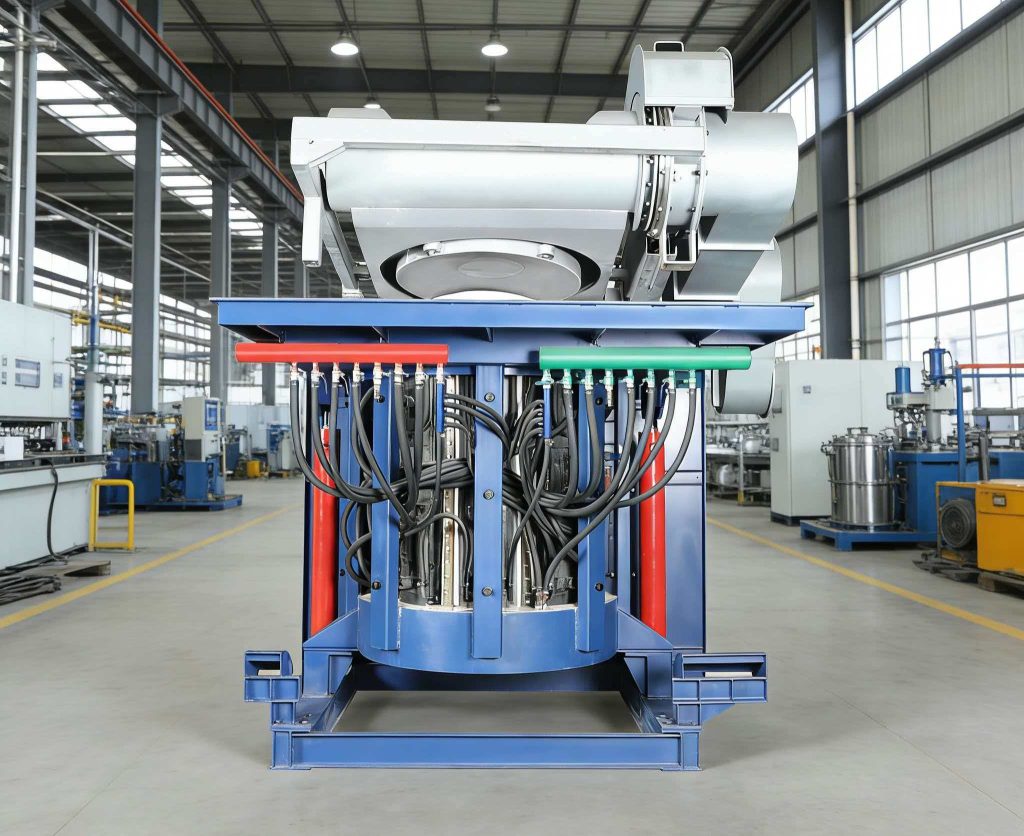
2. What is a Steel Melting Furnace?
A steel melting furnace is an industrial high-temperature system designed to convert solid metal materials—such as scrap steel, pig iron, and alloying elements—into molten steel. This molten metal is then used in downstream processes like casting, forging, and rolling.
Working Principle
Steel melting furnaces operate by generating and transferring thermal energy to metallic charge materials through different heat sources, including:
- Electric arcs
- Electromagnetic induction
- Fuel combustion (gas or oil)
To melt steel, temperatures must exceed approximately 1538°C, the melting point of pure iron. During this process, furnaces also enable:
- Initial impurity removal (e.g., sulfur and phosphorus)
- Chemical composition adjustment
- Homogenization of molten metal
Core Structure
Although designs vary, most steel melting furnaces include:
- Furnace body lined with refractory materials
- Heat generation system (electrodes, induction coils, or burners)
- Charging and tapping systems
- Temperature monitoring and control systems
- Off-gas and dust treatment systems
Core Value
Steel melting furnaces form the bridge between raw materials and finished steel products. They are essential not only for primary steelmaking but also for metal recycling and high-grade alloy production, making them indispensable in both traditional and modern metallurgical systems.
3. Classification of Steel Melting Furnaces
3.1 By Heat Source (Primary Classification)
Electric Arc Furnace (EAF)
The Electric Arc Furnace (EAF) uses high-temperature electric arcs (above 3000°C) generated between graphite electrodes and metal charge.
- Types: AC EAF, DC EAF
- Power levels:
- Regular Power (RP): <400 kVA/t
- High Power (HP): 400–700 kVA/t
- Ultra High Power (UHP): >700 kVA/t
Key advantages:
- Ideal for scrap steel recycling
- Flexible production
- High productivity
EAFs are currently one of the most widely used steelmaking technologies, especially in short-process steel plants.
Induction Melting Furnace
Induction furnaces generate heat through electromagnetic induction.
- Types: Medium frequency, high frequency
Key advantages:
- Uniform heating
- Fast temperature rise
- Precise control
- Low environmental impact
They are particularly suitable for small-to-medium batch production and precision alloy manufacturing.
Open-Hearth Furnace (OHF)
The Open-Hearth Furnace uses preheated air and fuel combustion to achieve high temperatures.
- Can process mixed charge (scrap + molten iron)
Although largely phased out in developed countries due to low efficiency and high emissions, it still exists in some regions.
Other Furnace Types
- Crucible Furnace – Small batch, multi-variety melting
- Cupola Furnace – Traditional, low-cost melting (limited modern use in steel)
- Vacuum Melting Furnace – High-purity and specialty alloy production
3.2 Other Classification Dimensions
- Refractory lining:
- Basic lining (magnesia, dolomite)
- Acid lining (silica-based)
- Charging method:
- Top charging
- Side charging
- Tapping method:
- Side tapping
- Center bottom tapping (CBT)
- Eccentric bottom tapping (EBT)
- Capacity scale:
- Induction steelmaking furnaces are mainly divided by tonnage per heat:
- Small: 0.5–5 tons (for precision casting, small batches)
- Medium: 5–20 tons (most common for general steel & foundry)
- Large: 20–50 tons (for large steel plants & high output)
- Extra-large: over 50 tons (rare, for special large-scale production)
- The most popular size in industry is 5–15 tons.
4. Application Industries
Steel melting furnaces serve a wide range of industries:
Core Industry
- Steelmaking industry
- Long-process and short-process steel production
- Scrap recycling and reuse
Key Industries
- Foundry industry
- Production of cast components for automotive, machinery, and heavy equipment
- Alloy manufacturing
- Stainless steel, nickel-based alloys, high-temperature alloys
- Applications in aerospace, medical, and electronics sectors
- Non-ferrous metallurgy
- Copper, aluminum, titanium melting and refining
- Powder metallurgy
- Preparation of molten materials for metal powder production
Extended Applications
- Aerospace
- Automotive manufacturing
- Construction materials
- Heavy machinery
- New energy sector
5. Suitable Application Scenarios
By Production Scale
- Large steel plants
- UHP EAFs and large furnaces
- High-volume, continuous production
- Medium-sized manufacturers
- Medium-frequency induction furnaces or mid-size EAFs
- Balanced efficiency and flexibility
- Small workshops / laboratories
- Small induction or crucible furnaces
- R&D, custom alloys, pilot production
By Production Needs
- Scrap recycling → EAF, induction furnace
- High-precision alloys → Vacuum furnace, high-frequency induction furnace
- Multi-variety production → Medium-frequency induction furnace
- Environmental compliance → Modern EAF with dust collection systems
By Facility Conditions
- Suitable for standard industrial workshops
- Compact systems available for space-limited facilities
- No need for integrated blast furnace infrastructure (especially for EAF routes)
6. What Can a Steel Melting Furnace Bring to Your Business?
6.1 Higher Production Efficiency
- Fast melting cycles (EAF: ~30–40 minutes per heat)
- Automated control systems reduce manual intervention
- Flexible material and grade switching
6.2 Improved Product Quality
- Precise temperature control
- Reduced oxidation and contamination
- Effective impurity removal (S, P, etc.)
- Accurate alloy composition adjustment
6.3 Cost Reduction
- Energy-efficient designs reduce power consumption
- Scrap utilization lowers raw material costs
- Reduced labor and maintenance costs
6.4 Sustainability & Compliance
- Advanced gas treatment systems reduce emissions
- EAF routes can cut carbon emissions significantly (up to ~60–70% lower than traditional blast furnace routes)
- Supports circular economy through scrap recycling
6.5 Stronger Competitive Advantage
- Ability to produce high-value alloys
- Stable and reliable production output
- Compatibility with advanced refining technologies (e.g., VOD, LF refining)
- Enables transition toward high-end manufacturing markets
7. Conclusion
The steel melting furnace is a foundational technology in the global steel and alloy industry. Whether for large-scale steel production or precision alloy manufacturing, it delivers unmatched advantages in efficiency, flexibility, quality control, and sustainability.
As industries shift toward greener and more efficient production models, modern furnace technologies—especially electric arc and induction systems—are becoming the preferred choice worldwide.
Get Expert Support for Your Project
Choosing the right steel melting furnace is a critical decision that directly impacts your production efficiency, cost structure, and product quality.
If you are planning to upgrade your facility or invest in new melting equipment, our team is ready to help.
Contact us today for tailored technical solutions, equipment recommendations, and detailed quotations designed specifically for your application needs.