
1. Introduction
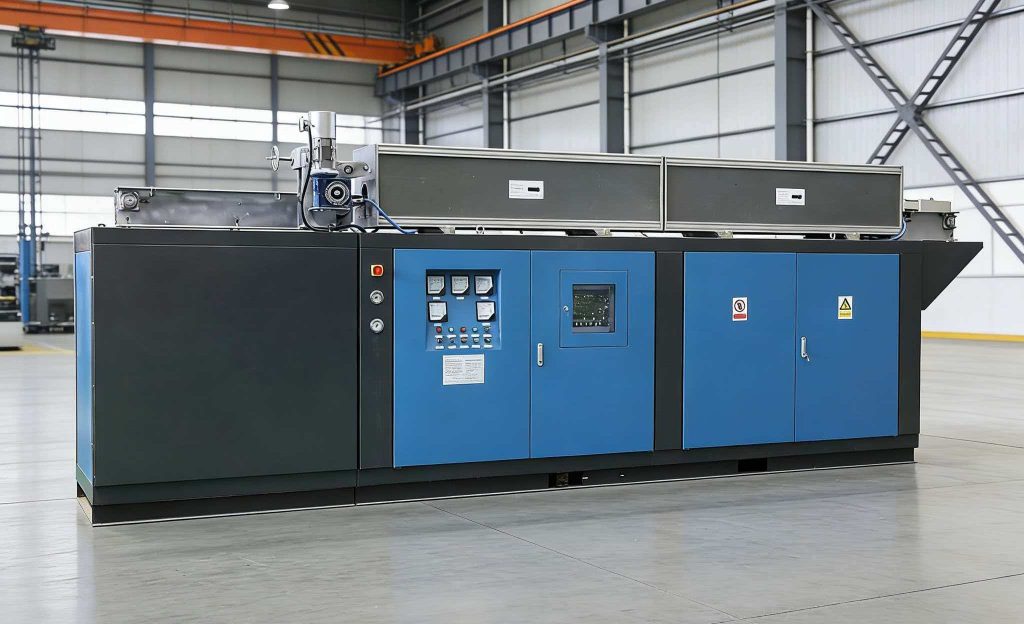
In modern metal processing industries—ranging from forging and heat treatment to precision casting—the Metal Induction Heating Furnace plays a critical role. Its advantages in energy efficiency, rapid heating, and precise temperature control make it a preferred solution for manufacturers aiming to improve productivity and product quality.
However, in long-term, high-load industrial environments, even the most advanced induction heating systems inevitably encounter operational challenges. Common issues such as high water temperature alarms, declining heating efficiency, increased energy consumption, and furnace lining damage can directly impact production stability and operating costs.
Purpose of this Guide:
This article addresses six of the most common operational problems in induction heating furnaces, offering practical troubleshooting methods and actionable maintenance strategies. The goal is to help operators minimize downtime, optimize performance, and extend the service life of their equipment through effective induction heating furnace troubleshooting and regular maintenance practices.
2. Core Troubleshooting Solutions
Q1: Why does the Metal Induction Heating Furnace trigger a high water temperature alarm?
Root Causes:
- Insufficient cooling water flow (pump failure or low pressure)
- Blockage or scaling in cooling pipelines
- Damaged or aging water-cooled cables
- Heat exchanger inefficiency
Actionable Steps:
- Check cooling water pressure (recommended: ≥0.2–0.3 MPa depending on system design)
- Inspect and clean pipelines to remove scale or debris
- Examine water-cooled cables for leakage or overheating signs
- Verify proper operation of the cooling tower or chiller
Pro Tip:
Advanced systems equipped with dual-circuit cooling systems and intelligent overheat protection can reduce failure rates by over 30% and significantly enhance operational safety.
Q2: Why is the heating efficiency decreasing while energy consumption increases?
Root Causes:
- Induction coil aging or poor electrical contact
- Internal dust accumulation or scaling affecting heat transfer
- Low-quality or improperly prepared raw materials (e.g., moisture, oxidation)
Actionable Steps:
- Tighten coil connections and inspect for oxidation or wear
- Perform periodic internal cleaning using compressed air
- Ensure raw materials are dry and free of contaminants
- Monitor power factor (ideally >0.9 for efficient operation)
Technical Insight:
A well-maintained induction system can achieve thermal efficiency levels of 85–95%, while neglected systems may drop below 70%, significantly increasing energy costs.
Q3: How to reduce excessive metal element burning during heating or smelting?
Root Causes:
- Oxidation due to high-temperature exposure
- Uneven heating causing localized overheating
- Prolonged holding time at peak temperatures
Solutions:
- Pre-treat raw materials (drying and cleaning)
- Apply slagging or protective covering agents
- Optimize heating cycles to reduce holding time
Key Advantage:
Induction furnaces with electromagnetic stirring ensure uniform temperature distribution, reducing local overheating and minimizing element burn-off by up to 15–25%.
Q4: What causes furnace lining to crack or leak?
Root Causes:
- Incorrect refractory material selection
- Rapid heating or cooling (thermal shock)
- Poor installation or sintering process
Solutions:
- Select refractory materials compatible with operating temperatures and metal types
- Follow strict preheating (baking) curves to eliminate internal stress
- Conduct regular visual inspections for early crack detection
Industry Data:
Improper thermal ramp-up can reduce furnace lining lifespan by 30–50%, making controlled heating cycles essential.
Q5: The Metal Induction Heating Furnace fails to start — how to diagnose?
Root Causes:
- Power supply failure or voltage instability
- Control system malfunction (PLC or sensors)
- Coil short circuit or open circuit
Diagnostic Steps:
- Verify input voltage and power supply stability
- Check control panel alarms and PLC signals
- Inspect coil continuity using a multimeter
- Examine protection systems (overcurrent, overvoltage triggers)
Safety Note:
Always perform troubleshooting under complete power shutdown conditions. Professional systems often include 24/7 remote diagnostics support, reducing downtime significantly.
Q6: How to control oxygen content in molten metal to ensure quality?
Root Causes:
- Moist or contaminated raw materials
- Excessive exposure to air during heating
- Improper process control
Solutions:
- Use dry, clean charge materials
- Apply flux or protective atmosphere when necessary
- Adjust power frequency and heating stages to limit oxidation
- Control pouring timing to minimize air contact
Result:
Optimized oxygen control improves casting integrity, reduces porosity defects, and enhances mechanical properties.
3. Proactive Maintenance Tips
Preventive maintenance is the most effective strategy to ensure long-term reliability and reduce unexpected failures. A structured furnace maintenance plan can extend equipment lifespan by 20–40%.
Scheduled Inspection Checklist
Cooling System (Monthly):
- Check water purity (recommended conductivity: <50 μS/cm for closed systems)
- Monitor flow rate and pressure stability
- Inspect for leaks or corrosion
Electrical System (Quarterly):
- Tighten all electrical connections
- Inspect insulation resistance (≥1 MΩ recommended)
- Verify capacitor bank performance
Mechanical Components (Quarterly):
- Lubricate moving parts
- Check furnace tilting mechanisms and seals
- Inspect structural integrity
Operational Best Practices
- Avoid overload operation beyond rated capacity
- Follow proper startup and shutdown procedures
- Maintain a clean and dust-free working environment
- Train operators regularly to ensure standardized operation
Consistent adherence to these practices ensures optimal furnace care, reduces failure rates, and supports stable production output.
4. Conclusion
Summary
Efficient operation of a Metal Induction Heating Furnace depends on a clear understanding of both troubleshooting techniques and preventive maintenance strategies. While addressing faults is necessary, adopting a proactive maintenance mindset is the key to minimizing downtime, reducing costs, and ensuring consistent product quality.
Trust & Support
A reliable equipment supplier should not only deliver high-performance furnaces but also provide:
- Professional after-sales technical support
- Fast spare parts availability
- Remote diagnostic capabilities
- Customized maintenance solutions
Contact Us
If you are experiencing operational issues or looking to optimize your furnace performance, contact our technical team today. We offer tailored support, expert diagnostics, and comprehensive maintenance solutions to help you maximize your investment and achieve long-term production stability.