
I. Why Furnace Shell Design Matters
In modern metal melting operations, the induction furnace has become one of the most widely used technologies due to its high efficiency, precise temperature control, and relatively low environmental impact. While many factors influence furnace performance—such as power supply, coil design, and refractory materials—the furnace shell structure is often overlooked.
However, the shell plays a critical role in determining the furnace’s structural strength, operational stability, cooling efficiency, and long-term reliability. Among the most common designs used in industry today are the steel shell induction furnace and the aluminum shell induction furnace. Understanding the differences between these two types is essential for foundries and metal processing plants selecting the most suitable equipment.
1.1 Role of the Furnace Shell in Induction Melting
The furnace shell is the external structural frame that supports the entire melting system. Its main functions include:
- Providing mechanical support for the furnace body
- Protecting internal components such as the induction coil, refractory lining, and insulation layers
- Ensuring stable operation of the induction melting furnace
- Supporting cooling pipelines and auxiliary systems
- Maintaining overall structural rigidity during tilting and pouring operations
Because induction furnaces operate at extremely high temperatures—often exceeding 1,600 °C in steel melting applications—the structural integrity of the furnace shell directly affects operational safety and service life.
1.2 Why Compare Steel Shell and Aluminum Shell Furnaces
Different furnace shell structures are designed to meet different production requirements. In practice, steel shell furnaces and aluminum shell furnaces differ significantly in terms of:
- Mechanical strength
- Furnace capacity
- Installation requirements
- Cooling system design
- Maintenance complexity
- Overall investment cost
For foundries planning to install a metal melting furnace, choosing the right shell structure can significantly influence both initial investment and long-term operating efficiency.
II. Overview of Induction Melting Furnaces
2.1 Basic Working Principle of Induction Furnaces
An induction melting furnace operates based on the principle of electromagnetic induction. When alternating current passes through the induction coil, it generates a rapidly changing magnetic field. This magnetic field induces eddy currents inside the metal charge placed within the furnace crucible.
The induced currents generate heat due to the electrical resistance of the metal, causing the charge to melt. This process offers several advantages:
- Rapid heating
- High thermal efficiency (typically 75–85%)
- Uniform metal temperature
- Precise temperature control
Compared with traditional fuel-based furnaces, induction heating technology provides cleaner and more controllable melting conditions.
2.2 Main Components of an Induction Furnace
A standard industrial induction furnace typically includes the following components:
- Furnace shell
- Induction coil
- Refractory lining
- Cooling system
- Power supply system
- Hydraulic or mechanical tilting mechanism
Each of these components must work together to ensure safe and efficient melting operations.
III. What Is a Steel Shell Induction Furnace
3.1 Structural Characteristics
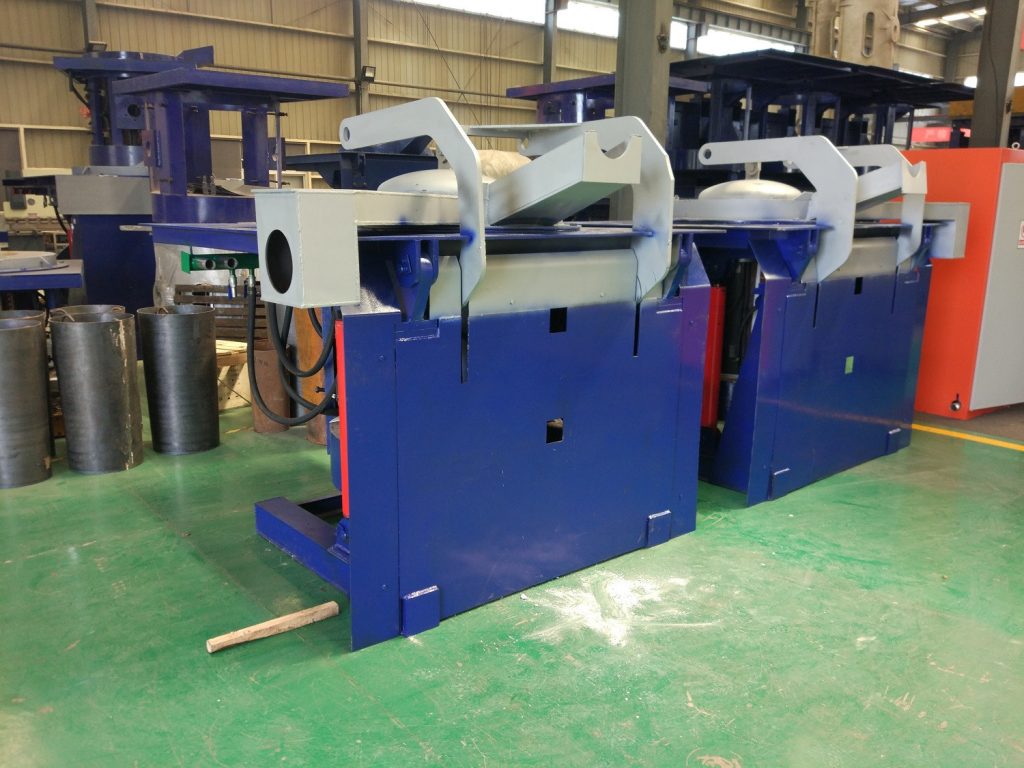
A steel shell induction furnace features a heavy-duty steel outer structure designed for high mechanical strength and long-term industrial operation. The shell is usually constructed from welded steel plates reinforced with structural ribs.
Key structural features include:
- Rigid steel furnace shell
- Integrated hydraulic tilting system
- Reinforced support frame
- Closed-loop cooling system
- Heavy-duty base structure
Because of its robust design, this type of industrial induction melting furnace can withstand high mechanical loads and large metal capacities.
3.2 Typical Applications
Steel shell furnaces are commonly used in:
- Large steel foundries
- iron casting plants
- Continuous metal melting production lines
- High-capacity scrap melting operations
In many modern steel plants, steel shell furnaces with capacities ranging from 5 tons to more than 60 tons per heat are widely used.
3.3 Key Advantages
The main advantages of a steel shell induction furnace include:
High mechanical strength
The rigid steel structure allows the furnace to withstand heavy loads and thermal stress.
Long service life
With proper maintenance, steel shell furnaces can operate reliably for many years in demanding industrial environments.
Large melting capacity
They are suitable for large-scale melting operations where high throughput is required.
Operational stability
The reinforced frame improves vibration resistance and overall equipment stability.
3.4 Potential Limitations
Despite their advantages, steel shell furnaces also have certain limitations:
- Higher initial investment
- More complex installation requirements
- Heavier equipment structure
- Maintenance may require specialized technical support
IV. What Is an Aluminum Shell Induction Furnace
4.1 Structural Characteristics
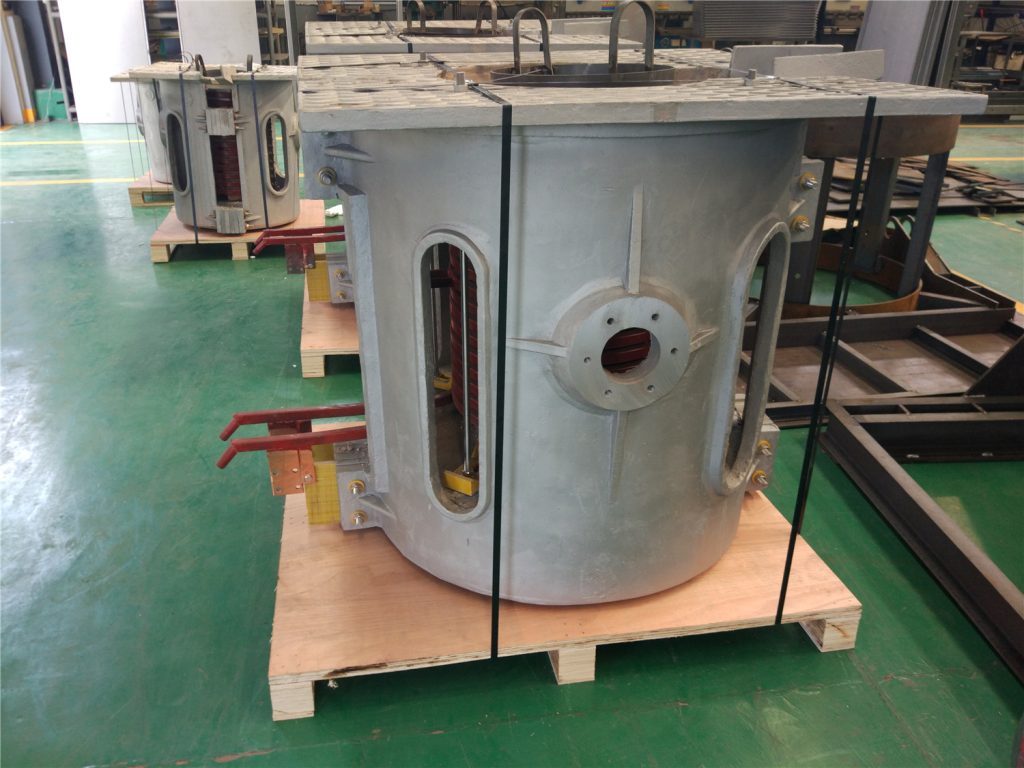
An aluminum shell induction furnace uses a lightweight aluminum alloy frame as the external structure. This design focuses on simplicity, mobility, and cost efficiency.
Typical structural characteristics include:
- Lightweight aluminum alloy furnace shell
- Modular assembly structure
- Compact furnace body
- Simple mechanical tilting mechanism
- Simplified cooling configuration
These features make the aluminum shell melting furnace particularly suitable for smaller foundries and flexible production environments.
4.2 Typical Applications
Aluminum shell furnaces are commonly used in:
- Small and medium-sized metal casting workshops
- Non-ferrous metal melting such as aluminum melting, copper melting, and brass casting
- Jobbing foundries with batch production
- Recycling operations using scrap metal melting furnaces
Most aluminum shell furnaces operate in capacity ranges from 100 kg to around 3–5 tons per heat.
4.3 Key Advantages
The popularity of the aluminum shell induction furnace is largely due to several practical advantages.
Lower equipment cost
The simpler structure reduces manufacturing and installation costs.
Easy installation and relocation
The lightweight design allows faster installation and easier relocation compared with heavy steel shell furnaces.
Simple maintenance
Maintenance procedures are generally less complex due to the modular structure.
Flexible production capability
They are ideal for small foundries or production lines with varying melting requirements.
4.4 Potential Limitations
However, aluminum shell furnaces also have certain constraints:
- Lower mechanical strength compared with steel shell furnaces
- Limited capacity for very large melting operations
- Less suitable for continuous heavy-duty industrial production
V. Key Differences Between Steel Shell and Aluminum Shell Induction Furnaces
5.1 Structural Strength and Durability
The most significant difference lies in structural strength.
A steel shell induction furnace provides a rigid structure capable of supporting large molten metal loads and resisting mechanical stress during operation. In contrast, an aluminum shell induction furnace is lighter but less robust.
For heavy industrial environments, the steel shell structure offers superior durability.
5.2 Furnace Capacity
Furnace capacity is another major distinction.
- Steel shell furnaces: typically used for medium to large capacities (5–60+ tons).
- Aluminum shell furnaces: usually used for small and medium capacities (0.1–5 tons).
As production scale increases, steel shell furnaces become the preferred choice.
5.3 Cooling System Design
Cooling is critical in any induction melting system.
Steel shell furnaces typically use a closed-loop cooling system with advanced monitoring to maintain coil temperature stability.
Aluminum shell furnaces often rely on simpler cooling arrangements, which are sufficient for smaller power loads.
5.4 Installation and Mobility
Installation requirements vary significantly between the two furnace types.
Steel shell furnaces require:
- Strong concrete foundations
- Hydraulic system installation
- Complex cooling pipeline networks
By comparison, aluminum shell induction furnaces are easier to install and can sometimes be relocated if production layouts change.
5.5 Cost Considerations
Cost is an important factor in furnace selection.
Steel shell furnaces involve:
- Higher equipment costs
- Higher installation expenses
- Greater infrastructure requirements
Aluminum shell furnaces offer:
- Lower initial investment
- Faster installation
- Lower entry barrier for small foundries
However, for large-scale production, the long-term efficiency of steel shell induction furnaces may offset the higher initial cost.
VI. Which Furnace Is Better for Your Application?
6.1 Factors to Consider When Choosing
When selecting an induction furnace for metal melting, several factors should be evaluated:
- Required production capacity
- Type of metal being melted
- Available installation space
- Budget and return on investment
- Production continuity requirements
Careful analysis of these factors helps determine the most suitable furnace structure.
6.2 Typical Selection Scenarios
In practice, the selection often follows these general patterns:
Large steel foundries
→ Prefer steel shell induction furnaces for high-capacity and continuous operation.
Small to medium non-ferrous metal foundries
→ Often choose aluminum shell induction furnaces for flexibility and lower cost.
VII. Industry Trends in Induction Furnace Design
7.1 Increasing Demand for Energy Efficiency
Energy efficiency has become a major priority in modern metal melting furnace technology.
Recent developments include:
- Optimized induction coil design
- Advanced refractory lining materials
- Improved insulation structures
These innovations help reduce energy consumption and improve melting efficiency.
7.2 Integration with Modern Foundry Automation
Many new induction melting systems are now integrated with intelligent control systems, including:
- Real-time monitoring platforms
- Automated charging systems
- Automated pouring equipment
- Data-driven process optimization
These technologies contribute to the development of smart foundries and Industry 4.0 manufacturing environments.
VIII. Conclusion
8.1 Summary of Key Differences
Both steel shell induction furnaces and aluminum shell induction furnaces play important roles in modern metal melting operations. Their main differences include:
- Structural design and mechanical strength
- Furnace capacity range
- Cooling system configuration
- Installation requirements
- Initial investment and maintenance costs
8.2 Choosing the Right Furnace for Long-Term Productivity
Selecting the appropriate induction furnace shell type is essential for optimizing production efficiency, reducing operating costs, and ensuring long-term equipment reliability.
If you are planning to invest in a high-efficiency induction melting furnace or need technical guidance on selecting the right equipment for your foundry, please contact us. Our engineering team can provide professional solutions tailored to your specific production requirements.