
1. Overview of the Aluminum Melting Process
In modern aluminum production, the efficiency of the aluminum melting process directly determines product quality, energy consumption, and overall production cost. For manufacturers involved in extrusion, casting, or recycling, understanding how melting methods interact with equipment is essential for making the right investment decisions.
Currently, most aluminum processing plants rely on remelting solid aluminum ingots to produce billets for downstream processes such as extrusion and forging. Depending on production requirements, different melting methods are applied to ensure efficiency and quality.
Understanding these methods is the first step toward optimizing your aluminum melting furnace system.
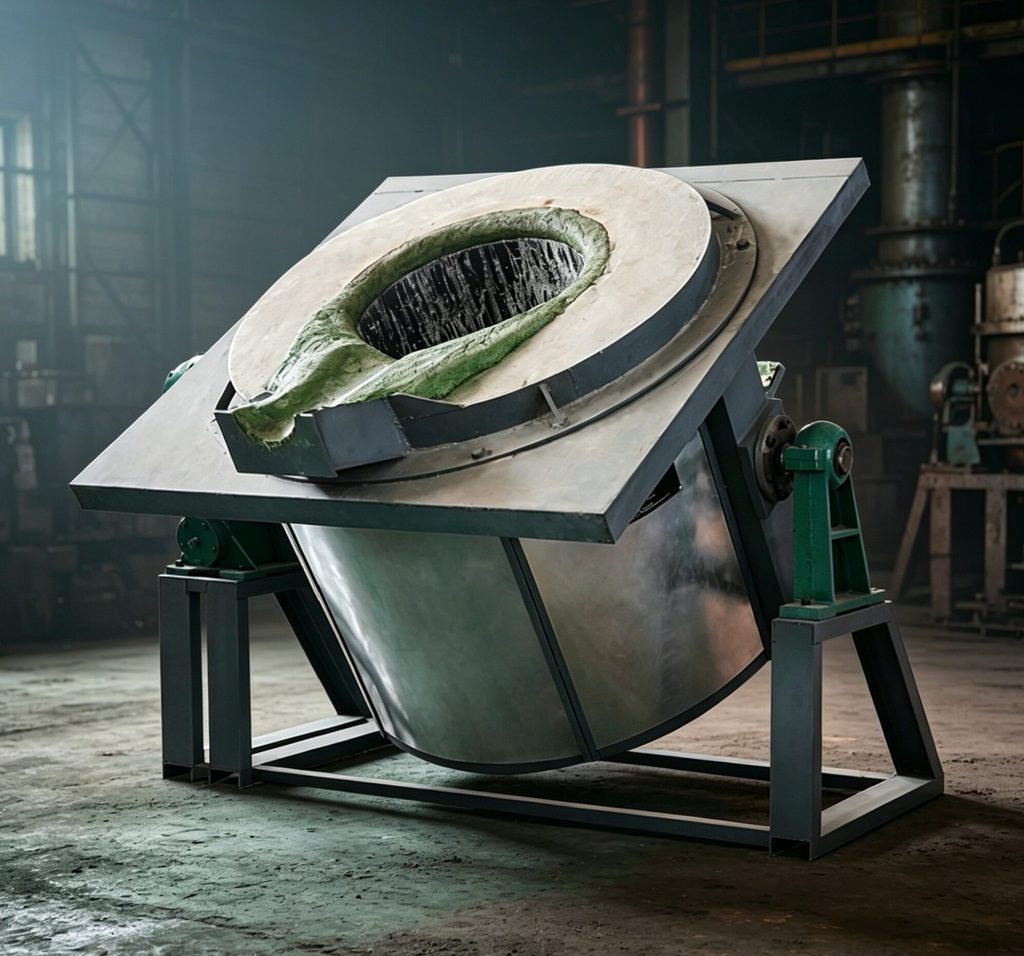
2. Four Main Aluminum Melting Methods
2.1 Batch Melting Method
Currently, most aluminum processing plants use solid aluminum ingots that have been remelted to produce billets for pressure processing. There are generally four types of melting methods: batch melting, semi-batch
melting, semi-continuous melting, and continuous melting. In the batch melting method, the process begins with charging the furnace, followed by melting, skimming, refining, and other steps, after which the metal is completely removed from the furnace in a single pour, leaving no metal behind. This method is primarily used for producing finished aluminum alloys with high quality requirements, as it better ensures the uniformity of the ingot’s chemical composition.
2.2 Semi-Batch Melting Method
The semi-batch melting method is essentially the same as the batch melting method, with the difference lying in the amount of molten metal retained in the furnace. In the semi-batch method, 1/5 to 1/4 of the molten metal is left in the furnace after tapping, and the charge for the next melt is then loaded for melting. The advantages of this method include: the newly added charge is immersed in the molten metal, reducing metal loss due to burning; during tapping, settled inclusions accumulate at the furnace bottom, preventing them from mixing into the molten metal during casting; and temperature fluctuations within the furnace are minimal, extending the furnace’s service life. This method is suitable for melting pure aluminum.
2.3 Semi-Continuous Smelting Method
The semi-continuous smelting method is similar to the half-batch smelting method, in that the next batch of charge can be added after each tapping yields 1/3 to 1/4 of the total volume. The difference from the half-batch method lies in the fact that, in the semi-continuous method, the volume tapped each time is small, leaving most of the molten metal in the furnace, which allows for a continuous sequence of tapping and charging. This method is suitable for smelting scrap in double-chamber furnaces. Since the added charge is immersed in the molten metal, not only is there minimal loss due to burning, but the melting rate is also accelerated.
2.4 Continuous Smelting Method
The continuous smelting method involves continuous charging of the furnace, while tapping is performed intermittently. This method offers limited flexibility and has a narrow scope of application; it is suitable only for the smelting of pure aluminum, as well as for smelting scrap aluminum and aluminum chips.
3. Why Furnace Selection Matters in the Aluminum Melting Process
While different melting methods define process behavior, the actual production performance depends heavily on the aluminum melting furnace used.
Improper furnace selection may lead to:
- High aluminum burn loss
- Poor temperature stability
- Increased energy consumption
- Inconsistent alloy composition
A well-matched aluminum melting furnace system helps ensure stable production, higher metal yield, and better final product quality.
4. Matching Aluminum Melting Methods with Furnace Types
Different melting processes require different furnace configurations. Proper matching is essential for achieving efficiency and reducing production cost.
| Melting Method | Recommended Furnace | Application | Key Advantage |
|---|---|---|---|
| Batch melting | induction melting furnace | High-quality aluminum alloys | Precise temperature control |
| Semi-batch melting | crucible furnace | Pure aluminum production | Lower oxidation loss |
| Semi-continuous melting | double chamber melting furnace | Scrap aluminum recycling | High efficiency and fast melting |
| Continuous melting | reverberatory furnace | Large-scale production | Stable continuous output |
5. Key Factors for Aluminum Melting Furnace Selection
5.1 Raw Material Type
- Aluminum ingots → induction melting furnace
- Scrap aluminum → double chamber furnace
- Aluminum chips → continuous melting systems
5.2 Production Capacity
- Small batch production → batch furnace
- Medium scale production → semi-batch system
- Large scale production → reverberatory furnace system
5.3 Energy Efficiency Requirements
Modern production lines increasingly require energy-saving solutions. Advanced energy-efficient aluminum melting furnaces help reduce fuel or electricity consumption while maintaining stable output.
5.4 Quality Requirements
For industries requiring high precision alloys:
- Stable temperature control
- Low inclusion rate
- Uniform chemical composition
These requirements are typically achieved using induction melting furnace systems.
6. Role of Holding Furnace in Aluminum Processing
In aluminum processing plants, molten aluminum alloys are transferred from the melting furnace to a holding furnace for refining and settling. The molten aluminum alloy in the holding furnace is processed in a single casting batch.
Combining a melting furnace with a holding furnace for aluminum provides:
- Stable pouring temperature
- Improved impurity removal
- Better casting consistency
This combination is widely used in modern aluminum production lines.
7. Complete Aluminum Melting Furnace Solutions
A complete production system usually includes:
- aluminum melting furnace
- aluminum holding furnace
- charging system
- temperature control system
- casting system
We provide customized aluminum melting solutions based on:
- Raw material type
- Production capacity
- Energy consumption target
- Final product requirements
8. FAQ
What is the most efficient aluminum melting method?
Semi-continuous melting is generally the most efficient for scrap aluminum due to higher throughput and lower oxidation loss.
Which furnace is best for high-quality aluminum alloys?
An induction melting furnace is preferred due to its precise temperature control and stable composition.
Can one furnace handle all melting methods?
Not efficiently. Different methods require different furnace designs for optimal performance.
Why is a holding furnace necessary?
A holding furnace for aluminum stabilizes temperature and improves metal cleanliness before casting.
9. Contact Us
If you are planning to upgrade or build a new aluminum melting production line, choosing the right furnace system is critical.
We can help you design a complete solution including:
- aluminum melting furnace selection
- process optimization
- production line configuration
- energy-saving design
Contact us to get a customized proposal based on your production needs.