
Working Principle, Applications, and Energy Efficiency Analysis
What Is an Industrial Induction Heating Machine?
An industrial induction heating machine is a high-efficiency thermal processing system that uses electromagnetic induction to heat conductive metal materials without direct contact. Compared with traditional fuel-based or resistance heating systems, induction heating delivers faster heating speeds, higher energy efficiency, and more precise temperature control.
Today, industrial induction heating equipment is widely used in forging, heat treatment, pipe processing, and continuous production lines, especially where consistent temperature and repeatability are critical.
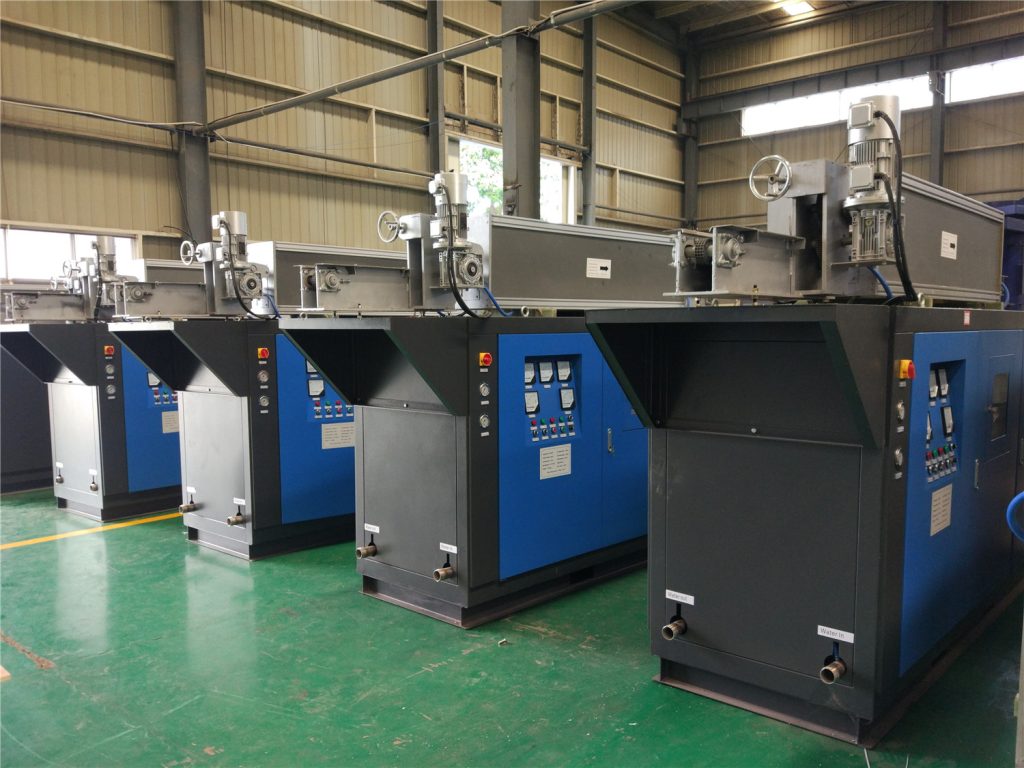
Working Principle of Induction Heating
The core of an induction heating system is based on electromagnetic induction:
- Alternating current flows through the induction coil
- A changing magnetic field is generated
- The metal workpiece inside the coil produces eddy currents
- Electrical resistance converts these currents into heat (Joule heating)
This process allows rapid and uniform heating from within the material, rather than relying on external heat transfer.
Compared with traditional heating methods, this results in:
- Faster heating rates
- Reduced oxidation and scaling
- Higher thermal efficiency
Key Technical Parameters
The following is the device description:
| Parameter | Value / Description |
|---|---|
| Heating Temperature Range | 200°C – 1300°C |
| Power Consumption | 380 kWh per ton |
| Installation | Easy installation and operation |
| Footprint | Small footprint |
| Temperature Stability | Stable and reliable |
| Heating Type | Non-contact induction heating |
The power consumption per ton (380 kWh) is significantly lower than many traditional gas or resistance furnaces, making it ideal for energy-conscious manufacturing environments.
Main Applications of Industrial Induction Heating Machines
1. Pre-Forging Heating
Induction systems are widely used in pre-forging heating processes, ensuring uniform temperature before deformation:
- Gears
- Ring gears
- Connecting rods
- Bearings
- Shackles
- Rigging components
Compared to traditional furnaces, induction forging heating improves consistency and reduces material waste.
2. Online Continuous Heating
In automated production lines, online induction heating plays a key role:
- Pipeline anti-corrosion spraying
- Long steel bar heating
- Steel wire and pipe tempering
This makes it highly suitable for continuous production lines where stable output and speed are essential.
3. Localized Heating Applications
Induction heating enables precise local heating of metal parts, such as:
- U-bolt bending
- Roller hot assembly
- Pipe bending
This targeted heating reduces energy loss and improves processing accuracy.
4. Heat Treatment Processes
Industrial induction systems are also widely used in metal heat treatment processes, including:
- Tempering
- Annealing
- Pre-heating before extrusion or rolling
Compared with traditional furnaces, induction heat treatment offers better control over metallurgical properties.
Advantages of Industrial Induction Heating Machines
1. High Energy Efficiency
With power consumption around 380 kWh per ton, induction systems outperform many conventional heating methods. Energy is directly transferred into the workpiece, minimizing heat loss.
2. Precise Temperature Control
A stable and reliable heating temperature ensures:
- Consistent product quality
- Reduced overheating or underheating
- Better metallurgical results
This is critical for industries requiring strict process control.
3. Compact Design and Easy Installation
Compared to bulky traditional furnaces, compact induction heating machines offer:
- Small footprint
- Easy integration into existing production lines
- Lower infrastructure requirements
4. Clean and Environmentally Friendly
Induction heating produces:
- No open flame
- No combustion emissions
- Reduced workplace pollution
This makes it ideal for modern, environmentally compliant factories.
5. Improved Production Efficiency
- Faster heating cycles
- Reduced downtime
- Easy automation integration
This directly increases overall production throughput.
Comparison: Induction Heating vs Traditional Heating
| Feature | Induction Heating | Traditional Furnace |
| Heating Speed | Very fast | Slow |
| Energy Efficiency | High | Medium to low |
| Temperature Control | Precise | Less accurate |
| Oxidation | Minimal | Significant |
| Automation | Easy integration | Limited |
| Footprint | Compact | Large |
How to Choose the Right Industrial Induction Heating Machine
When selecting an industrial induction heating solution, consider:
- Required heating temperature range
- Workpiece size and geometry
- Production volume
- Whether continuous or batch processing is needed
- Energy consumption targets
Choosing the right configuration ensures maximum return on investment.
FAQ
1. What metals can be heated using an induction heating machine?
Induction heating works best with conductive metals such as:
- Steel
- Stainless steel
- Copper
- Aluminum
Different materials may require different frequency and power settings.
2. Is induction heating suitable for continuous production lines?
Yes. Industrial induction heating machines are widely used in continuous heating applications, especially for pipelines, bars, and wire processing.
3. How energy-efficient is induction heating compared to gas furnaces?
Induction heating is significantly more efficient. With around 380 kWh per ton, it reduces energy waste and lowers operating costs compared to traditional fuel-based systems.
4. Can induction heating be used for local heating only?
Yes. One of the key advantages is localized heating capability, making it ideal for bending, assembly, and partial heat treatment processes.
5. What industries use induction heating machines?
Common industries include:
- Metal forging
- Automotive manufacturing
- Pipe and steel processing
- Machinery production
Conclusion
An industrial induction heating machine is a highly efficient, precise, and environmentally friendly solution for modern metal processing. With advantages in energy consumption, temperature control, and production efficiency, it is becoming the preferred choice across multiple industries.
For manufacturers looking to improve product quality while reducing operational costs, investing in a reliable induction heating system is a strategic decision.