
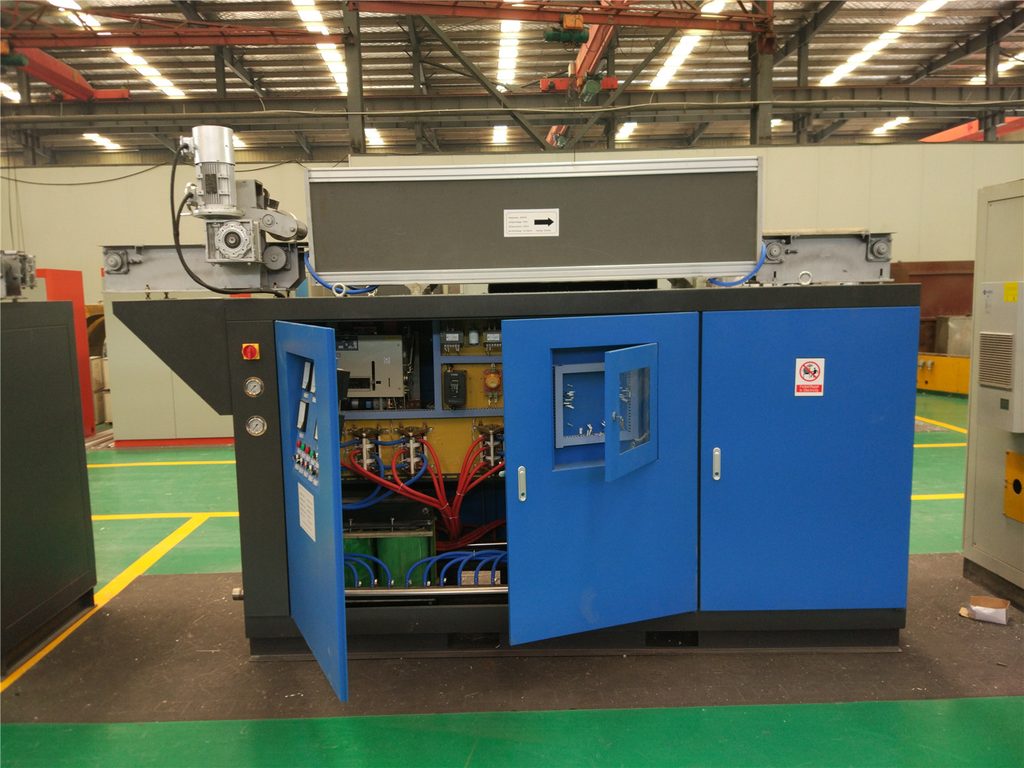
Induction heating is an important technology in modern tube and pipe processing. It uses electromagnetic induction to generate heat directly inside conductive metal workpieces, making it suitable for applications that require controlled heating, localized temperature changes, or integration with continuous production lines.
In the tube industry, induction heating can be used for steel pipe heat treatment, online tempering, pipe bending, and other metal forming operations. Each application has different heating requirements, so the equipment must be configured according to the pipe dimensions, material properties, target temperature, and production conditions.
Choosing suitable induction heating solutions for the tube industry requires more than selecting a power supply. The induction coil, heating zone, frequency, cooling system, and material handling arrangement must work together to achieve the required heating results.
This guide explains the main applications of induction tube heating, the factors affecting heating performance, and how to select suitable industrial equipment.
1. What Is Induction Heating for Tubes and Pipes?
Induction heating is a non-contact heating process that uses an alternating electromagnetic field to generate heat inside a conductive workpiece.
An alternating current passes through an induction coil, producing a changing magnetic field. When a metal pipe enters this field, electrical currents are induced within the material. The electrical resistance of the pipe converts this electrical energy into heat.
An industrial induction heating system generally includes:
- Induction power supply: Provides electrical energy at the required operating frequency.
- Induction coil: Generates the electromagnetic field around the pipe.
- Cooling system: Maintains suitable cooling conditions for water-cooled components.
- Temperature monitoring: Measures the pipe temperature during processing.
- Material handling system: Positions and transfers pipes through the heating zone.
- Control system: Coordinates heating power and production operations.
For tube and pipe applications, the coil is designed according to the workpiece diameter, wall thickness, heating length, and required temperature distribution.
Unlike a general-purpose heating system, an industrial induction tube heating solution needs to account for the geometry and movement of the pipe throughout the production process.
For more background on coil geometry, coupling distance, and operating frequency, see the guide to how an induction heating coil works.
2. Main Applications of Induction Heating in the Tube Industry
Different pipe manufacturing and processing operations require different heating arrangements. Three important applications are online heat treatment, pipe bending, and localized heating.
2.1 Online Tempering of Steel Pipes
Tempering is a heat treatment process used to modify the properties of previously hardened steel.
In steel pipe processing, induction heating can be integrated into an online production arrangement to heat the pipe according to the required tempering procedure.
The system needs to maintain consistent heating conditions while the pipe moves through the heating area.
Important considerations include:
- Steel grade and material condition
- Pipe diameter and wall thickness
- Required tempering temperature
- Heating zone and residence time
- Pipe movement speed
- Temperature monitoring and process control
The target temperature and treatment procedure must be determined according to the material specification and required mechanical properties. Different steel grades should not be assigned the same tempering conditions without technical verification.
The metal induction heating furnace product page lists online tempering of steel pipes among its applications.
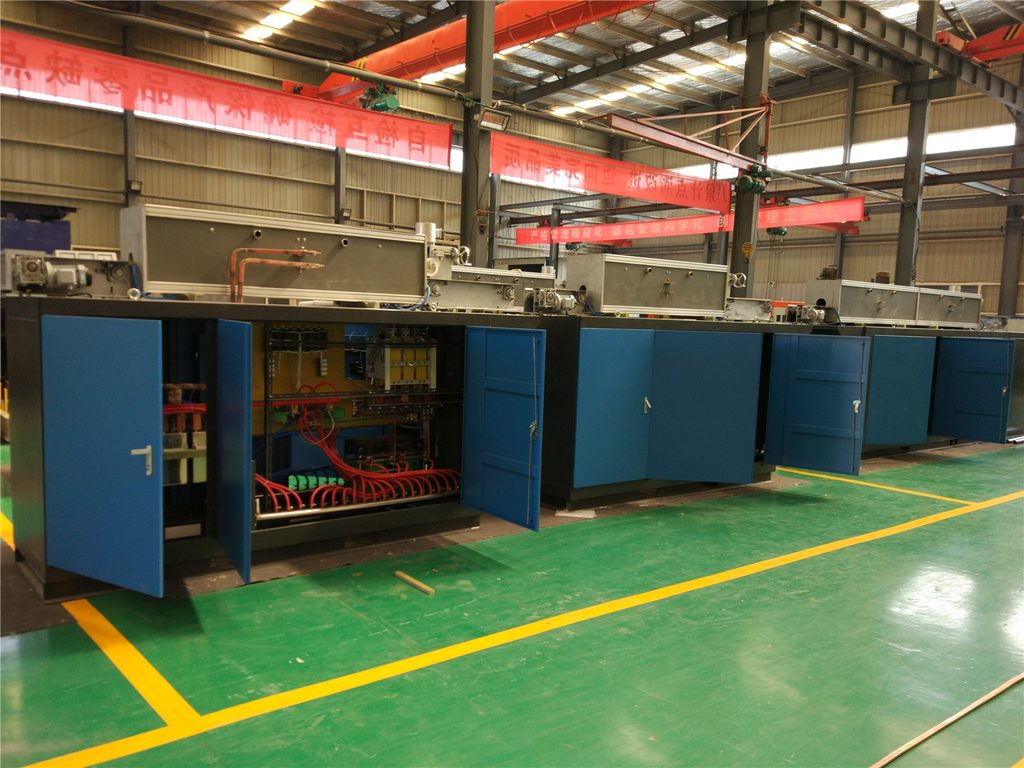
2.2 Induction Heating for Pipe Bending
Steel pipes may need localized heating before bending or other forming operations.
Induction heating can concentrate heat in the area where deformation is required, allowing the material to reach suitable forming conditions without unnecessarily heating the entire workpiece.
The heating arrangement should match:
- Pipe diameter and wall thickness
- Steel material and grade
- Required bending radius
- Heated zone length
- Forming method
- Production speed
The length and position of the heated section are particularly important. If the heating zone does not match the required deformation area, the material may not reach suitable forming conditions throughout the operation.
The induction coil must therefore be designed around the actual pipe geometry and bending process.
2.3 Localized Heating of Tube Components
Some tube processing operations require heating only a specific section of a metal workpiece.
Localized induction heating is suitable for applications where temperature needs to be concentrated in a defined area while limiting unnecessary heating of surrounding material.
Examples may include pipe forming, U-bolt bending, and other component-heating operations.
Compared with heating an entire workpiece, localized heating requires careful control of coil position, heating area, and workpiece movement.
The specific configuration depends on the component shape and the required processing result.
3. How Does an Industrial Pipe Induction Heating System Work?
A pipe induction heating system needs to coordinate electrical heating, material positioning, and temperature control.
A typical operating sequence includes the following stages.
Step 1: Pipe Feeding and Positioning
Pipes are transferred into the heating area using suitable material handling equipment.
The pipe must be positioned correctly relative to the induction coil. Changes in alignment or distance can affect the electromagnetic coupling and heating distribution.
Step 2: Induction Heating
The power supply delivers electrical energy to the induction coil, generating the magnetic field that heats the pipe.
The heating arrangement depends on whether the process requires full-section heating, continuous pipe heating, or a localized heating zone.
Step 3: Temperature Monitoring
The pipe temperature is monitored to determine whether the workpiece has reached the required process conditions.
The measurement position and method should be selected according to the application. Surface temperature alone may not fully represent the temperature distribution through the pipe wall.
Step 4: Transfer to the Next Operation
After heating, the pipe moves to the next processing stage, such as tempering completion, bending, or another forming operation.
The transfer arrangement should be coordinated with the heating cycle to maintain consistent production conditions.
4. Key Factors Affecting Induction Tube Heating Performance
Selecting an induction heating system requires understanding how pipe properties and operating conditions affect heating results.
| Factor | What Needs to Be Considered | Effect on Heating |
|---|---|---|
| Pipe diameter | Minimum and maximum outside diameter | Affects coil dimensions and coupling |
| Wall thickness | Actual pipe wall thickness range | Influences heating penetration |
| Material properties | Steel grade and magnetic and electrical characteristics | Affect electromagnetic heating behavior |
| Heating temperature | Required process temperature | Determines thermal duty |
| Heating area | Full pipe section or localized area | Determines coil arrangement |
| Production speed | Pipe movement speed and required output | Influences available heating time |
| Coil design | Coil geometry and pipe clearance | Affects heating distribution |
| Operating frequency | Frequency matched to material and heating depth | Influences current distribution |
| Cooling system | Cooling requirements of the equipment | Supports stable operation |
4.1 Pipe Diameter and Wall Thickness
Pipe dimensions directly affect the design of the induction heating system.
A change in outside diameter changes the relationship between the pipe and the induction coil. Wall thickness also affects the amount of metal that needs to be heated and the required heating penetration.
For manufacturers processing several pipe sizes, the complete dimensional range should be provided before equipment design.
4.2 Material Grade
Different steel grades have different electrical, magnetic, and thermal characteristics.
These properties influence how energy is transferred into the workpiece and how temperature develops during heating.
The material specification should therefore be provided to the equipment supplier rather than describing the workpiece only as a steel pipe.
4.3 Operating Frequency and Heating Depth
Operating frequency affects the distribution of induced currents within the metal.
In general, higher frequencies concentrate induced currents closer to the surface, while lower frequencies can provide deeper penetration under suitable material conditions.
However, frequency selection depends on more than pipe wall thickness. Material properties, target heating conditions, coil geometry, and the required heating pattern must also be considered.
A higher frequency is not automatically better for every pipe heating application.
4.4 Heating Speed and Production Output
In continuous pipe processing, the heating system must match the movement speed of the production line.
If a pipe passes through the induction coil too quickly for the available heating duty, it may not reach the required temperature.
On the other hand, heating time and power should not be increased without considering the material and process requirements.
The power supply, coil arrangement, heating length, and transfer system should be designed together.
5. Common Problems in Industrial Pipe Induction Heating
Several problems can affect heating consistency and production stability.
| Problem | Possible Cause | Practical Solution |
|---|---|---|
| Uneven heating around the pipe | Incorrect pipe positioning or unsuitable coil geometry | Check alignment and coil configuration |
| Temperature variation along the pipe | Mismatch between heating length and pipe movement speed | Review the heating profile and production speed |
| Insufficient heating depth | Frequency and heating conditions not matched to the application | Reevaluate material properties and heating requirements |
| Local overheating | Incorrect heating distribution or excessive local energy input | Review coil design and power control |
| Unstable heating results | Changes in pipe dimensions, positioning, or operating conditions | Standardize workpiece handling and process parameters |
| Equipment overheating | Inadequate cooling conditions or abnormal cooling operation | Inspect the cooling circuit and protection system |
Improving Heating Uniformity
Uniformity should be evaluated in relation to the actual processing requirement.
For example, a process that heats the entire circumference of a pipe has different requirements from one that heats only a localized section.
The coil geometry, pipe positioning, distance between the coil and workpiece, and movement speed all affect the heating pattern.
Temperature measurement should also be performed at appropriate locations so that both circumferential and longitudinal variations can be identified.
Preventing Surface Overheating
Excessive local heating can cause an undesirable temperature distribution or damage the workpiece surface.
The heating system should therefore be configured according to the material and target process.
If overheating occurs, the first step should be to examine the coil arrangement, operating conditions, and material positioning rather than simply reducing power without identifying the cause.
6. How to Select Induction Heating Equipment for Tubes and Pipes
The selection of industrial induction heating equipment should start with the actual workpiece and its intended processing operation.
| Selection Factor | Information to Provide |
|---|---|
| Pipe material | Steel grade and material condition |
| Pipe dimensions | Outside diameter and wall thickness |
| Pipe length | Individual pipe length or continuous processing arrangement |
| Heating application | Online tempering, pipe bending, or localized heating |
| Target temperature | Required process temperature |
| Heated area | Full section or specific processing zone |
| Production speed | Required pipe movement speed and output |
| Coil configuration | Required coil arrangement and size adjustment |
| Power supply | Available plant electrical supply |
| Cooling | Site cooling conditions and equipment requirements |
| Temperature control | Measurement method and control requirements |
Match the Equipment to the Processing Application
A system intended for online pipe tempering needs to be designed around the heat treatment requirements and continuous material movement.
A localized pipe bending system has different requirements because it needs to concentrate heating in the intended forming area.
These applications should not automatically use the same coil arrangement or heating parameters.
The industrial induction heating furnace range provides a starting point for evaluating equipment for different metal heating applications.
Evaluate the Complete Equipment Configuration
When comparing equipment proposals, buyers should look beyond the rated power supply.
The complete configuration may include:
- Induction power supply
- Induction coil and supporting structure
- Cooling equipment
- Electrical control cabinet
- Temperature monitoring system
- Pipe feeding and positioning arrangement
- Safety and protection components
The exact supply scope depends on the selected equipment and project requirements.
Before purchase, confirm which components are included, which are optional, and which must be prepared by the buyer.
7. What Information Is Needed Before Requesting a Quotation?
To evaluate an induction heating solution for tube and pipe processing, manufacturers should prepare:
- Pipe outside diameter and wall thickness
- Steel grade and material specifications
- Pipe length and workpiece condition
- Intended heating application
- Required heating temperature
- Heating zone and required penetration
- Production speed or hourly output
- Whether processing is continuous or batch-based
- Available electrical supply and cooling conditions
- Workshop layout and material handling requirements
Providing these details helps the supplier evaluate the induction power supply, coil design, control system, and material handling arrangement.
It also reduces the risk of selecting equipment that cannot satisfy the actual production conditions.
Frequently Asked Questions
What is induction heating used for in the tube industry?
Induction heating is used in tube and pipe processing for applications such as online tempering of steel pipes, pipe bending, localized heating, and other thermal forming operations.
Can induction heating be used for large steel pipes?
Yes. Industrial induction heating can be applied to large steel pipes. The system must be designed around the pipe diameter, wall thickness, material, heated area, and production requirements.
How do you select an induction heating coil for pipes?
The coil should be selected according to pipe diameter, wall thickness, material properties, target heating area, operating frequency, and production speed.
Can one induction heating system process different pipe diameters?
This depends on the system design and coil arrangement. Manufacturers processing multiple pipe sizes should provide the full diameter and wall thickness range so the equipment configuration can be evaluated.
What affects the heating uniformity of steel pipes?
Pipe positioning, coil geometry, coupling distance, material properties, operating frequency, and pipe movement speed can all affect heating uniformity.
What information is needed to select an industrial pipe heater?
The main information includes pipe dimensions, material grade, heating application, target temperature, heated area, required production speed, and available plant utilities.
Conclusion
Induction heating solutions for the tube industry are used in industrial processes that require controlled heating of steel pipes and other tubular metal workpieces.
Applications such as online tempering, pipe bending, and localized heating have different requirements. The appropriate equipment must therefore be selected according to pipe dimensions, material properties, heating depth, target temperature, production speed, and coil configuration.
For manufacturers planning a new pipe heating system or upgrading existing equipment, the heating process and equipment arrangement should be evaluated together rather than selecting a power supply based on rated output alone.
For an application-specific proposal, contact the technical team with your pipe dimensions, material grade, heating purpose, and production requirements to discuss a suitable induction heating configuration.