
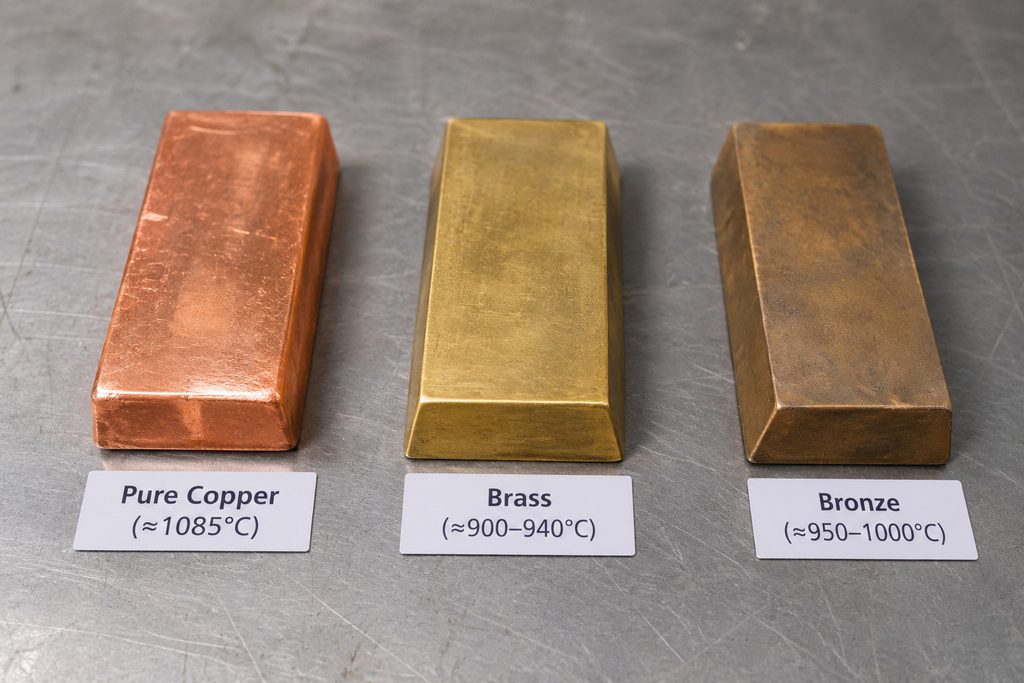
Pure copper melts at 1,084.62°C (1,984.3°F). Standard engineering property tables give the same property as 1,356 K, about 1,083°C (1,981°F); the small difference between published figures comes from the reference source and rounding. Either way, the working answer is approximately 1,083–1,085°C.
That answers the basic question, but copper is usually melted as an alloy. Brass and bronze begin melting and become fully liquid at different temperatures because their composition differs. A melting point also does not tell a foundry what temperature to run a furnace or pour at. This guide covers the pure-metal value, the alloy ranges people most often ask about, and the difference between material properties and process temperatures.
The Melting Point of Pure Copper
For pure copper, the figure to remember is approximately 1,084.6°C (1,984.3°F) at atmospheric pressure. Engineering property tables derived from the standards-body measurements cited below list 1,356 K (about 1,083°C) as the melting point, with a boiling point of 2,868 K. When comparing charts from different publishers, small offsets between 1,083°C and 1,085°C are rounding differences, not a real disagreement about the metal.
Pure copper is melted for electrical products, anodes and alloy making. For these uses, the more important production numbers are not the melting point itself but the temperature of the melt once the charge is fully liquid, how long it is held, and how the melt is protected from gas pickup and oxidation during holding and transfer. A furnace does not operate “at the melting point”; it operates at whatever temperature the process requires above it.
If a certificate identifies a specific copper grade, use the technical data attached to that grade for any decision that affects product quality. The pure-metal value is a reference point, not a substitute for a melt specification.
Melting Point of Brass
Brass is a copper–zinc alloy, and it melts over a range rather than at one point. The most common yellow brass (roughly 65% copper, 35% zinc) is published with a melting range of about 900–940°C (1,652–1,724°F), while general melting-point charts often group brass around 870–930°C. The spread between published figures reflects composition: changing the zinc content shifts the range.
The presence of zinc matters beyond the numbers. Zinc melts at only 420°C (787°F)—far below the brass melting range—so in overheated brass melts, zinc can be lost to vapor and oxide fume. This is one reason brass melting practice treats the furnace as a composition-control problem, not just a heat-up operation: a charge melted too hot or held too long can leave the bath short of zinc compared with the intended alloy.
There is no single correct “brass melting point” for a job. Read the range for the actual alloy designation, and treat any number from a general chart as indicative until checked against the material data for the grade being produced.
Melting Point of Bronze
Bronze is not one alloy but a family: tin bronzes, phosphor bronzes, aluminum bronzes, silicon bronzes and others. Each family has its own melting behavior, and general reference tables typically place bronze in the same neighborhood as brass—around 870–905°C (1,600–1,665°F)—while exact solidus and liquidus values depend on the specific alloy.
A few practical consequences follow from this:
- “Bronze” on a scrap bin is not enough information to set a process. Two bins labeled bronze can differ in melting range and in what they should be melted into.
- Melting begins at the solidus and the last solid disappears at the liquidus; between them the material is a mush of solid and liquid. A reading inside that window does not mean the charge is ready to pour.
- Alloy additions that make one bronze stronger or more corrosion-resistant also change its melting range and its melt-handling needs.
For any bronze work, use the alloy designation first and pull the published melting range for that designation. Tables that group “brass and bronze” together are convenience summaries, not process data.
Melting Range, Furnace Temperature and Pouring Temperature
These three numbers answer different questions and are routinely confused:
- Melting range (material property): the temperature span over which the specified alloy changes from solid to fully liquid.
- Furnace temperature (equipment reading): whatever the installed sensor measures—possibly a chamber or control-zone value rather than the molten bath itself.
- Pouring or casting temperature (process requirement): the metal condition needed when the melt reaches the mold or the next operation.
Copper and its alloys are melted above their liquidus, but how far above is a process decision. Excess temperature raises oxidation and gas-related problems, increases refractory wear and wastes energy; too little temperature leaves the melt difficult to transfer and fill. The correct window belongs to the alloy, the furnace, the part and the plant, and should come from a validated procedure—not from adding a guessed margin to a melting-point figure copied from a chart.
When comparing readings across heats, record what was measured, where and when. A furnace display, a bath dip and a ladle reading are three different pieces of information, and mixing them up is a common source of process arguments.
Melting Copper Scrap and Copper Alloys in Practice
The melting-point numbers above assume defined materials. Recycled copper feed rarely arrives that way. Copper-bearing scrap can include clean millberry, wire granulate, turnings, plated or coated parts, brass radiator stock and mixed castings—each with different composition risk and contamination.
Before charging, three checks decide most of the outcome:
- Identification. Separate copper from copper alloys, and separate brass from bronze wherever practical. Alloys whose composition is unknown should not be merged into a grade-specific melt.
- Condition. Insulation, oil, coatings, dirt and moisture are charge-preparation and emissions issues; wire and coated scrap typically need processing before they belong in a furnace.
- Target. Melting converts suitable solid material into molten metal; it does not refine it. Mixed or low-grade feed may need pretreatment or additional refining steps that a melting furnace cannot perform.
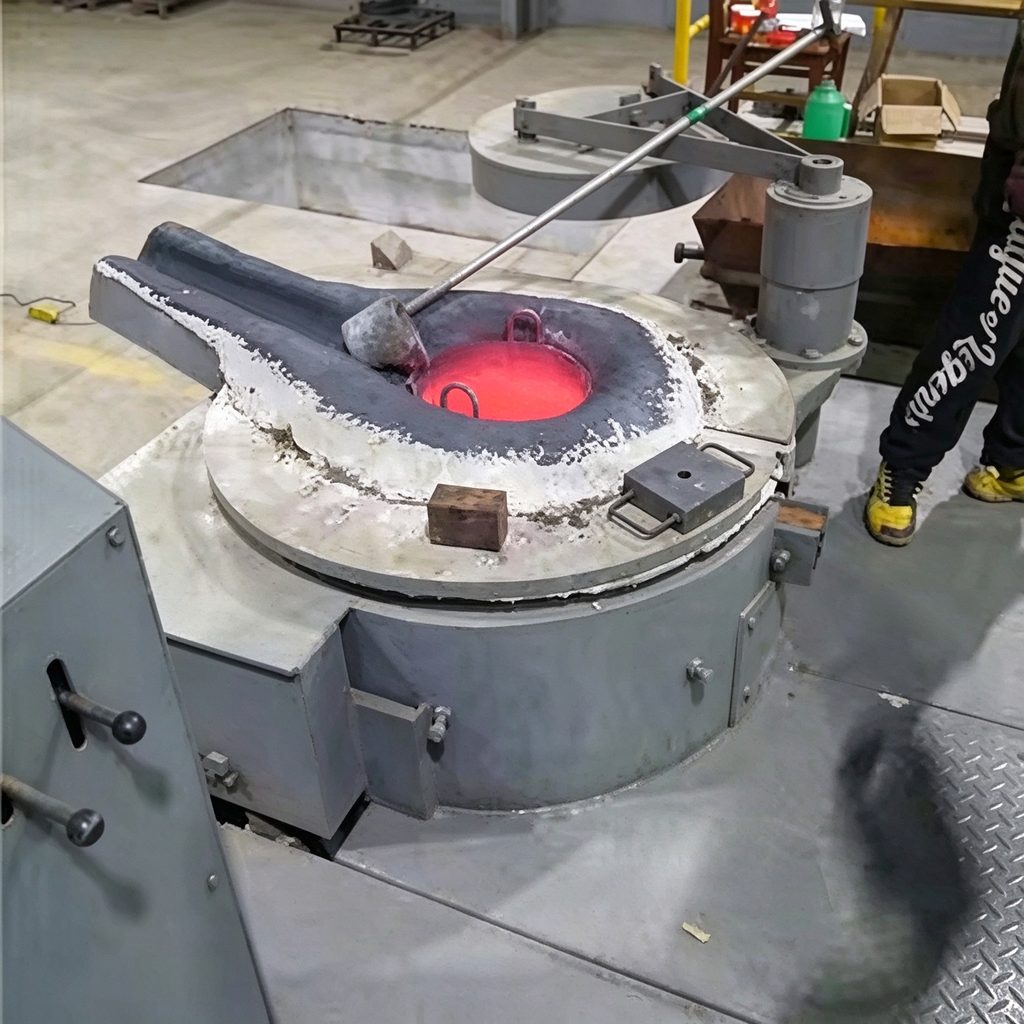
Induction melting is widely used for these materials because the melt heats inside the charge with stirring from electromagnetic forces. The equipment-side consequences—lining selection, cooling, power configuration and fume handling for coated or oily scrap—are covered in MFMelt’s guide to copper melting induction furnaces. The general equipment layout is described in the induction melting furnace overview, and the product range is on the products page.
Choosing Equipment Once the Material Is Known
Furnace selection follows from the material answer, not the reverse. A shop melting defined electrical copper scrap has different needs from one melting mixed brass turnings with coating residues: the feed affects the lining system, the required chemical control, the fume treatment and the batch rhythm. If the same furnace must run both copper and brass campaigns, the changeover requirements should be discussed with the supplier rather than assumed.
A practical inquiry package includes the material list with known compositions, typical batch weight, target daily output, available electrical supply, and the intended end product (ingot, castings or transfer to a casting line). That information lets an equipment supplier evaluate furnace type, capacity, power supply, cooling and auxiliary scope as a system. MFMelt has supplied induction melting, casting and heat-treatment equipment since 2012; for a copper or copper-alloy melting project, send the material description and output target through the contact page to start a configuration review.
Frequently Asked Questions
What temperature does copper melt at?
Pure copper melts at approximately 1,084.6°C (1,984.3°F); engineering property tables list 1,356 K, about 1,083°C (1,981°F). Both refer to the same pure-metal behavior, with small differences from the reference source and rounding.
Why is it so hard to melt copper?
Copper combines several difficulties that most familiar metals do not. Its melting temperature—around 1,084°C—is far above metals such as lead, tin or zinc (420°C), so the furnace must deliver sustained high heat rather than a quick melt. Copper is also one of the best electrical conductors, which means a cold copper charge converts induced current into heat less readily than a steel charge would; induction furnaces sized for copper need proportionally more power density. Once molten, copper oxidizes and absorbs gases readily, so the melt must be protected and handled promptly or the casting develops porosity and oxide defects. Finally, when the real target is brass or bronze, the alloying element adds its own problem—zinc boils away from an overheated bath—so the operation is composition control, not just heating.
At what temperature does copper wire melt?
The conductor itself is nearly pure copper, so it melts at the same approximately 1,084°C once the metal reaches that temperature. In practice the wire never gets there as a whole: the plastic insulation chars and burns away far below that, and tinned copper wire shows its coating melting first because tin liquefies at a much lower temperature. One trap for scrap dealers is copper-clad aluminum wire—an aluminum core melts at roughly 660°C, hundreds of degrees below copper, while the copper skin keeps the wire looking normal until it sags or fails.
Does brass melt at the same temperature as pure copper?
No. Common yellow brass is published with a melting range near 900–940°C, below the pure-copper value, because of its zinc content. Other brass alloys differ; use the data for the actual composition.
Is the bronze melting point a single number?
No. Bronze is a family of copper alloys—tin, phosphor, aluminum and others—each with its own behavior. General charts group bronze near 870–905°C, but a specific alloy designation needs its own published range.
Can one induction furnace melt copper, brass and bronze?
Often the same furnace platform can, but the lining condition, composition control, fume handling and changeover procedure must be checked per material. Mixed melts of unknown composition can land in neither intended alloy; the practical answer depends on the furnace configuration and the material plan.