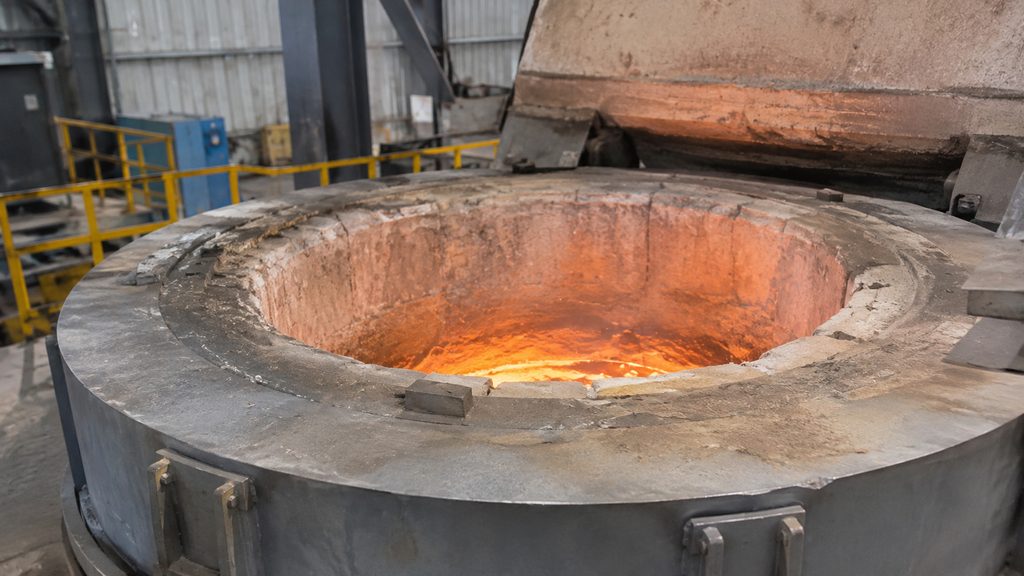
Refractory materials play an important role in aluminium melting furnaces. They protect the furnace structure from high temperatures, separate molten aluminium from the outer furnace shell, and help maintain stable operating conditions.
However, aluminium melting creates specific challenges for furnace linings. Molten aluminium can interact with refractory materials, penetrate unsuitable lining structures, and contribute to oxide or corundum buildup. Repeated heating and cooling, mechanical impact during charging, and aggressive cleaning can also shorten lining service life.
Choosing suitable aluminium melting furnace refractories therefore requires more than checking the maximum temperature rating. The furnace type, metal contact conditions, charging method, alloy composition, and maintenance requirements must all be considered.
This guide explains the main refractory requirements for aluminium melting furnaces, common lining materials, factors that cause refractory damage, and practical points to check when selecting and maintaining a furnace lining.
1. What Are Aluminium Melting Furnace Refractories?
Refractories are heat-resistant materials used to protect industrial furnaces and other high-temperature equipment.
In an aluminium melting furnace, the refractory system forms a protective layer between the furnace interior and its external structure. Depending on the furnace design, it may include a working lining, insulation layers, castable sections, and specially shaped components around the outlet or other metal-handling areas.
The main functions include:
- Thermal protection: Reduce heat transfer to the external furnace structure.
- Metal containment: Provide a suitable barrier between molten aluminium and the furnace shell or supporting structure.
- Chemical resistance: Resist interaction with molten aluminium, oxides, and process residues.
- Mechanical protection: Withstand material charging, cleaning, and normal operating contact.
- Operational stability: Maintain the designed furnace geometry during repeated heating and cooling cycles.
The required refractory arrangement depends on the furnace type and the areas exposed to molten metal.
For information about the complete aluminium melting furnace equipment range, buyers should also consider the furnace structure and the specified contact materials when evaluating a proposed system.
2. Main Types of Refractory Materials Used in Aluminium Furnaces
Different furnace designs require different refractory arrangements. A material suitable for one furnace zone should not automatically be considered suitable for every other application.
2.1 High-Alumina Refractory Castables
High-alumina castables are used in certain aluminium furnace lining applications, particularly where resistance to molten metal, mechanical wear, and high operating temperatures is important.
Special formulations may include additives designed to improve resistance to aluminium wetting and penetration.
Their suitability depends on the material grade, furnace zone, installation method, and operating conditions.
They may be considered for areas such as:
- Furnace bath zones
- Lower sidewalls
- Charging ramps
- Sills and other metal-contact areas
A general-purpose castable should not automatically be substituted for a refractory specifically developed for aluminium service.
2.2 Dry-Vibratable Refractory Materials
Dry-vibratable refractories are commonly used in certain coreless induction furnace lining systems.
The material is installed by vibration and compacted to form the working lining. Its performance depends on the material composition, particle distribution, installation quality, and subsequent heating procedure.
For aluminium induction melting, lining materials need suitable resistance to molten aluminium wetting and penetration. Special formulations may also be designed to limit buildup and facilitate cleaning.
The lining specification should be matched to the furnace design and the aluminium alloys being processed.
2.3 Refractory Repair Materials
Refractory repair materials are used to restore localized damaged areas when the remaining lining is still suitable for operation.
Depending on the damage and furnace design, repair materials may include compatible castable or phosphate-bonded refractory products.
The repair material must be compatible with the existing lining, metal-contact conditions, and operating temperature.
Applying an unsuitable patch material may lead to poor bonding, cracking, or premature deterioration. Repair work should therefore follow the refractory manufacturer's technical instructions.
2.4 Precast Refractory Components
Some furnace areas have complex shapes or experience concentrated wear. Precast refractory components may be used where a shaped component is more suitable than forming the entire section in place.
Examples include certain spout, lid, and other furnace components.
The selection depends on the component's location, thermal exposure, metal contact, and mechanical requirements.
3. Refractory Requirements in Different Furnace Areas
Refractory wear is not uniform throughout an aluminium melting furnace. Different areas experience different combinations of temperature, metal contact, abrasion, and cleaning activity.
| Furnace Area | Main Operating Conditions | Important Refractory Requirements |
|---|---|---|
| Furnace bottom | Contact with molten aluminium and accumulated residues | Metal resistance, structural stability, and suitable installation |
| Bath sidewalls | Prolonged exposure to molten metal | Resistance to wetting, penetration, and chemical attack |
| Charging area | Impact from ingots and scrap materials | Mechanical strength and wear resistance |
| Ramp and sill | Metal flow and repeated operating exposure | Suitable erosion and aluminium resistance |
| Spout or outlet | Molten metal flow during discharge | Metal compatibility and resistance to local erosion |
| Lid and upper sections | Heat exposure and thermal cycling | Thermal stability and suitable insulation |
| Coil protection area | Thermal exposure near induction components | Electrical and mechanical protection appropriate to furnace design |
This distinction is important when evaluating refractory specifications.
For example, the charging area may experience more mechanical impact than a relatively protected upper section. Meanwhile, the bath and outlet areas need materials compatible with contact with molten aluminium.
A single refractory grade should not be assumed to provide the best performance across every furnace section.
4. Key Factors When Selecting Aluminium Melting Furnace Refractories
Refractory selection should be based on the complete furnace application rather than material names alone.
4.1 Resistance to Molten Aluminium Wetting and Penetration
One of the main requirements for aluminium furnace linings is resistance to molten metal wetting and penetration.
If molten aluminium penetrates the refractory structure, it can react with the lining, contribute to buildup, and make cleaning or future repairs more difficult.
Special aluminium-resistant refractory formulations are designed to limit these interactions.
When evaluating a material, check whether its technical documentation specifically covers aluminium contact rather than relying only on a general high-temperature rating.
4.2 Resistance to Chemical Attack and Buildup
The refractory may be exposed to aluminium oxide, dross, flux residues, and other materials generated during melting and treatment.
These conditions can contribute to chemical deterioration or deposits on the working surface.
The appropriate refractory depends on the metal composition, process residues, cleaning method, and operating temperature.
For scrap melting applications, the incoming material should also be considered because contaminated feedstock can change the conditions to which the furnace lining is exposed.
4.3 Mechanical Strength and Abrasion Resistance
Charging and cleaning operations can place mechanical stress on the refractory lining.
Large scrap pieces, heavy tools, and careless material handling may cause impact damage or surface erosion.
The charging zone and other areas exposed to mechanical contact may therefore require different refractory properties from protected furnace sections.
4.4 Thermal Shock Resistance
Aluminium melting furnaces operate through repeated heating and cooling cycles.
Rapid temperature changes can create thermal stresses inside refractory materials, potentially resulting in cracks, surface spalling, or structural damage.
The refractory installation and furnace operating procedure should therefore follow the recommended heating, drying, and cooling requirements.
Avoid using an arbitrary heating schedule because the correct procedure depends on the refractory composition, lining thickness, installation method, and furnace design.
4.5 Thermal Insulation and Heat Loss
The refractory system also affects heat transfer through the furnace structure.
Working linings need to resist the conditions inside the furnace, while insulation layers may be used to reduce heat transfer to the surrounding structure.
The complete lining arrangement should balance thermal performance, mechanical strength, and metal-contact requirements.
Selecting materials based only on low thermal conductivity may be inappropriate if the material cannot withstand the actual operating environment.
5. Refractory Lining Requirements for Different Aluminium Furnace Types
The refractory arrangement varies according to the furnace heating method and construction.
5.1 Coreless Induction Melting Furnaces
Coreless induction furnaces use an induction coil surrounding a refractory-lined melting chamber.
The working lining forms the metal-containing vessel and must be compatible with the furnace's electromagnetic and thermal operating conditions.
Dry-vibratable high-alumina refractory formulations are used in certain aluminium induction furnace designs. Their properties should include suitable resistance to molten aluminium wetting and penetration.
The lining also needs to maintain its structure throughout the operating cycle.
5.2 Gas-Fired Aluminium Melting Furnaces
Gas-fired furnaces transfer heat to aluminium through combustion and the furnace chamber.
Their refractory arrangements may include working linings, insulation, and specialized sections around the charging area, bath, ramps, and discharge openings.
Areas exposed to direct mechanical impact or repeated contact with molten aluminium may require different materials from upper chamber sections.
Refractory selection should account for the furnace geometry, burner arrangement, operating temperature, and metal-contact conditions.
The gas-fired aluminium melting furnace is a separate heating configuration from an induction furnace, so its refractory requirements should be evaluated according to its own design.
5.3 Crucible Furnaces
In a crucible furnace, the crucible itself contains the molten aluminium.
This is different from a furnace design where a monolithic working lining forms the melting chamber.
The crucible material and the surrounding furnace insulation have separate functions and should have their own technical specifications.
Buyers should not assume that the refractory materials used for a fixed furnace lining can automatically replace a crucible.
For a more detailed discussion of crucible materials, preheating, and operating precautions, see the guide to aluminium melting crucibles.
6. Common Causes of Aluminium Furnace Refractory Damage
Understanding the causes of refractory deterioration helps foundries plan inspections and avoid preventable damage.
6.1 Rapid Heating and Cooling
Abrupt temperature changes generate thermal stress inside refractory materials.
Repeated thermal shock can cause cracking, spalling, and separation between different lining sections.
The heating and cooling procedure should follow the refractory supplier's instructions.
6.2 Mechanical Impact During Charging
Dropping heavy materials into the furnace or striking the lining with tools can damage the working surface.
Operators should use the recommended charging method and avoid unnecessary contact with refractory walls, the furnace bottom, and other protected surfaces.
6.3 Molten Metal Penetration
If the refractory is not suitable for aluminium service, molten metal may penetrate its pores or cracks.
The extent of this problem depends on the refractory structure, metal-contact conditions, temperature, and the presence of existing damage.
Suitable material selection and regular inspection are essential for identifying this type of deterioration.
6.4 Slag and Dross Accumulation
Oxide buildup and residues may accumulate on the furnace lining during melting.
Aggressive removal methods can damage the refractory surface, particularly if operators use unsuitable tools or excessive force.
Cleaning procedures should remove process residues without unnecessarily wearing the working lining.
6.5 Incorrect Installation and Dry-Out
Even suitable refractory materials can perform poorly if installation and drying are not carried out correctly.
Problems may result from improper mixing, insufficient compaction, unsuitable curing conditions, or incorrect initial heating.
For this reason, installation procedures and dry-out schedules should be provided according to the selected material and furnace design.
7. Refractory Inspection and Maintenance
Refractory inspection should be included in the overall furnace maintenance program.
The inspection method and frequency depend on the equipment manufacturer's instructions, operating conditions, and previous lining performance.
Visual Inspection
During an appropriate shutdown and after the furnace has reached a safe inspection condition, check for:
- New or expanding cracks
- Surface spalling or loose refractory sections
- Localized erosion around charging and discharge areas
- Unusual metal penetration
- Excessive oxide or residue buildup
- Damaged joints and transitions
- Signs of deterioration around the furnace outlet
Visible surface discoloration alone does not necessarily indicate lining failure. Inspection findings should be evaluated together with the lining condition and operating history.
Cleaning and Residue Removal
Remove dross and deposits using the appropriate tools and procedures.
Avoid striking the refractory surface or using methods that can remove substantial amounts of the working lining.
The cleaning procedure should be compatible with the furnace structure and refractory material.
Repair and Replacement Decisions
Small localized damage may be suitable for repair if the surrounding lining remains structurally sound.
More extensive cracking, metal penetration, or significant erosion may require a larger repair or lining replacement.
The decision should consider:
- Damage location and depth
- Whether the damage reaches the backup lining or furnace structure
- The condition of adjacent refractory sections
- The operating severity and expected remaining service
- The manufacturer's repair and inspection recommendations
Repairs should not be used to conceal serious lining deterioration. Where structural integrity or metal containment is in doubt, the furnace should remain out of operation until it has been assessed and made safe.
For broader operating procedures and routine inspection recommendations, see the aluminium melting furnace operation and maintenance guide.
8. How to Select the Right Refractory System
When purchasing a new furnace or replacing an existing lining, buyers should provide detailed operating information to the refractory or furnace supplier.
| Selection Factor | Information to Confirm |
|---|---|
| Furnace type | Induction, gas-fired, crucible, or another design |
| Metal type | Pure aluminium or a specific aluminium alloy |
| Operating conditions | Normal operating and pouring conditions |
| Metal-contact areas | Bath, sidewall, bottom, ramp, sill, and outlet |
| Raw materials | Ingots, clean scrap, coated scrap, or mixed feedstock |
| Mechanical exposure | Charging impact, cleaning, and material handling |
| Installation method | Casting, dry vibration, ramming, or precast components |
| Dry-out procedure | Supplier-approved curing and heating schedule |
| Maintenance | Inspection method, repair materials, and replacement procedure |
| Production requirements | Operating schedule, shutdown arrangements, and maintenance access |
Compare Total Refractory Costs, Not Just Material Prices
The purchase price of refractory materials is only one part of the total cost.
A more complete comparison should consider:
- Refractory material consumption
- Installation labor and equipment
- Curing and dry-out requirements
- Furnace downtime during installation and repair
- Cleaning and maintenance requirements
- Expected service under the actual operating conditions
- Availability of compatible repair materials
A lower-priced refractory does not necessarily reduce total operating costs if it requires more frequent repairs or longer production interruptions.
Likewise, choosing a more expensive material without confirming its suitability for the furnace zone does not guarantee better performance.
The most practical approach is to compare materials using technical specifications and operating conditions for the actual furnace.
Frequently Asked Questions
What refractories are used in aluminium melting furnaces?
Depending on the furnace design, aluminium melting furnaces may use high-alumina castables, dry-vibratable refractory materials, specialized repair compounds, and precast refractory components. The appropriate material depends on the furnace type and its operating conditions.
Why is aluminium resistance important in furnace refractory materials?
Molten aluminium can wet and penetrate unsuitable refractory structures. This may lead to chemical interaction, metal penetration, and buildup on the working lining. Aluminium-resistant formulations are designed to reduce these problems.
Are furnace linings and melting crucibles the same?
No. A furnace lining is installed within the furnace structure, while a crucible is a separate vessel that contains molten metal. Their material requirements and replacement procedures are different.
Why do aluminium furnace linings crack?
Common causes include thermal shock, mechanical impact, incorrect installation, and unsuitable heating or cooling procedures. The actual cause should be identified before repairing the damaged section.
Can damaged refractory linings be repaired?
Some localized damage can be repaired using compatible refractory materials. However, extensive erosion, serious metal penetration, or structural damage may require larger repairs or complete lining replacement.
How should a new aluminium furnace lining be dried?
The curing and dry-out schedule depends on the refractory formulation, lining thickness, installation method, and furnace design. It should be supplied by the refractory manufacturer or furnace engineering team rather than replaced with a generic temperature schedule.
Conclusion
Aluminium melting furnace refractories are essential for protecting furnace structures and maintaining stable melting conditions. Their performance depends on material compatibility, resistance to molten aluminium, mechanical strength, thermal stability, and correct installation.
Different furnace designs require different lining arrangements. Coreless induction furnaces, gas-fired melting furnaces, and crucible furnaces should not be treated as having interchangeable refractory systems.
For manufacturers planning a new aluminium melting furnace or upgrading existing equipment, refractory selection should be considered together with furnace structure, charging methods, metal handling, and maintenance requirements.
For equipment selection or a furnace project, contact the technical team with your furnace type, aluminium alloy, raw materials, and operating conditions. This information helps determine the appropriate furnace configuration and refractory requirements.